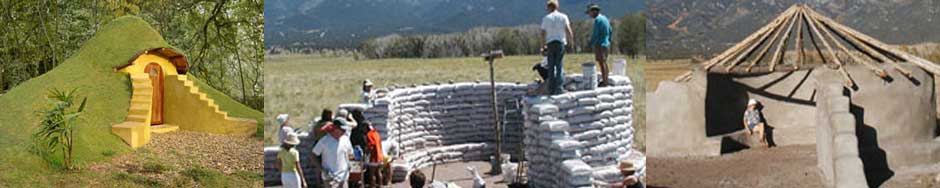
“Designed by the owners, a doctor and nurse from Cambridge, Ontario, Canada. Built by local Belizean builder, Jorge Rosales, this organic home emanates a sense of place at the junction of Parrot’s Cove and Forest Hill Drive in our Belize Eco Village. A sublime design.”
Lightweight materials such as rice hulls can speed construction ten-fold. But good design is important! Note how Paul in Thailand (see yesterday’s blog post) added buttresses and steel pipe here and there as problems developed. Basically, he was just “winging it”. Who knows how long the house will last before having mold problems. That’s unfortunate because a similar house built correctly could last many decades.
I haven’t heard from the owner of this rice hull house in a few years. Yesterday I came across some new comments by the builder and thought it would make a good update. A reader had sent a message pointing out how rice hull houses can be built like the strawbale house the other day. (Round, pipe bond beam, etc.) So yeah, here you go. Here’s the step-by-step directions for a rice hull house. Note how lightweight fill materials such as rice hulls require some extra reinforcement from rebar, posts, buttresses, etc. for stability. In contrast, heavy earthbags filled with tamped soil are much more stable. Also note how Paul added wide roof overhangs to better protect the walls.
“It’s undeniable that building codes save lives, but something has changed in the past couple decades. Now, thanks to the Internet, the average homeowner has unlimited access to building techniques. We’re experimenting more than ever and often out of step with the rulebooks.
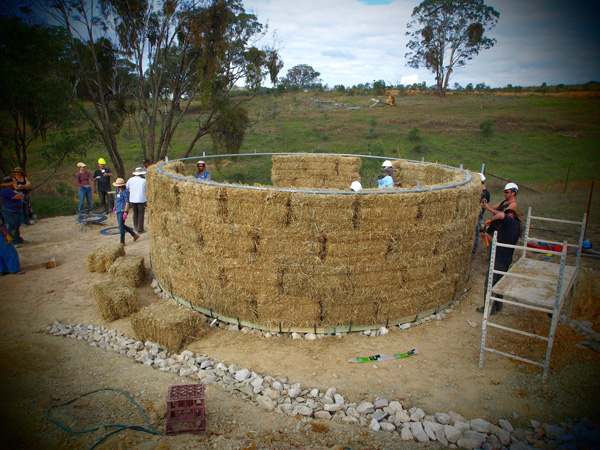
Photos from Milkwood Farm strawbale workshop show their building process
“A few months ago we raised a strawbale roundhouse with a reciprocal roof as part of our first Natural Building Workshop at Milkwood Farm.