A farmhouse in Madhya Pradesh, India is situated among winding rows of mango trees. The 1,800-square-foot space is constructed using the ancient technique of rammed earth – a building tradition that has nearly been forgotten in the region.
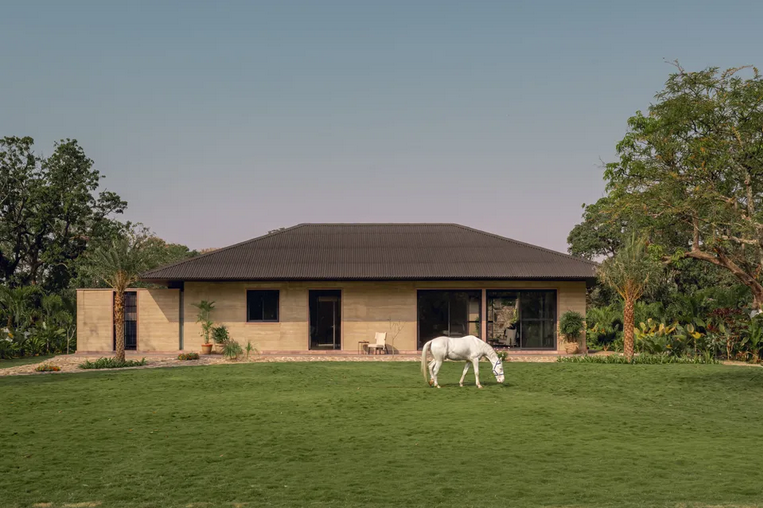 Aptly named ‘Fragrance of Earth’, the farmhouse is as much a cultural project as it is an architectural one. By working with local materials and local expertise, the house and the land become one. It really belongs to its surroundings.
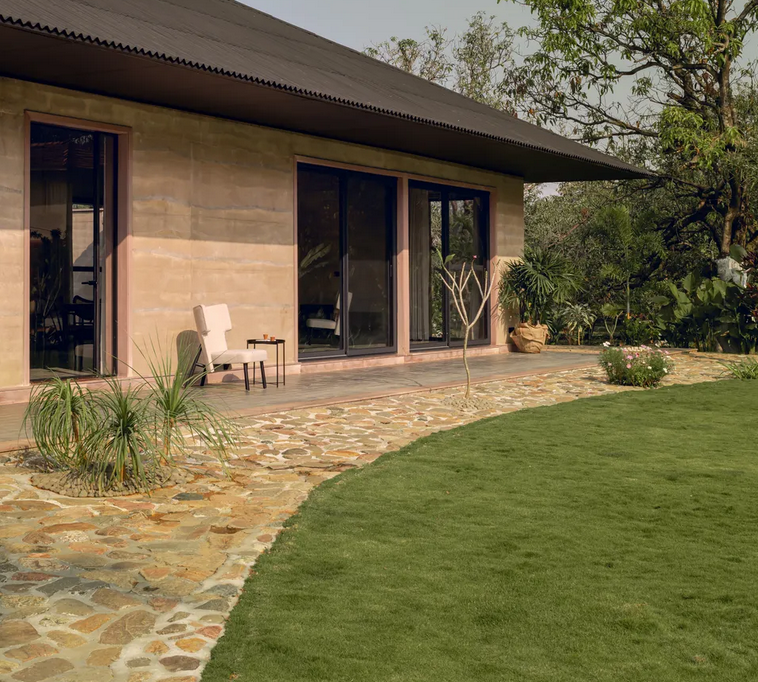 Local craftsmen were trained in the nuances of rammed earth construction, from soil composition and layering to compaction and long-term care.
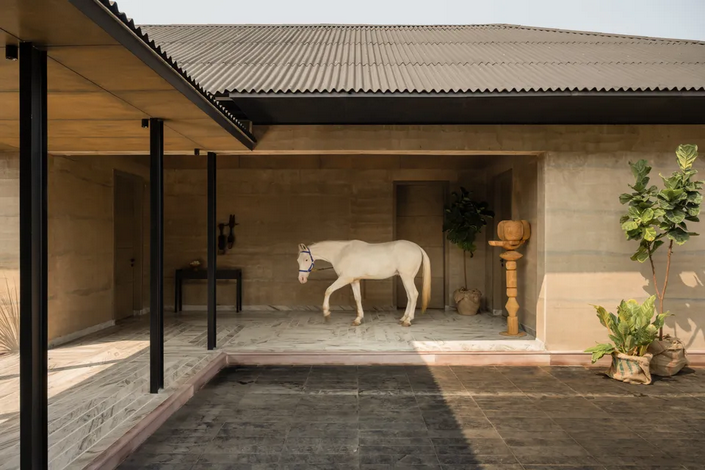
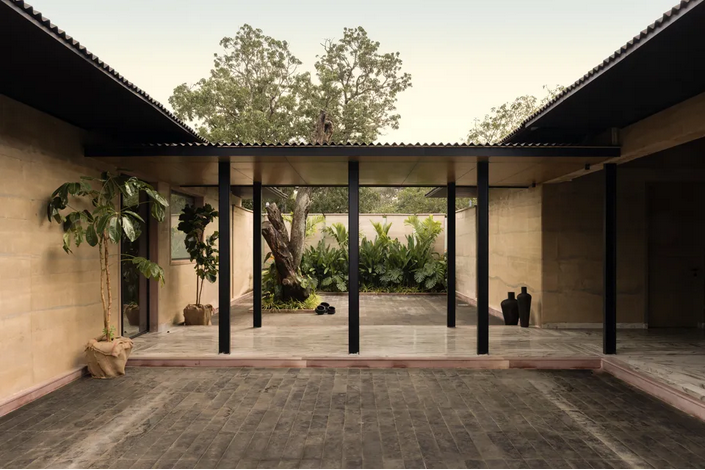 Though corrugated and dark, the roof acts like a shaded canopy over the patio and outdoor spaces, creating a calm, protective presence.
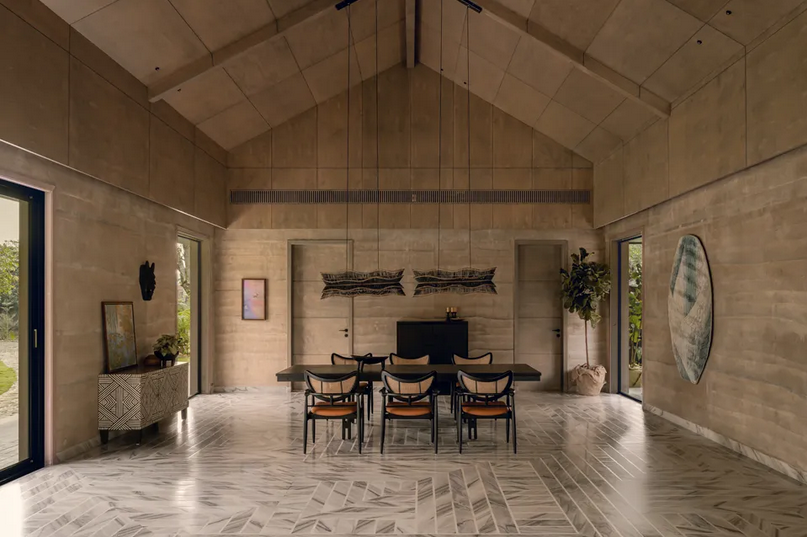
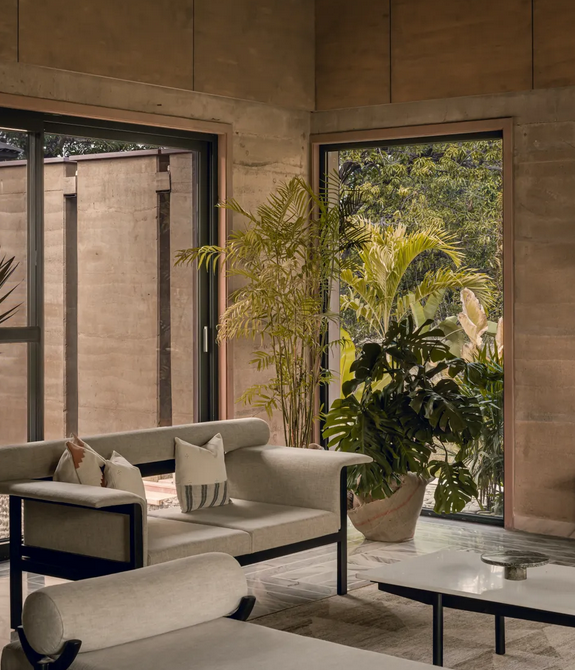 Sunlight filters through, gradually revealing layers of soil and mineral pigment that shift in tone and depth as the day unfolds.
 Reclaimed wood shapes much of the interior.
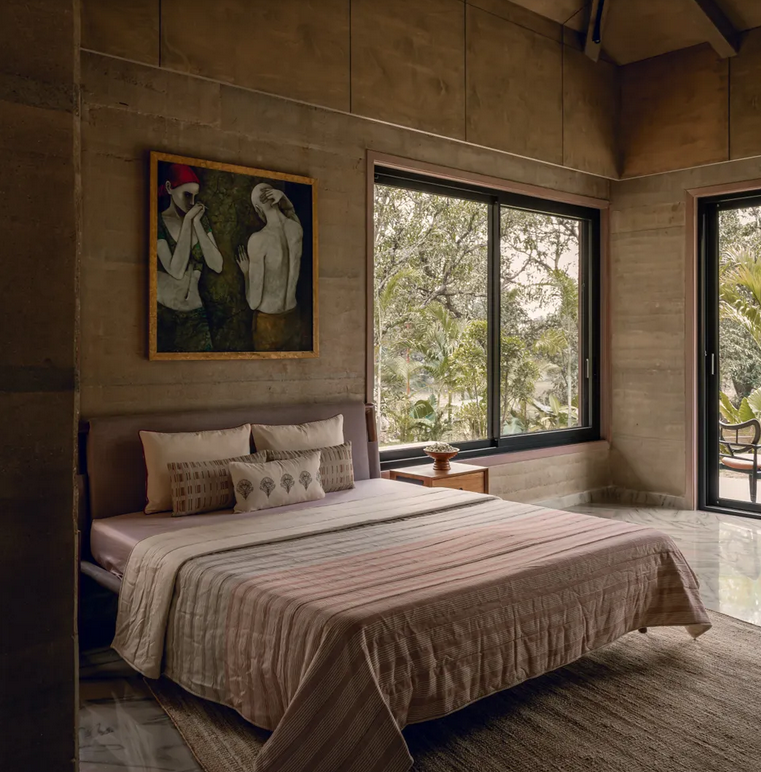 Three bedrooms are linked by a courtyard passage that gently mediates between personal and shared zones.
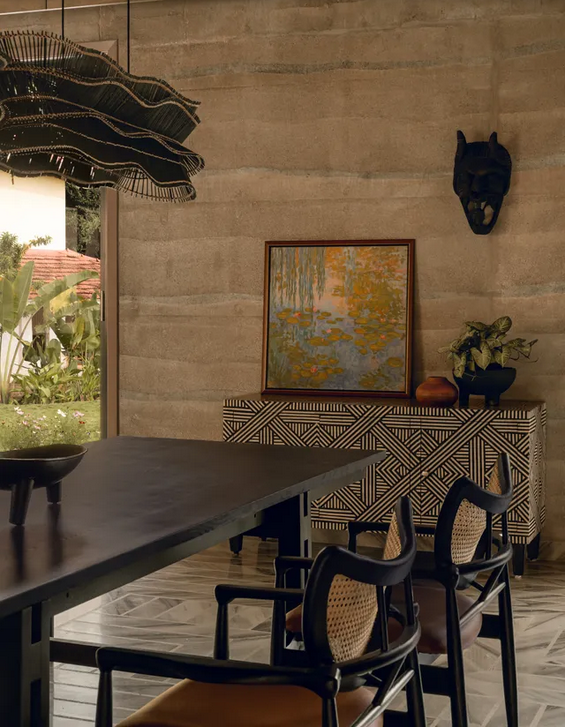 Living, dining, and kitchen areas are gathered naturally, creating a relaxed hub for entertaining or leisurely afternoons.
 High ceilings and expansive sliding glass doors fill the interiors with brightness and circulation.
 The striated marble floors enhance both coolness and a tactile connection to the material.
Even before this farmhouse in Madhya Pradesh was completed, the knowledge shared on site had begun to travel beyond it. Craftsmen carried these skills back to their own villages, building homes through the same technique and adapting it to their needs. In many ways, ‘Fragrance of Earth’ created a ripple effect, showing that this project wasn’t just about a single house…it was about giving something back to the community and the craft itself.
 You can read the original article at www.architecturaldigest.in