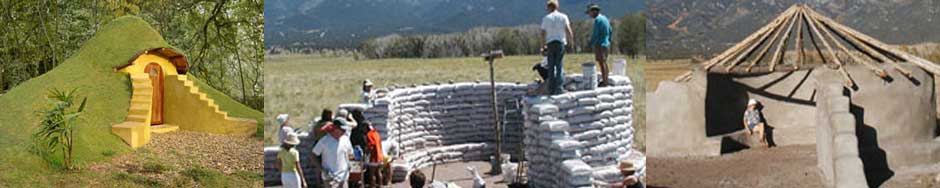
“Mark Shepard, manager of New Forest Farms and author of the book Restoration Agriculture, will offer a critique of annual crop-based staple food production, while laying the ecological framework and reasons for designing a perennial staple food crops farm.
Landscaping
Ecosystem Restoration Cooperative – Mass Ecosystem Restoration in a Time of Crisis
“This is a short video introducing the Ecosystem Restoration Cooperative and the Ecosystem Restoration Camps. This is a self-organizing, direct action to train and deploy everyone to mitigate and adapt to human induced climate change by restoring ecological function on a planetary scale.”
Greening the US Deserts: 80 Year Old Swales near Tucson, Arizona
Here are two classic videos about the giant permaculture swales in the Sonoran Desert near Tucson, AZ. The swales are now filled with trees and lush grass, and continue to thrive after 80 years with no maintenance. The swales were built in the 1930’s during President Roosevelt’s term to restore the countryside in the Dust Bowl era.
Thriving 23-Year-Old Permaculture Food Forest – An Invitation for Wildness
“In the small town of Riverton at the bottom of New Zealand’s South Island is Robert and Robyn Guyton’s amazing 23-year-old food forest. The two-acre property has been transformed from a neglected piece of land into a thriving ecosystem.”
Renaissance Farm Water Systems explained by Peter Bane
“Peter Bane, permaculture designer, teacher, consultant, editor & publisher of the Permaculture Activist Magazine as well as author of “The Permaculture Handbook” explains some of the water harvesting system at his urban homestead “Renaissance Farm” in Bloomington, IN.”
Indoor Salad Gardening
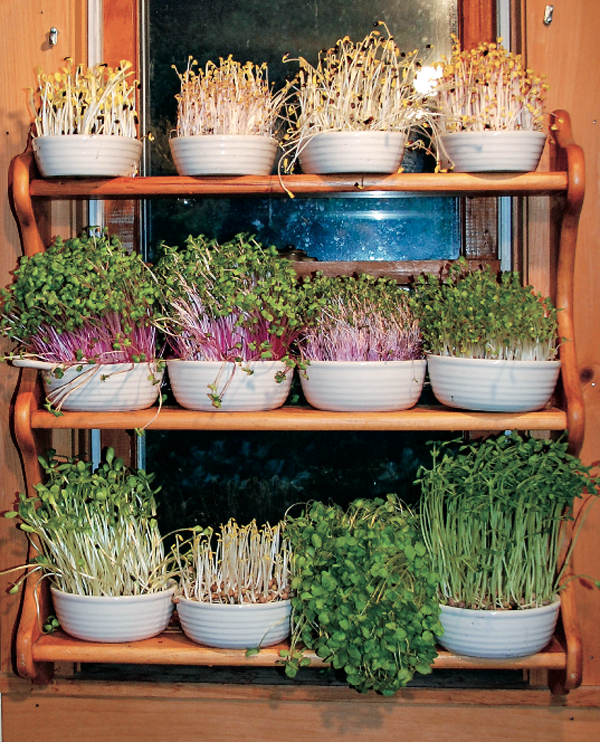
“Year-Round Indoor Salad Gardening offers good news: with nothing more than a cupboard and a windowsill, you can grow all the fresh salad greens you need for the winter months (or throughout the entire year) with no lights, no pumps, and no greenhouse.