Great Zimbabwe is an extensive Iron Age stone city whose surviving walls are impressive. Built between the eleventh and fifteenth centuries by ancestors of the Shona people, it became the center of a powerful inland kingdom whose name later passed to the modern state of Zimbabwe.
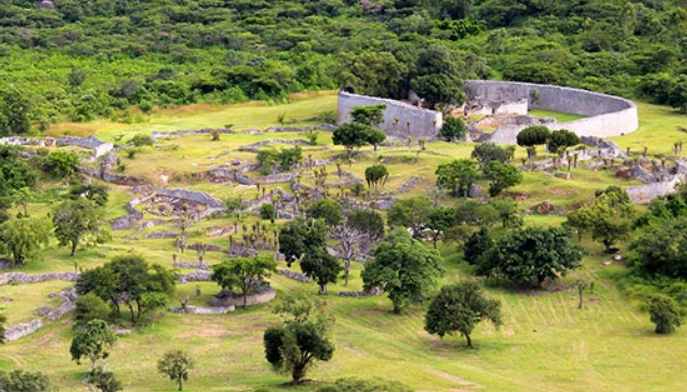
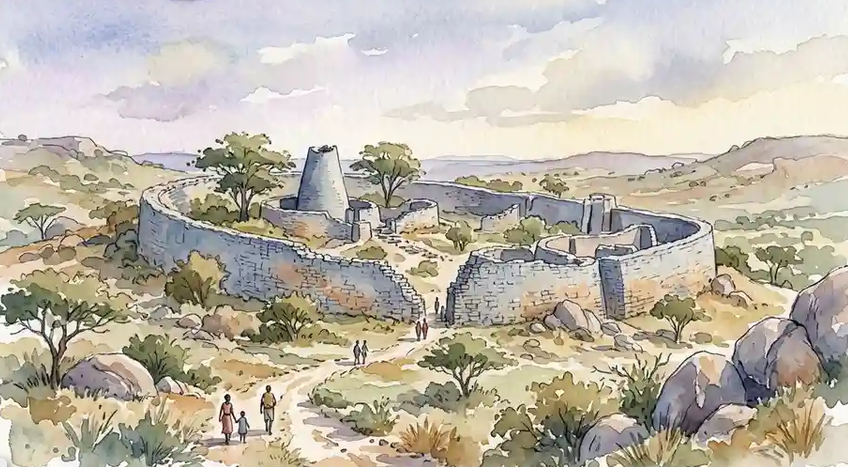 Great Zimbabwe occupies gently undulating country in south-eastern Zimbabwe. The ruins stand on and around an expanse of weathered granite, whose natural outcrops form a backdrop to the dry-stone structures. The central zone of stone constructions covers around 80 hectares (198 acres), making it one of the largest concentrations of precolonial masonry in southern Africa.
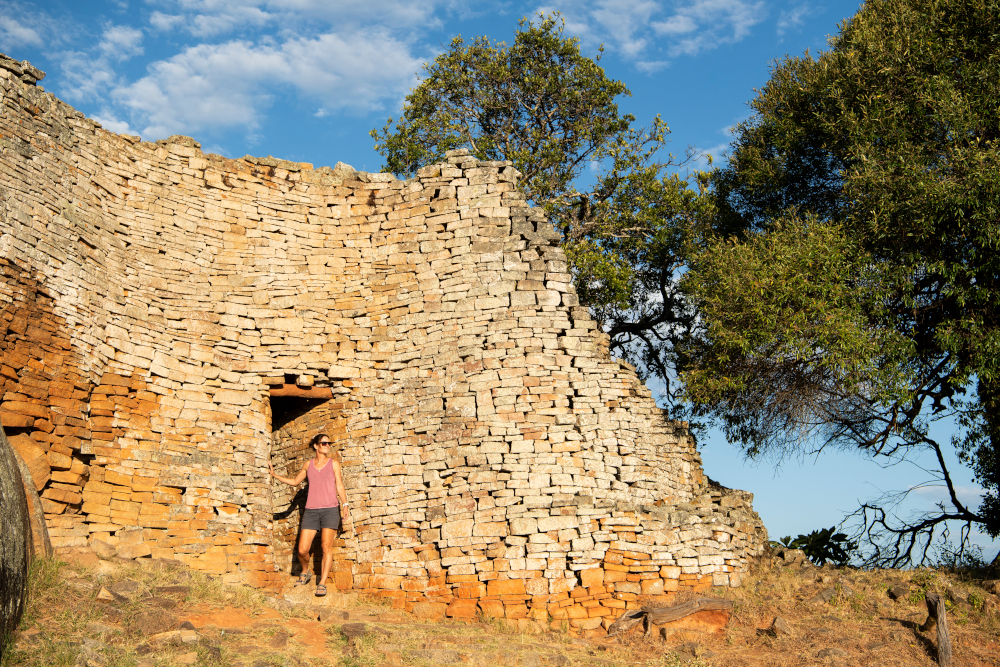
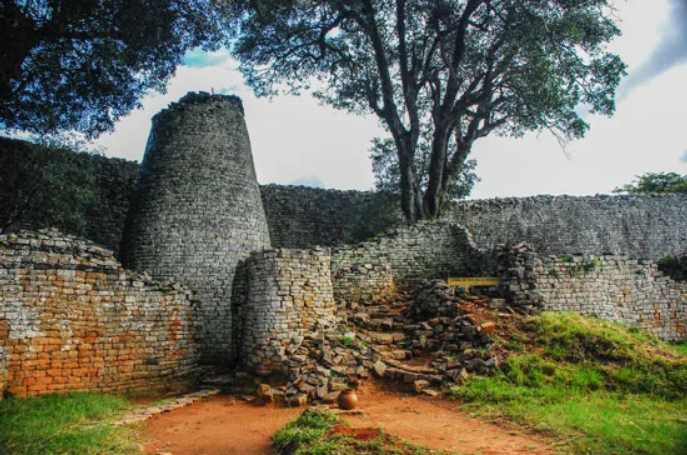 The architecture of Great Zimbabwe is defined by long dry-stone walls built from locally quarried granite blocks, laid without mortar in carefully coursed patterns. In many stretches the outer faces display alternating bands of stone lengths, forming subtle horizontal motifs that catch the light differently across each course. Between the masonry enclosures lie traces of clay and timber dwellings; together, the stone and earth architecture once housed thousands of people in a dense urban landscape.
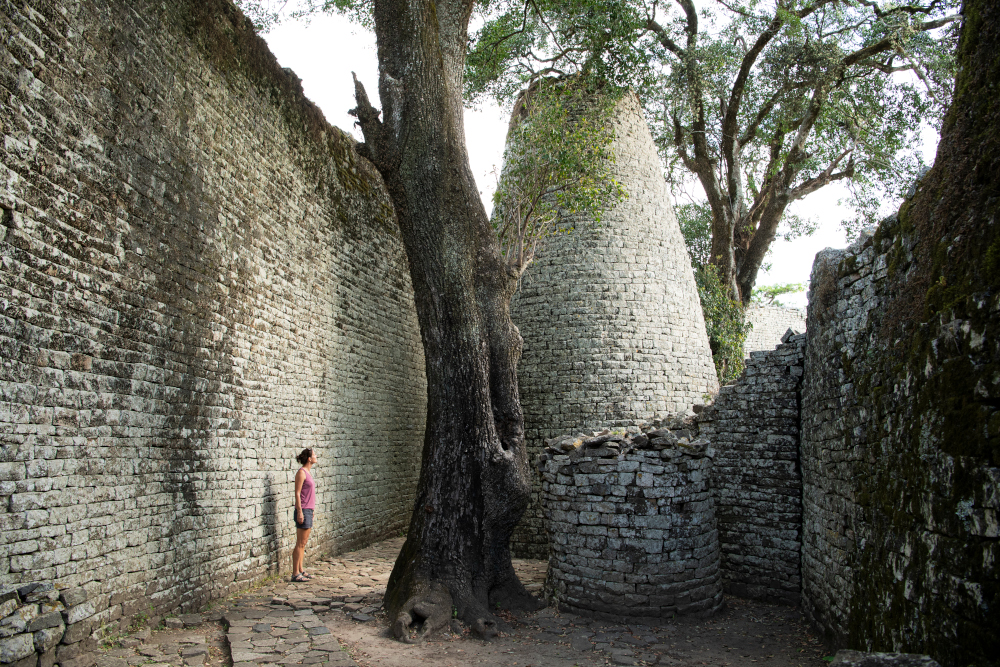
The Great Enclosure is a vast walled precinct whose outer wall rises to about 11 m (36 ft) and runs in an almost continuous curve around its interior. Inside, a freestanding stone cone known as the Conical Tower stands near one of the inner walls, while narrow passages run between masonry lines and open into small courts. Further out, the Valley Ruins fill the space between the hill and the enclosure with smaller stone complexes whose boundaries once surrounded clay houses and meeting spaces.
Archaeological and historical research links Great Zimbabwe to the Shona-speaking communities who dominated the region’s trade in the late Iron Age, connecting interior gold fields and cattle herds with coastal merchants along the Indian Ocean. By the thirteenth century the city had become the capital of the Kingdom of Great Zimbabwe, with political influence extending across much of present-day Zimbabwe and beyond. The settlement flourished until the fifteenth century, after which power shifted to other centres further north.
 The ruins achieved international recognition in the twentieth century as evidence of a sophisticated indigenous stone-building tradition in southern Africa. The name “Zimbabwe”, derived from a Shona phrase for “stone houses”, was adopted by the independent country in 1980 in reference to this earlier center of power.
You can read the original article at www.ad-hoc-news.de