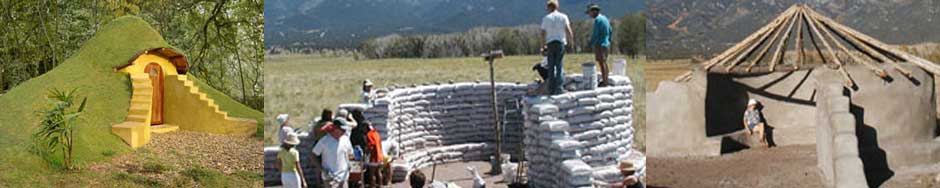
Drive west out of Taos, New Mexico, past the Rio Grande Gorge Bridge, and the landscape does something strange. The houses disappear into the earth. You can miss them entirely from the road, buried behind berms of packed dirt, their walls built from old tires and glass bottles, their rooftops harvesting rain. These are not ruins. They are the future, and the pool at the center of the newest community here has turned into something nobody planned.
The Greater World Earthship Community outside Taos has demonstrated for thirty years that homes can sustain themselves entirely from sunlight, rain and recycled materials. Every drop of water a resident uses was once a raindrop on the roof, collected, filtered and cycled through the home before returning to the soil. Using active solar for electricity and passive solar for heating, rain catchment supplements the water supply, which then feeds gardening and eventually waste disposal.
The Pangea Biotecture community, an expansion of this philosophy near Taos, went further still. It added shared spaces including an amphitheater, sports courts, walking trails and a natural swimming pool. That pool was about to develop a life of its own. Visitors expecting a conventional pool find something that looks more like a mountain lake edged in reeds. That impression is not accidental. A natural pool mimics the self-sustaining ecosystems of lakes and ponds, relying on biological filtration instead of chemicals to keep the water clean and clear. Water circulates continuously between a swimming zone and a regeneration zone, passing through layers of gravel, sand and plant roots.
Beneficial bacteria break down organic matter around the clock, doing work that chlorine would otherwise handle. No red eyes, no chemical smell, and the plants do it for free. But the real surprise arrived before anyone even took a first swim. As natural pool ecologists have documented, wildlife moves in almost immediately after the pool is filled and the regeneration zone is planted, with diving beetles, pond skaters and dragonflies often arriving while construction is still finishing. Within a couple of years, a full cast assembles: dragonfly and damselfly larvae, caddisfly and beetle larvae, pond snails and backswimmers. The pool had become a nursery for creatures the desert rarely offers a home.
From frogs to kingfishers, these natural pools act as a major attractor for local wildlife, building and supporting healthy ecosystems in landscapes where standing water is otherwise almost unknown. In the high Chihuahuan desert, where water pulls life from miles away, a place built for people to cool off had transformed into one of the richest patches of biodiversity on the mesa.
Natural pools are self-sustaining because water is filtered and recycled through the regeneration zone in a continuous loop, maintaining a stable level through even a dry summer. They do require genuine ecological stewardship: seasonal plant trimming, monitoring of water circulation and keeping the balance between the swim zone and the living filtration margin. A community that buried its homes in the earth to stay warm found that when it buried a pool in the same earth, the desert rushed in to fill it with life. That is not a bad trade for a place that uses nothing it did not earn from the sky.
You can read the original article at www.ecoportal.net