
Scientists at the University of Maryland have turned ordinary wood into a material that rivals steel in strength and weighs far less—and it’s already heading to market. What emerged is now called Superwood, a material created by altering natural wood’s internal structure to boost its strength, reduce weight, and improve resilience. The process, developed and tested in peer-reviewed studies, has produced a wood-based material strong enough for structural use and light enough for transportation and aerospace design.
 This technology relies on abundant, fast-growing species and the manufacturing method is low-energy and scalable, making it a potential breakthrough in the search for sustainable building materials. The core process involves two steps: chemical softening followed by compression. Raw timber is boiled in a solution of sodium hydroxide and sodium sulfite, which partially removes lignin and hemicellulose, the natural components that limit flexibility and strength. Afterward, the wood is hot-pressed, compressing its cellular structure into a dense, aligned form.
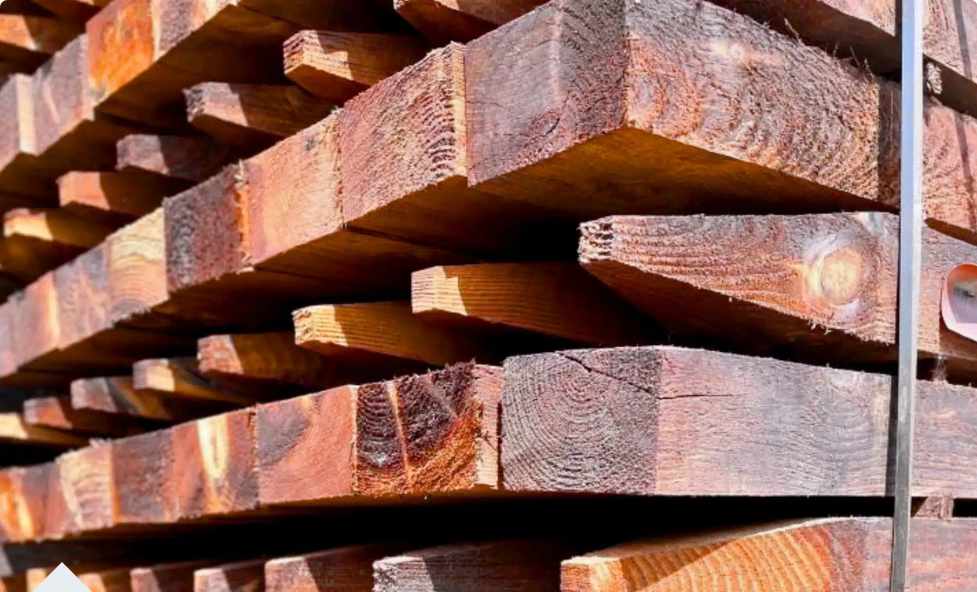 Densified samples of oak, poplar, pine, and cedar showed tensile strength increases of up to five times. The work of fracture, a key measure of toughness, also improved across all samples. The transformation realigns the internal cellulose nanofibers, enabling dense hydrogen bonding. This alignment boosts the material’s resistance to deformation and makes it behave more like a synthetic composite than a natural fiber. Even under high strain, the densified structure maintains its integrity and dissipates energy efficiently.
Superwood offers key advantages in real-world environments. Tests show that the material remains dimensionally stable under high humidity, a long-standing weakness of conventional timber products. Samples exposed to 95 percent relative humidity for over 120 hours expanded far less than untreated or pressed wood. Even after sustained exposure, Superwood retained most of its original mechanical performance.
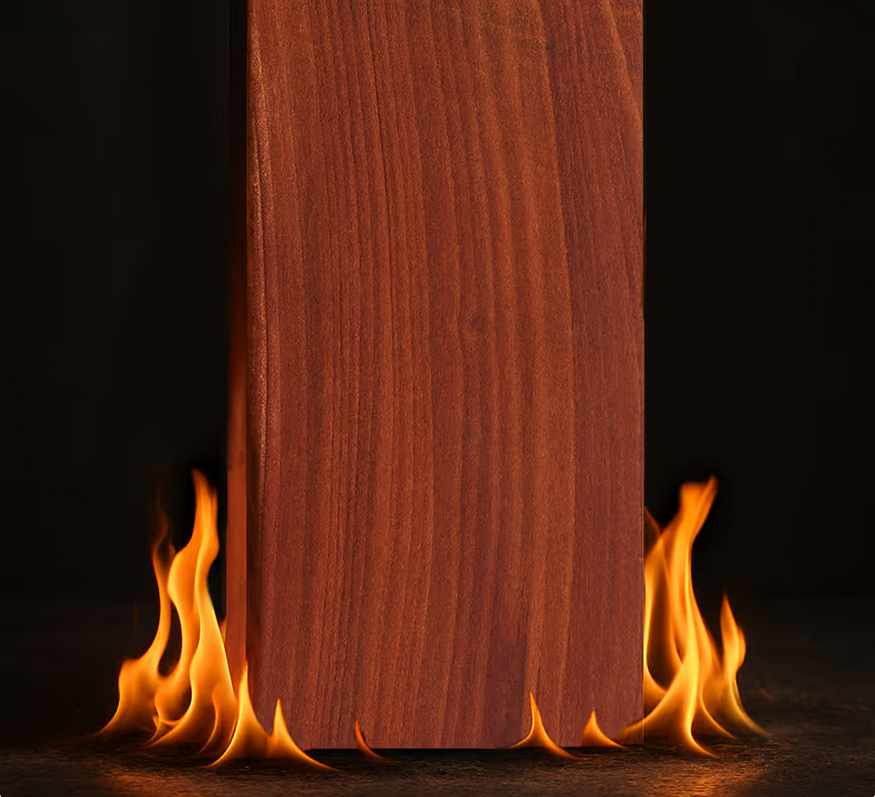 Thermal behavior is also improved. The product developed by InventWood, the startup commercializing the technology, carries a Class A fire rating. That rating places it in the highest category for flame resistance under standard building codes.
Because the process is effective across different wood types, manufacturers can source from local forests or use fast-growing species without compromising performance. This gives Superwood flexibility in supply chains that metals and synthetic composites often lack.
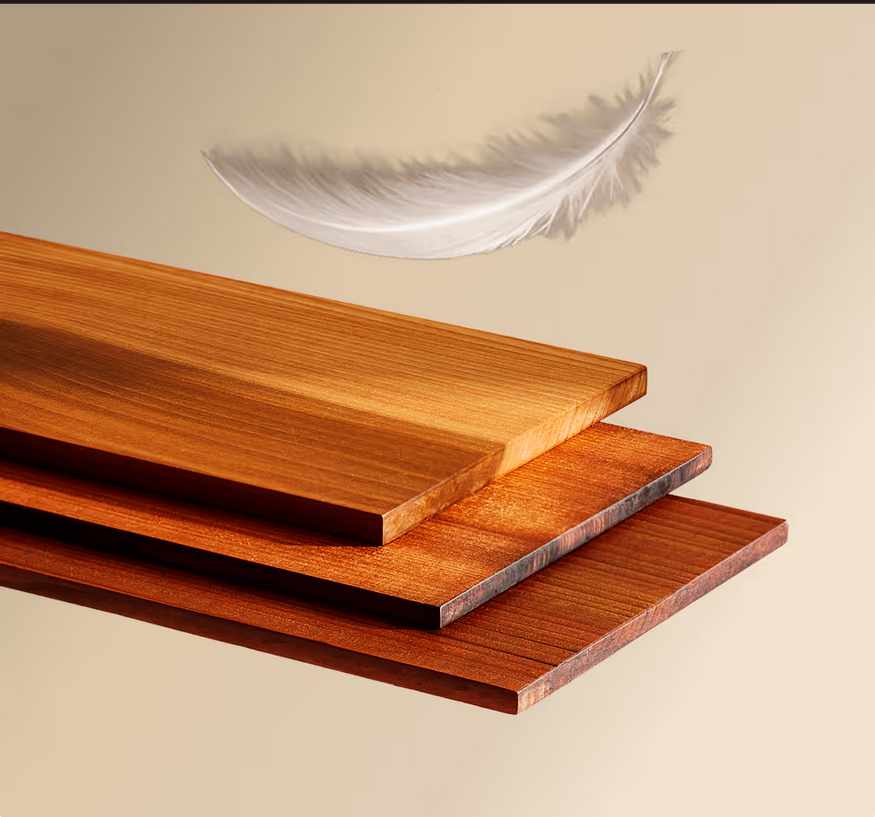 Production does not require the high-temperature furnaces used in steelmaking. The entire process operates at relatively low heat, significantly reducing energy demands. The research team estimated up to a 90 percent reduction in carbon emissions compared to steel production.
Superwood’s reliance on renewable biomass rather than mined ores adds resilience to geopolitical risks and commodity price spikes. In regions with established timber industries, it could offer a domestic source of high-performance building material without the logistical complexity of importing steel or synthetic composites.
Potential applications include lightweight cladding, vehicle paneling, prefabricated building modules, and protective structures. Its low weight and high toughness make it ideal for projects where structural performance must be balanced with mobility or carbon constraints.
You can read the original article at dailygalaxy.com
Let’s stop cutting down trees for building material. Let’s stop using chemical processing to ‘modify’ anything.