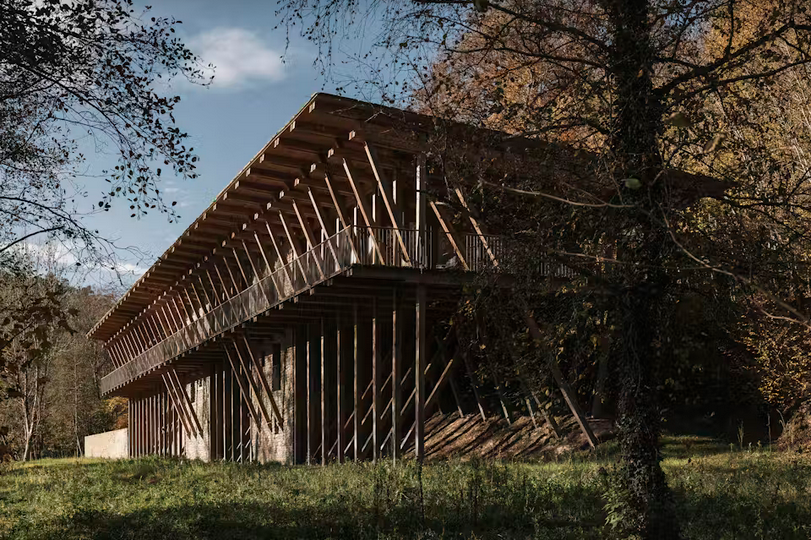
Woodstock is a self-sufficient, private house in Belgium, conceived as a vessel anchored along the riverbank.
 The project embodies the core principles of architecture as a form of transition within the construction culture towards a regenerative and post-carbon world.
 The architects say, “We believe systemic change in architecture must be learned through making. Woodstock became such a prototype: a long-term collaboration between architects, artisans, engineers, clients, family, architecture students, and local material producers, where design, research, and construction were developed as one intertwined process.”
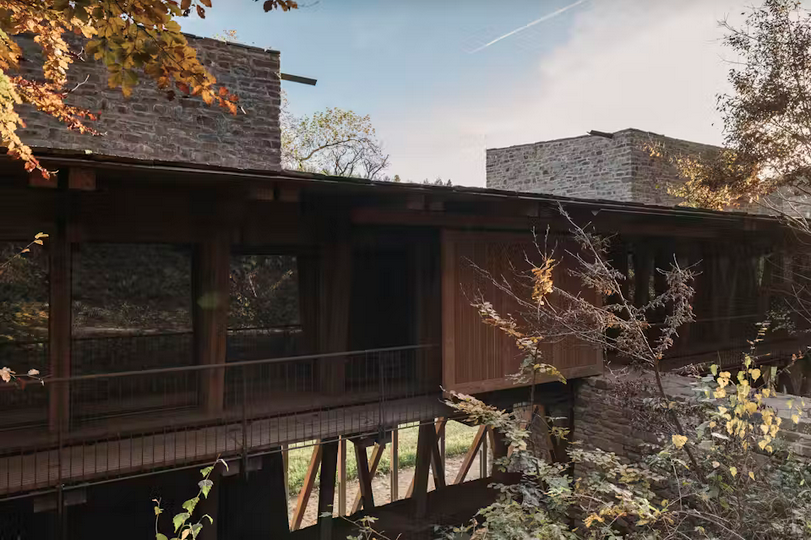 “Built entirely from local stone, timber, and earth, it follows the vernacular techniques of the region while redefining them through experimentation and shared knowledge.”
 “Every material was sourced, processed, and applied within a 19-mile radius, activating local supply chains and demonstrating how regenerative construction can become a cultural practice rather than an exception.”
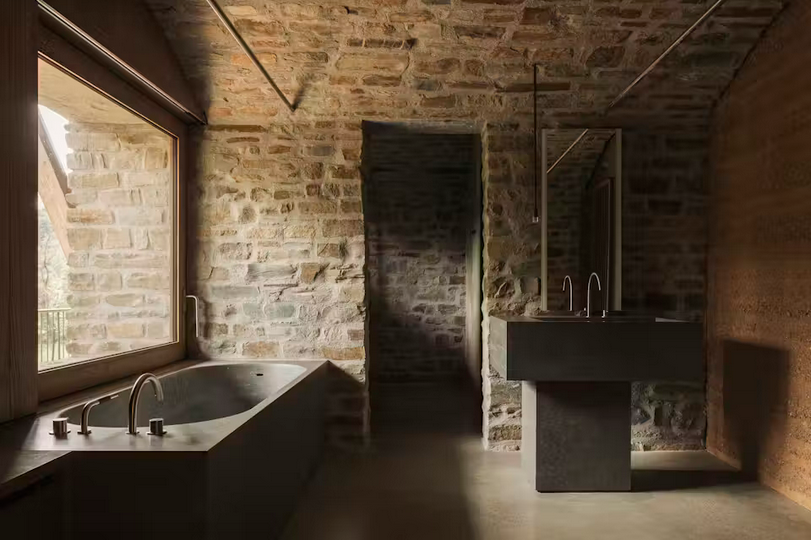
 “The natural stone volumes, laid in lime mortar and insulated with hemp, house the technical and intimate spaces of the dwelling.”
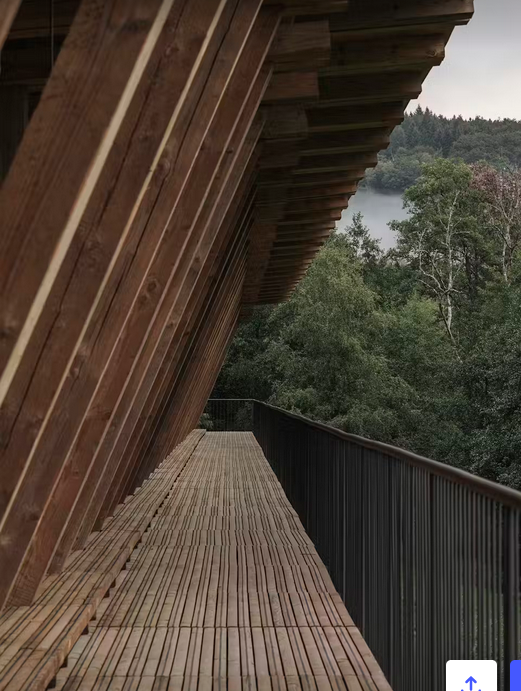 “Resting directly on the schist bedrock through compacted gravel layers, the structure avoids all use of concrete.”
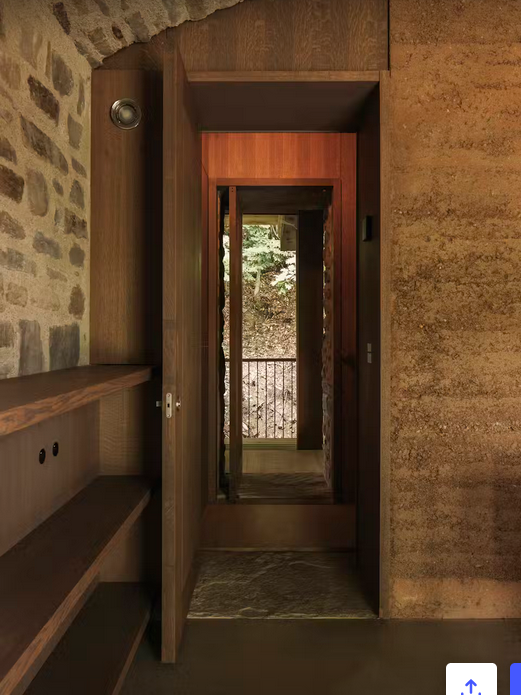 “Interiors are executed in rammed earth and clay plasters, tinted by the red earth of the Ardennes and composed of local soil and quarry residues. The three-story-high earthen walls moderate the interior climate while enhancing the tactile and sensory atmosphere of the home.”
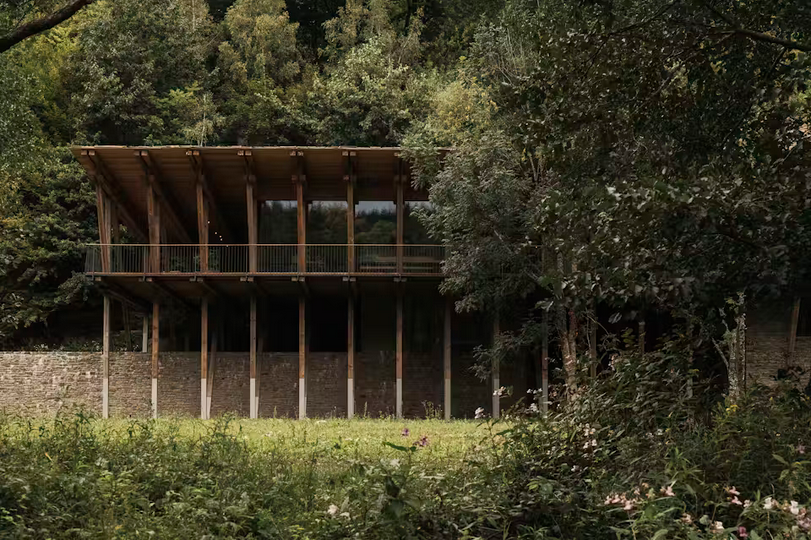
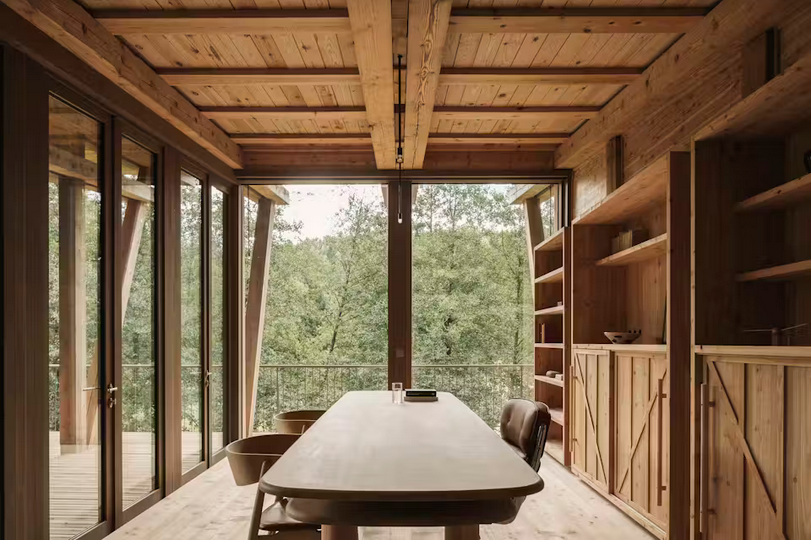 “The main house, a timber-framed structure made of untreated local Douglas fir, features a fully glazed living area on its upper floor, offering 360-degree views of the surrounding landscape while leaning gently against the forested hillside. Its operable façade embodies climate-adaptive architecture, seamlessly integrating living spaces with nature.”
 “The roofs of both the stone and timber structures are clad in thin stone slates, continuing the local craft tradition while anchoring the building against strong winds.”
 You can read the original article at www.dwell.com
Superb! Thank you for sharing!