
If you break open a chicken bone, you won’t find a solid mass of white material inside. Instead, you will see a complex, spongelike network of tiny struts and pillars, and a lot of empty space. It looks fragile, yet that internal structure allows a bird’s wing to withstand high winds while remaining light enough for flight. Nature rarely builds with solid blocks; it builds with porous patterns to maximize strength while minimizing weight.
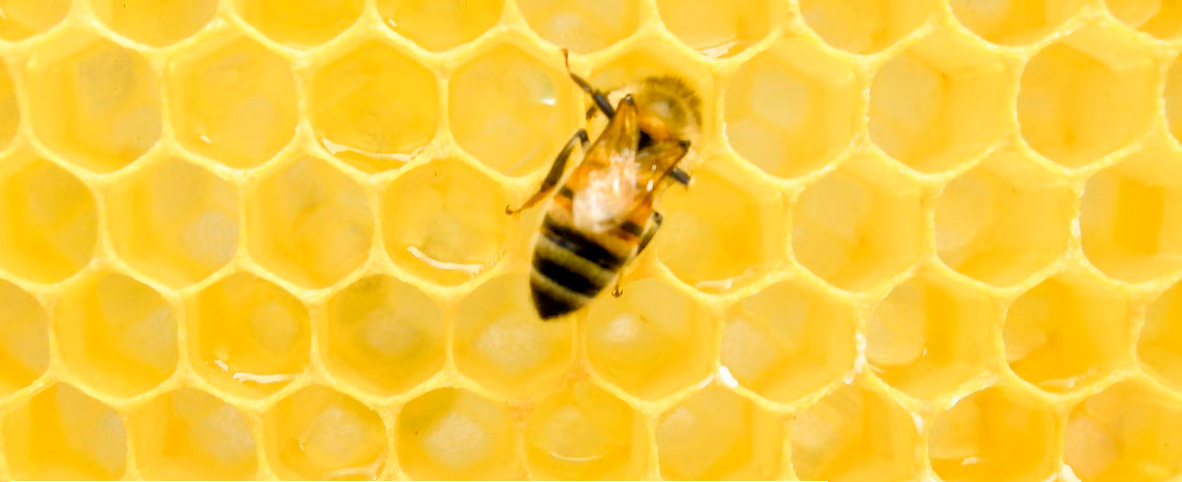
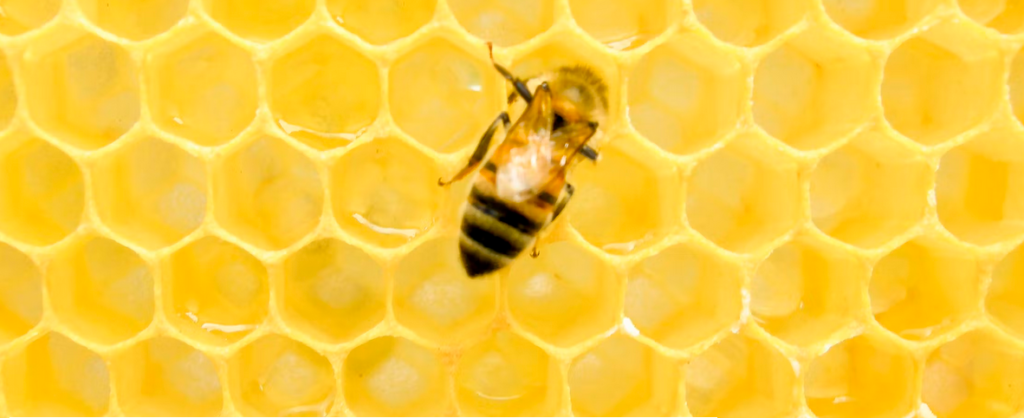 Human engineers have always envied this efficiency. You can see it in the hexagonal perfection of a honeycomb, which uses the least amount of wax to store the most honey, and in the internal spiraling architecture of seashells that resist crushing pressures.
Traditional manufacturing has usually been subtractive, meaning it starts with a heavy block of metal that is carved down, or formative, which entails pouring a plastic material into a mold. Neither method can easily create complex, spongelike interiors hidden inside a solid shell. It is only recently that 3D printing has made it possible for us to replicate them in the lab.
Instead of cutting away material, printers build objects layer by layer, depositing plastic or metal powder only exactly where it’s needed based on a digital file. This technology unlocked a new frontier in materials science focused on mesostructures, which are the internal architectural pattern, including the air and material hidden inside.
It’s the difference between a solid brick and the intricate iron latticework of the Eiffel Tower. Both are strong, but one uses vastly less material to achieve that strength because of how the empty space is arranged.
Modern bike helmets and football helmet liners are beginning to replace traditional foam padding with 3D-printed lattices. These tiny, repeating jungle gym structures are designed to crumple and rebound to absorb the energy more efficiently than solid materials, much like how the porous bone inside your own skull protects your brain.
Seashells are tough because they are built like a brick wall, with hard mineral blocks held together by a thin layer of stretchy glue. This pattern allows the hard bricks to slide past each other instead of snapping when put under pressure. The shell absorbs energy and stops cracks from spreading, which makes the final structure much tougher than a solid piece of the same material.
A wavy design can be very effective, especially when we fine-tune the thickness of the lines and the number of turns in the pattern. By finding these perfect combinations, we can design products that fail gradually and safely – much like the crumple zone on the front of a car. By understanding the mechanics of these structures, engineers can tailor them for specific jobs, making one area of a product stiff and another area flexible within a single continuous printed part.
Beyond performance, mimicking nature’s less-is-more approach is a significant win for sustainability. By “printing air” into the internal structure of a product, manufacturers can use significantly less raw material while maintaining the necessary strength. As industrial 3D printing becomes faster and cheaper, manufacturing will move further away from the solid-block era and closer to the elegant efficiency of the biological world. Nature has spent millions of years perfecting these blueprints through evolution – and engineers are finally learning how to read them.
You can read the original article at theconversation.com