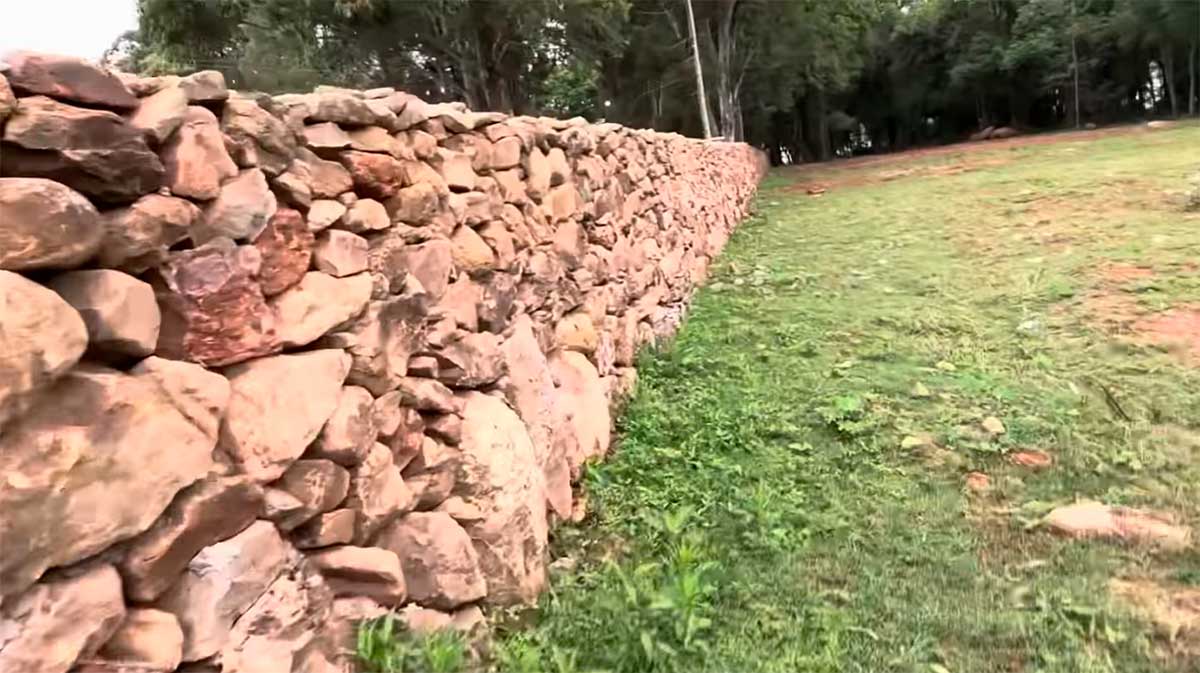
Mr. Giovane has enclosed an entire condominium in Brazil with a dry-stacked stone wall. He has worked with this method for decades. It took him about six months of work, but he stayed on site for almost a year because of the rainy weather. These walls are made without the use of any binding material, which is very common in that region.
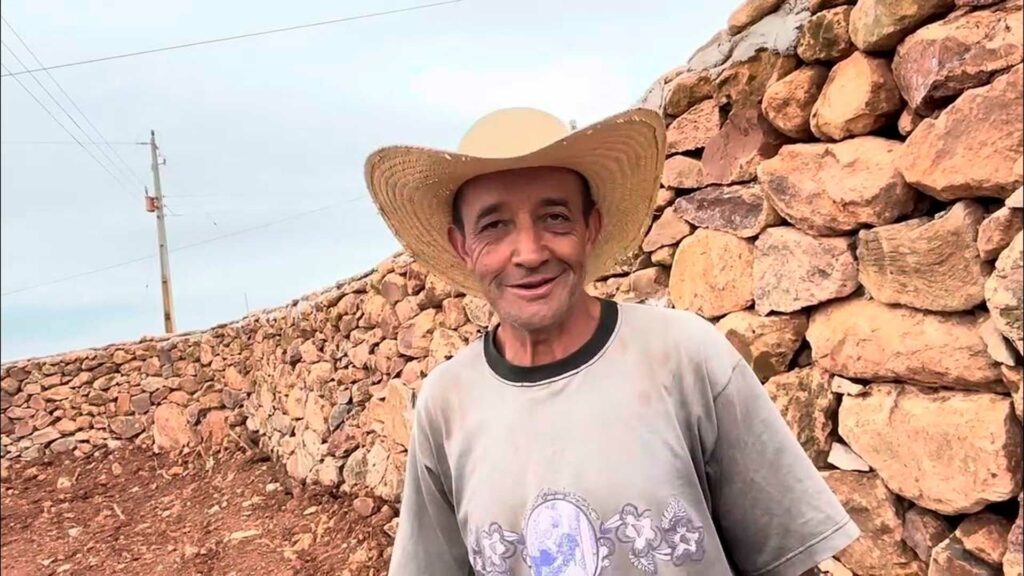 Mr. Giovane says he learned the trade within his family, passing the technique on to younger people who work with him. Not everyone wants to learn because it’s hard and repetitive work. The 65 year old stonemason claims that he remains active, without severe back pain, and attributes this to practice and the correct way of lifting and fitting the stones, reducing unnecessary effort.
Studies on stone walls describe the shape as having a broad base and a smaller top, a design conceived to support the weight and securely lock the assembly in place. The process resembles a jigsaw puzzle. Some stones don’t “obey” the cut and can break irregularly, which changes the fit and requires constant adaptation.
The assembly logic is simple to understand, but difficult to execute well. The wall is formed with two faces of selected and interlocked stones, while the core receives smaller infill stones to eliminate voids and increase interlocking.
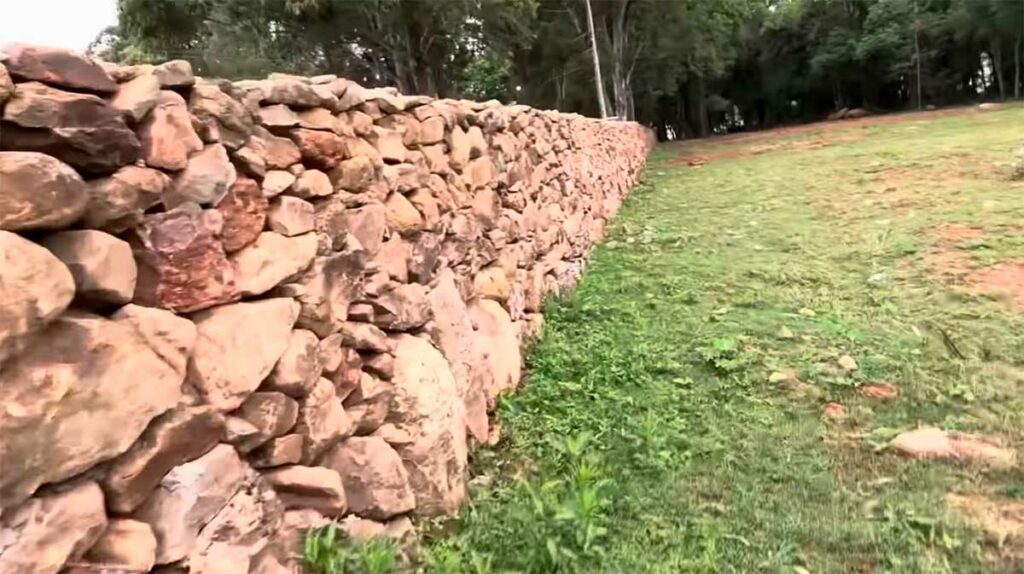 Stability stems from the weight and friction between the stones, and how the permeability of the structure promotes natural drainage and reduces water pressure behind it.
Stone walls in this region are used as fencing, boundary markers, and protection, and many were built with rock available in the field itself.
Outside of Brazil, dry stone construction is treated as a social practice and a means of transmitting knowledge between generations, precisely because it depends on community, learning, and continuity. When the craft weakens, what is lost is not just a wall, but a way of building and interpreting the territory.
You can watch a video at www.youtube.com
You can read the original article at clickpetroleoegas.com