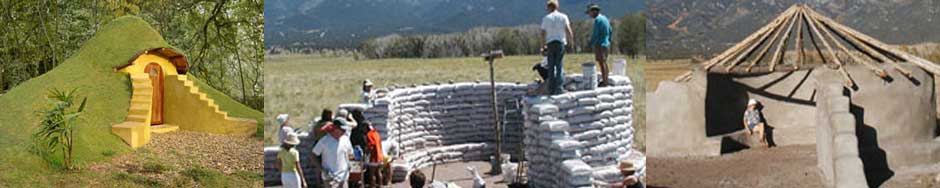
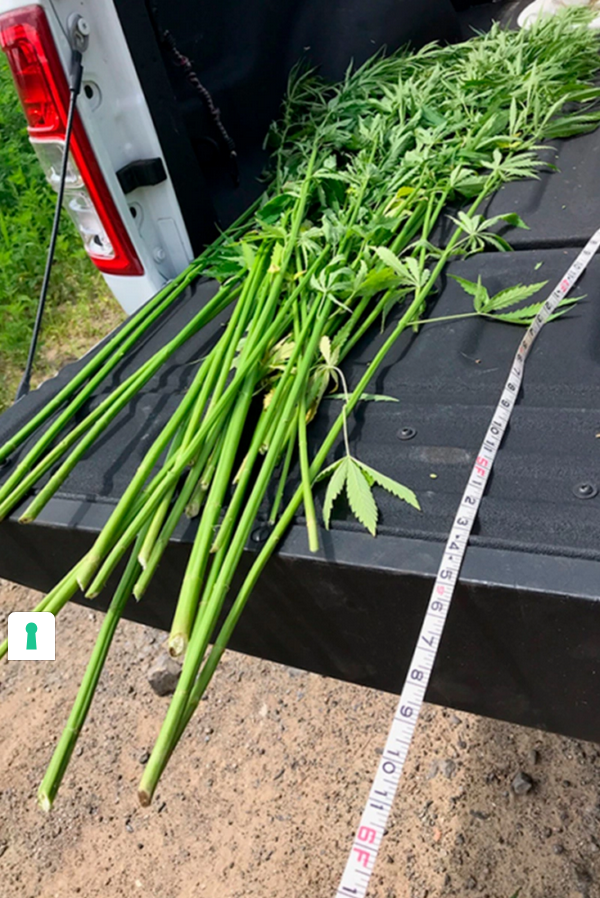
 Hempcrete is made from hemp hurd, lime, and water. The hemp stalk consists of two primary components: the outer fiber, commonly used in textiles, and the inner core, known as the hurd.
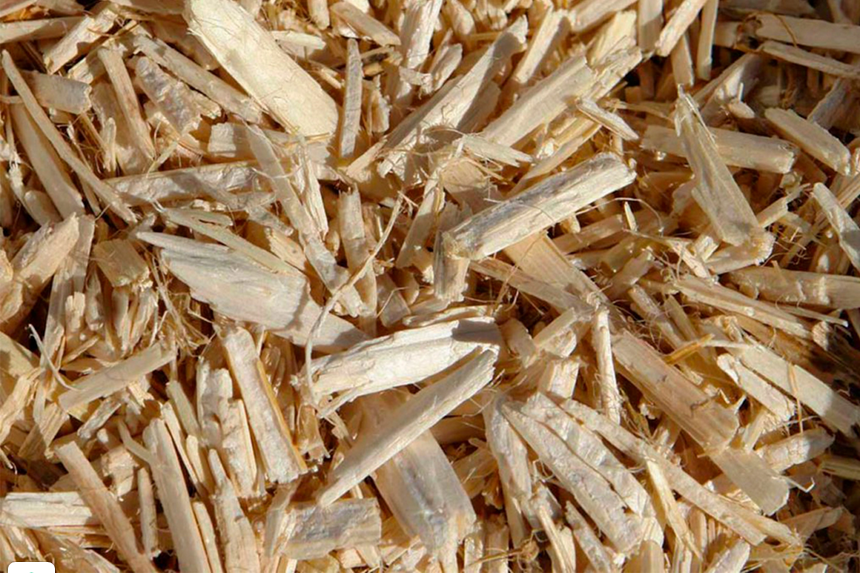 Traditionally considered agricultural waste, the hurd has a woody texture and serves as the main ingredient in hempcrete. Lime acts as a natural binder, holding the mixture together, creating an effective insulating material.
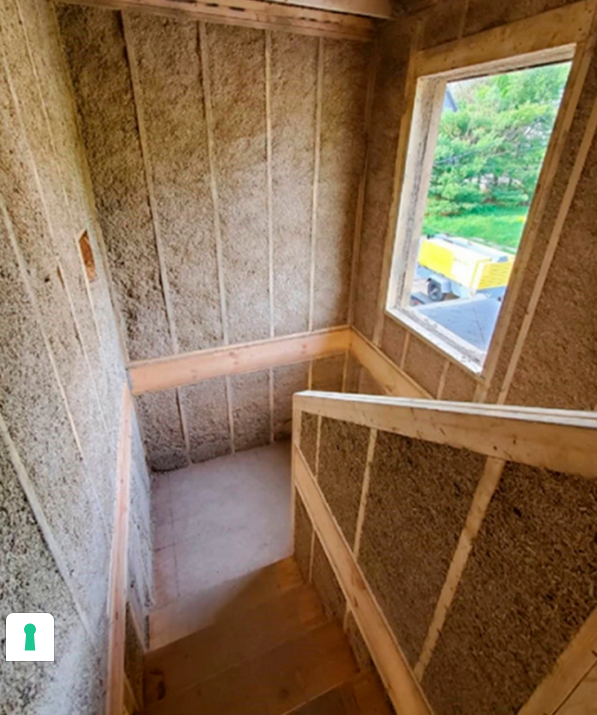 According to the National Hemp Association, hempcrete is not structural on its own unless used in prefabricated blocks. The most common applications involve either retrofitting hempcrete insulation into existing buildings or using it in new construction by packing it into a wooden frame. In this approach, the timber frame provides structural support while the hempcrete fills the voids in the walls. Whether applied as insulation or as prefabricated blocks, the material itself remains essentially the same.
It can regulate temperature and humidity, reducing fossil fuel inputs for heating and cooling. It’s a great insulator, but at the same time it’s breathable, which results in superior indoor air quality. Hempcrete allows air movement while maintaining thermal efficiency and is naturally resistant to mold, mildew, and pests.
Hempcrete is approximately eight times lighter than traditional concrete, which leads to further environmental advantages. Its reduced weight lowers transportation energy demands and emissions. In addition, construction using hempcrete often eliminates the need for heavy machinery and large-scale lifting equipment, further reducing pollution during the building process.
One of hempcrete’s most significant benefits is its ability to sequester carbon dioxide. Hemp absorbs CO₂ at multiple stages of its lifecycle. One hectare of industrial hemp can sequester approximately 15 tons of carbon dioxide, and hempcrete continues to absorb CO₂ for up to 100 years after installation. As a result, hempcrete structures can be carbon neutral or even carbon negative over time.
The main environmental drawback of hempcrete lies in the extraction and processing of lime, the binding agent. However, studies show that the carbon sequestration benefits of hempcrete far exceed the emissions generated during binder production, resulting in an overall positive environmental balance.
A mortar bridge in France built in the 6th century using hemp still stands today. Despite these ancient origins, modern research and development of hempcrete is relatively recent. Although hemp was federally legalized in the United States in 2018, the industry is still rebuilding the infrastructure needed for widespread adoption.
Another major barrier has been the lack of standardized building codes, but progress is underway. In 2022, ASTM International released the first standard for hempcrete insulation, and in 2023 the International Code Council approved its inclusion in the 2024 International Residential Code.
Using prefabricated hempcrete blocks reduces construction time since the blocks arrive fully cured, but transportation costs are higher due to their weight. Onsite installation lowers transport emissions but requires extended curing time before exterior cladding can be applied. Current research focuses on prefabricated panels rather than blocks to improve efficiency.
Hemp’s versatility makes it suitable for multiple industries, but scaling cultivation remains a challenge. Given the government subsidies already supporting corn production, similar policies could accelerate hemp’s adoption.
You can read the original article at lampoonmagazine.com