Located on a ridge at an altitude of 3,000 meters (9,843 feet) in China, This travel hotel transformed eight existing wooden cabins into a small-scale resort.
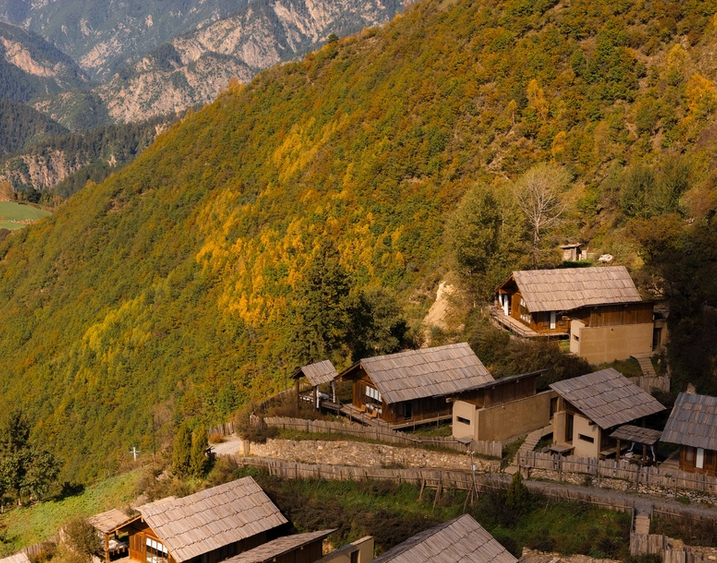 The site, defined by its proximity to clouds, dense fir forests, and rocky terrain, focuses on reusing aged timber and preserving structural traces.
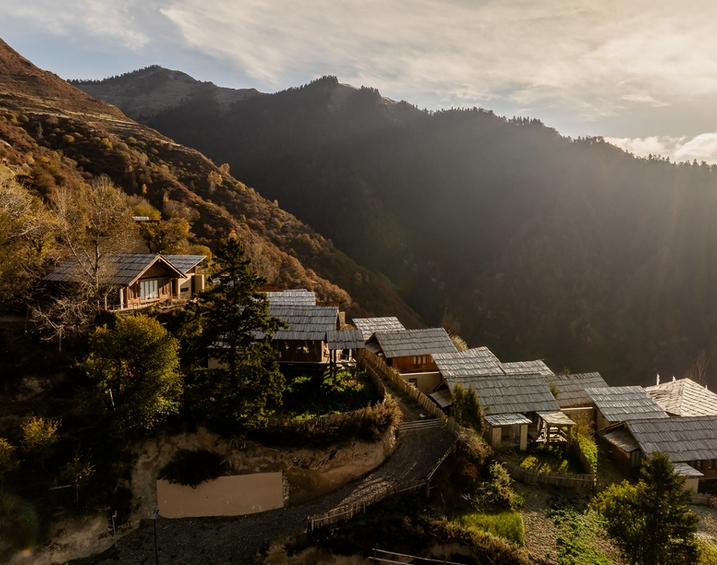 The project consists of 12 detached guest units that are organized into four clusters, where functions such as living rooms, bedrooms, soaking pools, and tea pavilions are distributed across separate spaces.
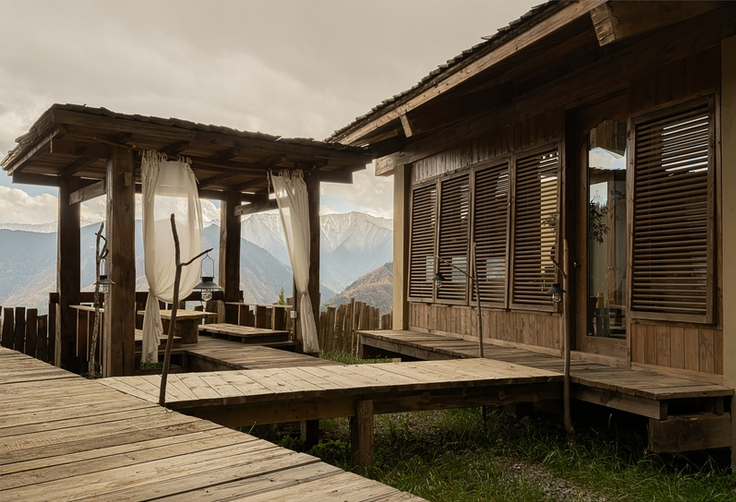 Existing wood elements are retained and reintroduced when new structures follow similar construction logic.
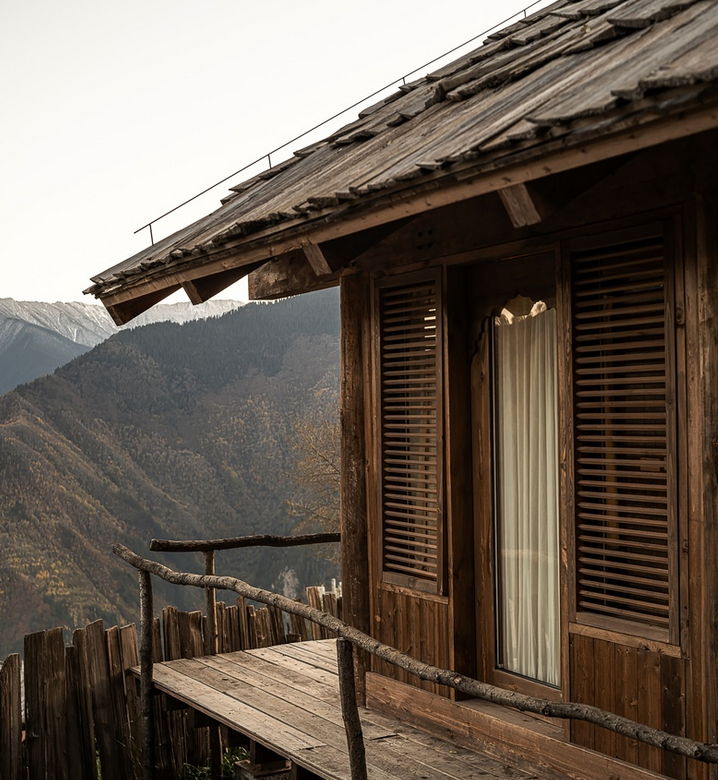 The architectural references Tibetan vernacular dwellings through the use of wooden shingles and tiled roofs, ensuring visual and material continuity with the region. The emphasis on untreated or minimally processed materials allows surface textures, aging, and environmental exposure to remain visible.
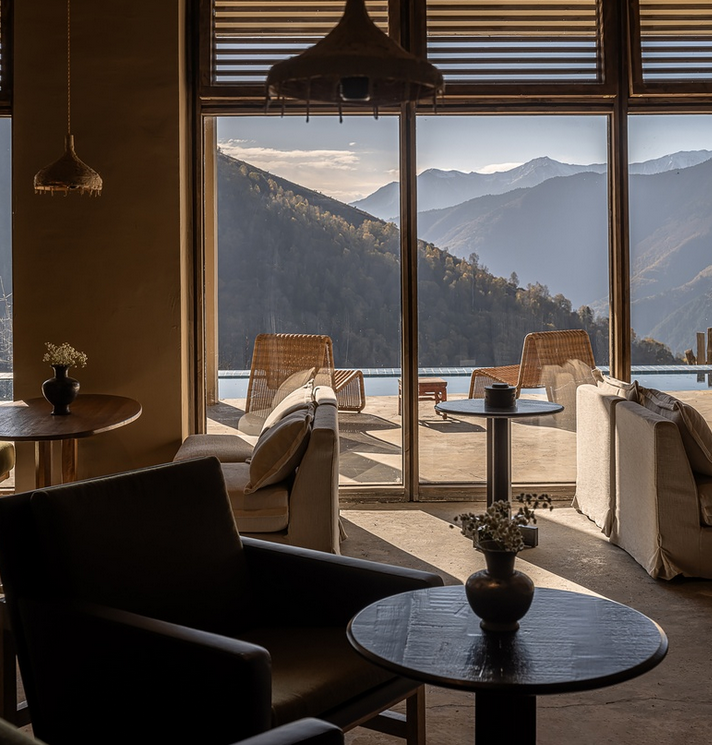 Openings and transparent surfaces are positioned to frame views of the surrounding landscape. Large glazed sections allow daylight to penetrate deep into the spaces, while also enabling continuous observation of changing weather conditions, from cloud movement to night skies.
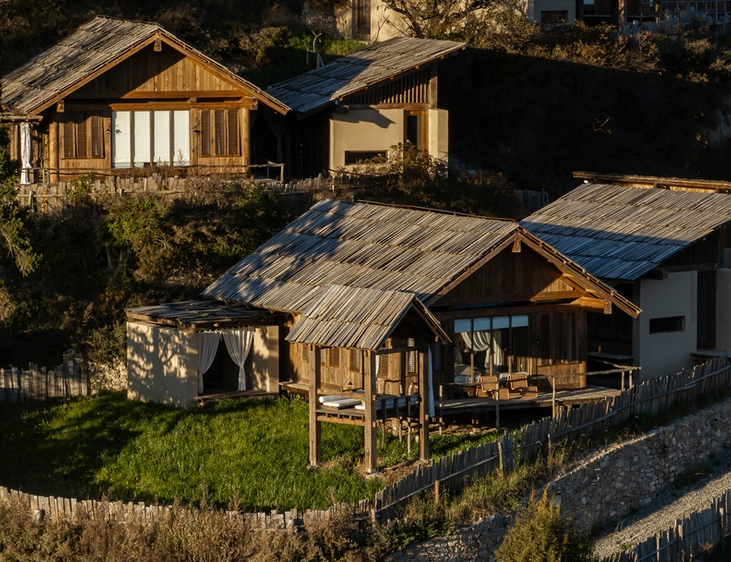 Outdoor areas are oriented to support activities such as stargazing and direct engagement with seasonal variations. The integration of water elements is addressed through timber-lined soaking pools.
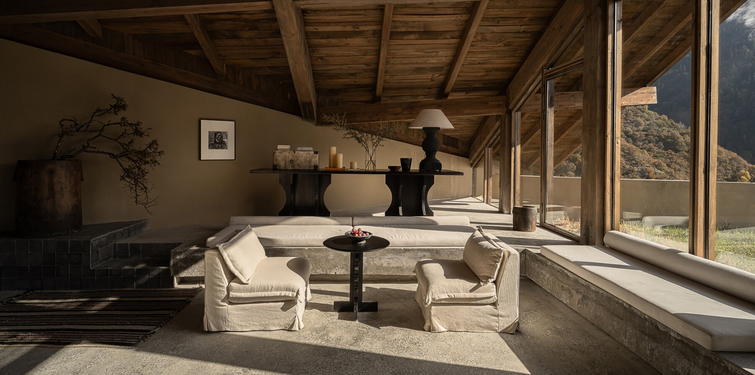 The central lobby is designed as a collective interior space defined by aged wooden panels lining the ceiling, while textured plaster walls introduce a contrasting surface.
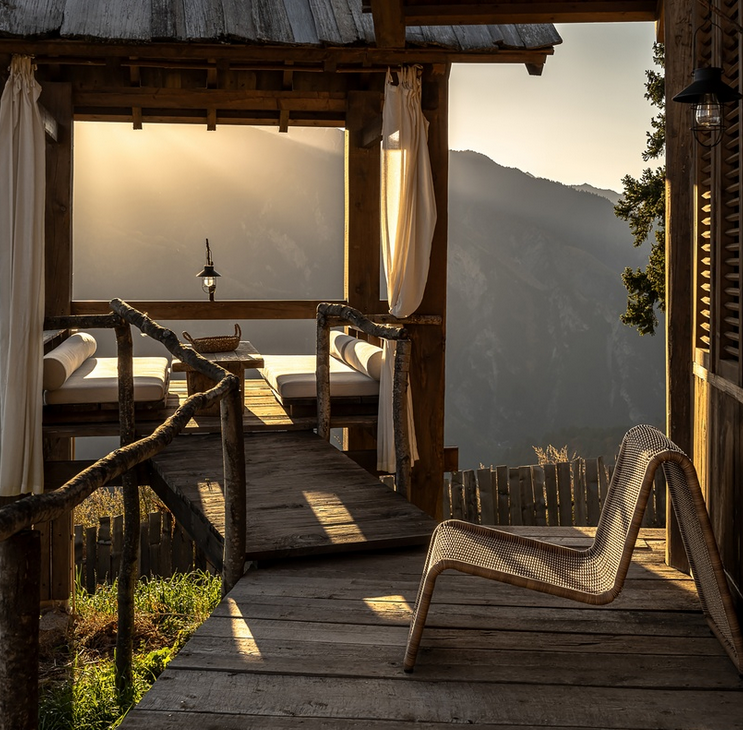 Existing cabins are retained where possible, and new structures are inserted with consideration for topography and vegetation.
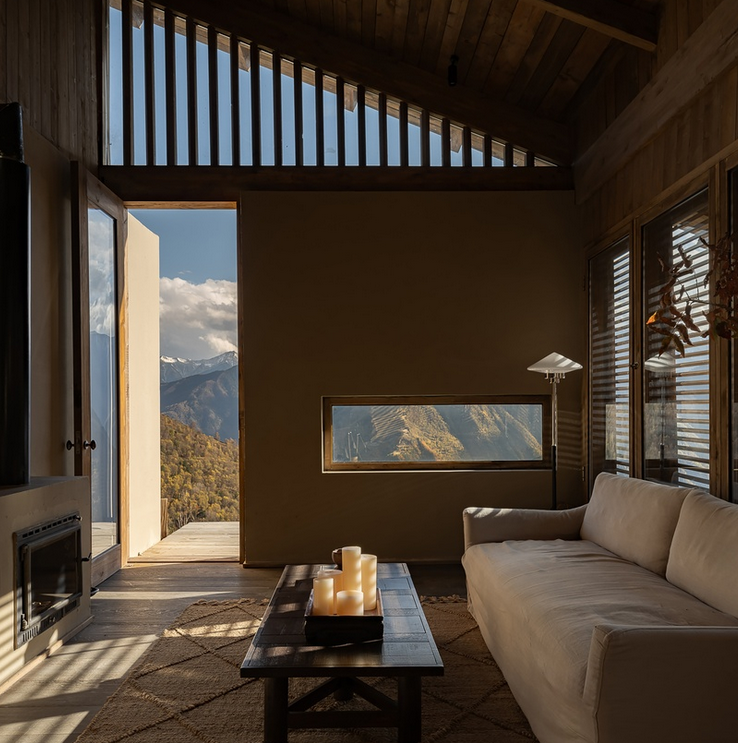 This project avoids large-scale ground modification, allowing the built environment to remain embedded within the existing landscape.
You can read the original article at www.designboom.com