Tony and Maureen Papas bought a collection of trulli — traditional dry-stone huts with distinct conical roofs commonly found in that area of Italy dating back to the 1600s. They discovered theirs were built by olive harvesters who needed somewhere to sleep.
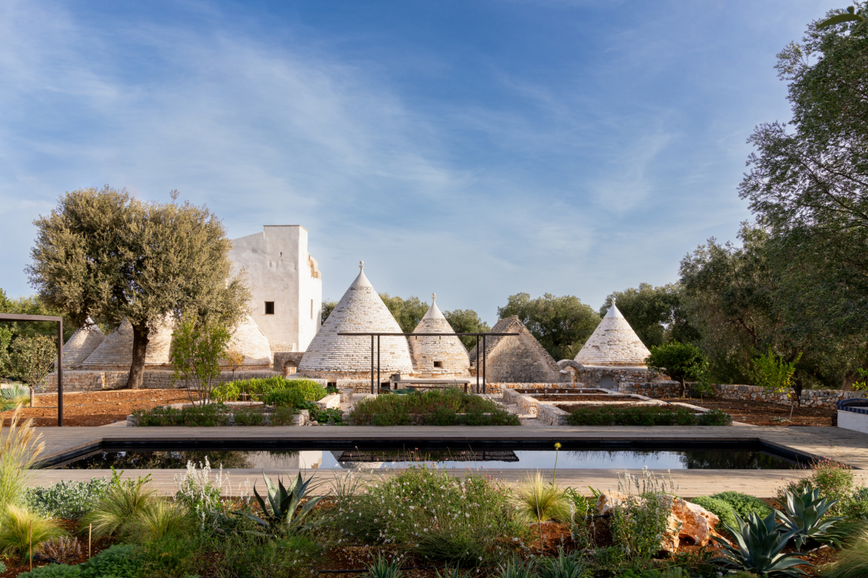 Even though some of the buildings were dilapidated, the geometry of the structures was special. And these particular trulli were large enough to be carved out to create well-proportioned living spaces.
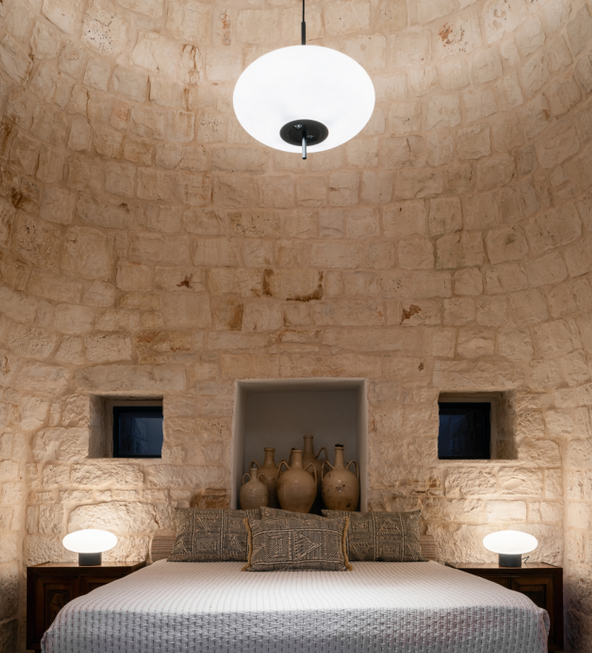 They turned to some architect friends, who are experts in rejuvenating trulli. “What we didn’t want to do was straighten everything up; we wanted to work with the shape of their walls,” Tony explains. They raised the huts’ floor levels and installed underfloor heating to help keep the walls warm during winter and combat humidity.
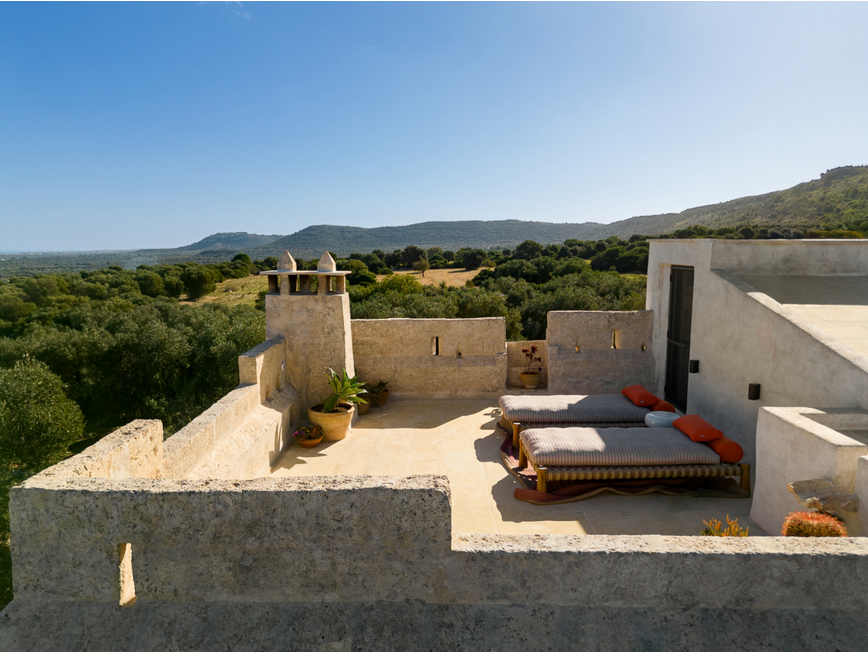
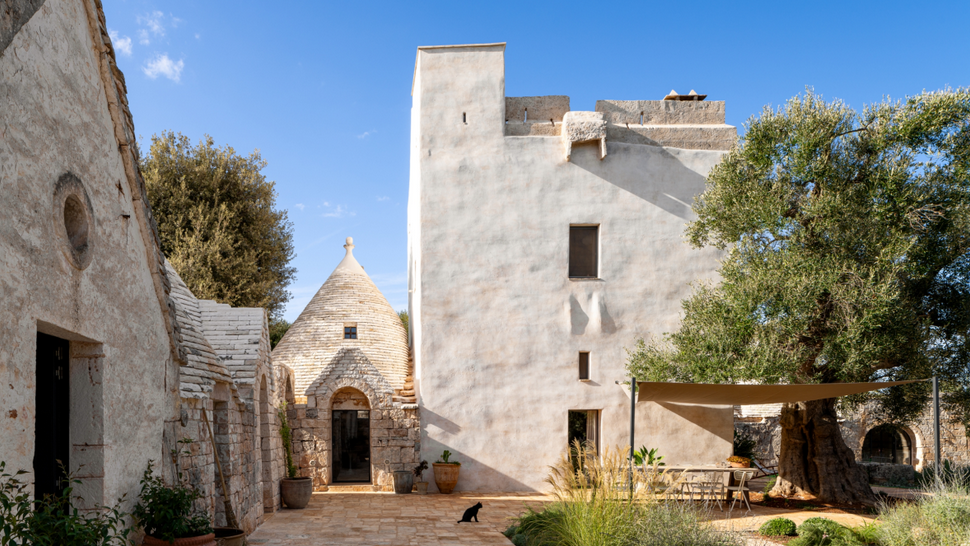 At the corner of the L-shaped property is a tower. On one side are six trulli and a lamia (a traditional stone building with a flat roof) where the couple have installed a bedroom, bathroom, office and living room.
 Three trulli joined together to form the kitchen and dining area, and the tower houses their bedroom, bathroom, living room and a roof terrace.
 On the other side of the property, two further trulli make a guest room with an outdoor bathroom, besides which is an old chapel.
 You can read the original article at www.thetimes.com