This tiny apartment has dozens of interesting space-saving features that could be used in any small home or tiny house. Note the outdoor clothes drying rack, accordian style screen doors, storage features, retractable range hood and laundry in the hallway. The glass bathroom door and clerestory windows with screens add extra light and cross ventilation. There’s even a water saving rain shower head that swivels out of the way. Not too many tiny houses/apartments have a fish pond and outdoor BBQ on the patio. Apparently the $300 also includes almost all utilities.
Kelly Hart
State of the Art, High Performance Tiny House Construction
Bryce documents the construction of his tiny house from start to finish. The entire build was done in only 21 days! It is built to the highest standard from the trailer on up. It has to be extremely strong, stable and weather resistant because he will be towing the house all over North America.
Biochar Plaster and Biochar Bricks
Biochar, a highly porous material produced from plant waste, is mostly used in agriculture as a soil conditioner, in livestock farming as a feed supplement, and in metalworking as a reducing agent. The latest developments at the Ithaka Institute are now focusing on its use as a building material.
Bringing Earthbags to the People – A New, Democratic Approach to Sustainable Building
by Kateryna Zemskova and Nathan Belofsky
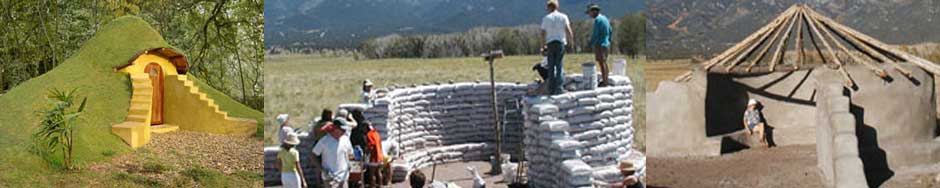
Earthbag technology builds safe, appealing, and cost-effective structures out of ordinary soil. Stronger, cheaper, and less harmful to the environment than conventional building techniques like brick and cement, Earthbag technology is generally considered the most promising of sustainable building techniques. But despite widespread support among environmental groups and eco-builders, this method is shunned by governments and remains virtually unknown to everyday building professionals and the public.
Utopian Micro-home Village in Berlin
Renowned for his one-square-meter house, German architect Van Bo Le-Mentzel continued his tiny house experimentation by launching a utopian village on the grounds of Berlin’s Bauhaus Archive. With permission from the design museum to utilize temporarily their garden, residents can park, and live in, homes here no bigger than 10 square meters, as long as they provide a bed for “a person in need” (e.g. refugees, homeless).
Regen Villages
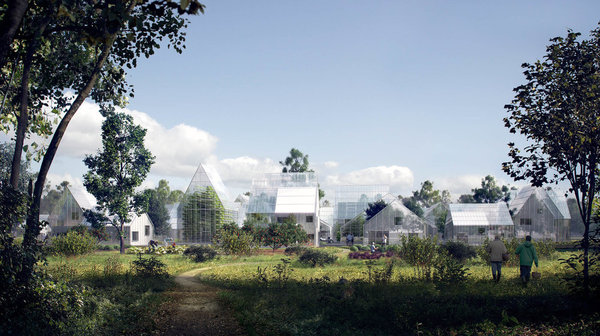
Desirable off-grid capable neighborhoods comprised of power positive homes, renewable energy, water management, and waste-to-resource systems that are based upon on-going resiliency research – for thriving families and reduced burdens on local and national governments.