When architect Neha Ballal floated the idea of moving to the mountains and building a mud home, her decision was met with skepticism: “Everyone’s doing the opposite. Why would you retreat to the place everyone’s leaving behind?” But today, when her home gets visitors from the city (it is listed on Airbnb) it makes for a peaceful escape from city hustle, and locals — those looking to transition to cement homes — are realizing the potential of sticking to sustainable architectural practices, which are more enduring in the long run.
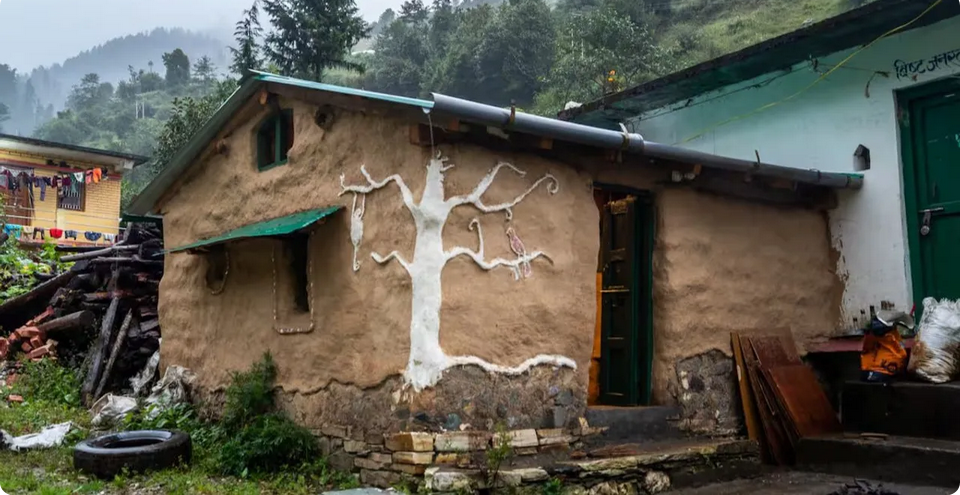 Perched on the shoulders of the mountains, the home melts into the landscape, as if it were always a part of it. Neha insists that the project, although complete, is ever-evolving. “The beauty about a mud home is that it grows with you,” she says.
 Referencing her century-old ancestral home, Neha says that too performs well in extreme temperatures, simply because of its laterite and lime plaster architecture. “The minute you step in, you feel a marked difference in the temperature. The structure is just more breathable. Mud makes the home feel alive.”
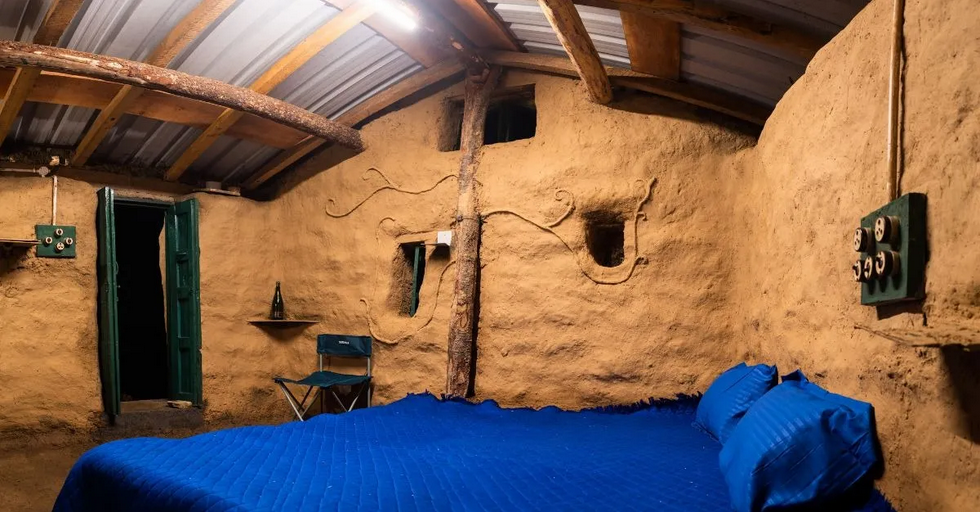 Aside from being good from an architectural standpoint, mud lends a quiet color and character to the structure. While in the cottage, the thrum of the outside world melts away. You feel you are being cocooned within the womb of ecology.
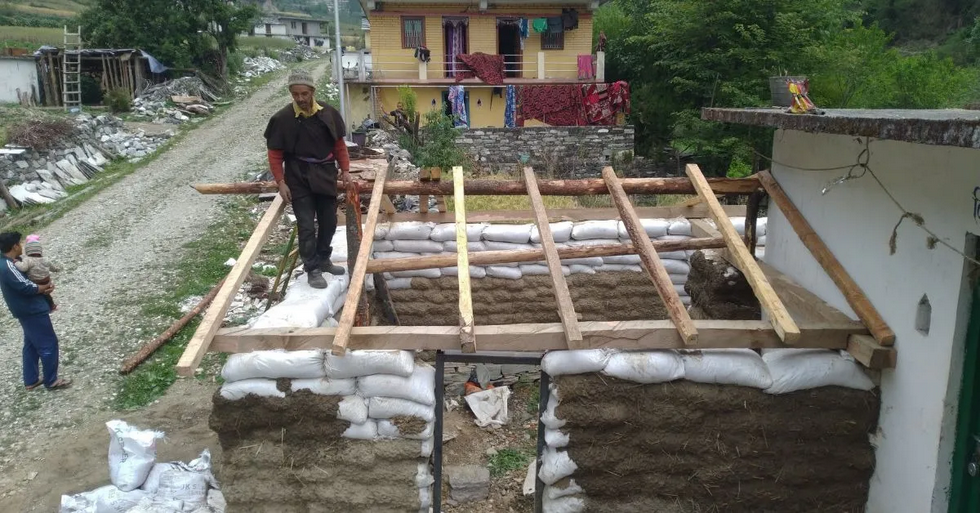 Neha says the materials for her new home were sourced locally. “We used a technique called earthbag construction, where we filled empty cement sacks with soil to create walls.”
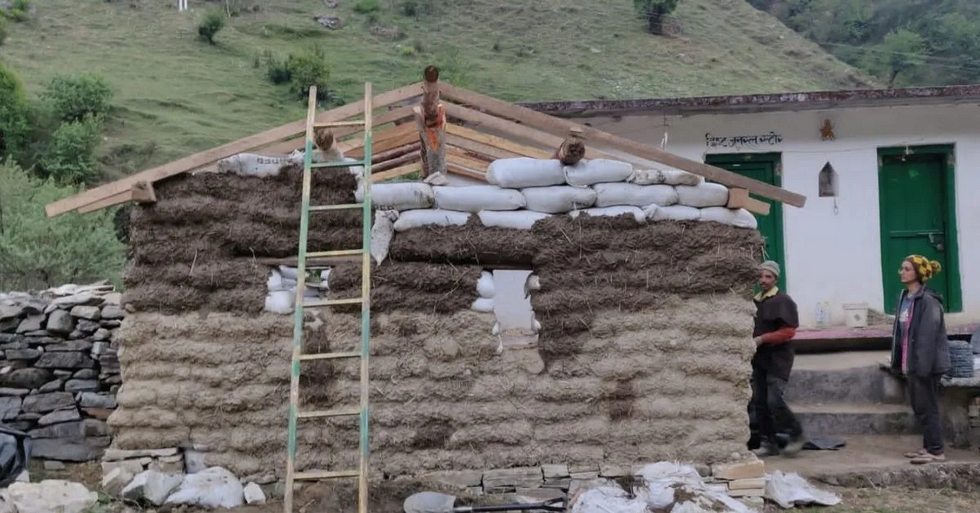 Neha says, “If you compare mud walls to brick walls, the former are thicker. They are at least a foot wide. Filling soil into a cement bag, which is then sealed, helps provide this thickness. When stacked, these cement bags form a thick wall. Working with these bags makes it easier than the traditional way of building a thick mud wall, which requires much more labor.”
Neha was joined by the people of the village, and even children who were excited to lend a hand, to plaster the earth bags with cob. “The mud and clay for the cob mix were sourced locally, and the sand was collected from the stream behind the house.
 She sees the place as a safe little abode high up in the mountains with nothing more than birdsong and nature to keep you company. The cottage features a comfortable king-sized bed, an attached toilet with hot water, and a kitchenette equipped with an induction stove and kettle.
You can read the original article at thebetterindia.com