Despite contributing nearly 1 percent to Nepal’s GDP, bamboo remains largely under-utilized. Traditional uses, including scaffolding, weaving, handicrafts and household items, dominate the current market.
 Bamboo’s optimal use depends on species and maturity, where shoots under three weeks are best for consumption, three weeks to one year for weaving, one to three years for small sticks and laminates and four to five years for construction and furniture. Beyond five years, structural strength declines, making timely harvesting critical. Proper clump management, pruning and barrier installation are essential to maintain quality and productivity.
Integrating bamboo into disaster prevention and management, agroforestry, tourism, housing, renewable energy and green enterprises can boost its application and utilization and stimulate market development.
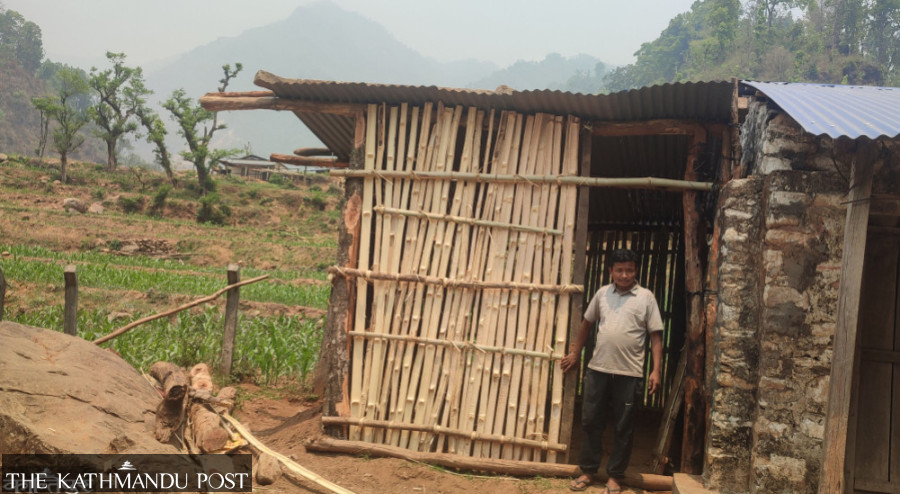
The government has recently introduced the National Building Guidelines for Bamboo-Based House Construction, but provincial and municipal governments have not yet developed uniform codes or procedural guidelines for approving bamboo structures. As a result, bamboo houses often fail to receive formal recognition as ‘permanent structures’, making it difficult to obtain building permits, insurance coverage, or banking credit for bamboo-based housing. Also, there are widespread misconceptions about bamboo’s lifespan, with many still believing that bamboo houses last only three to five years.
Unlike Nepal, several African countries have already integrated bamboo into their carbon credit systems, showing what is possible with proper policy support. Ethiopia, Kenya, Ghana and Uganda have developed bamboo plantations specifically designed for carbon sequestration and land restoration. These countries have recognized bamboo’s rapid growth, its ability to rehabilitate degraded land and its potential to replace carbon-intensive materials.
Integrating bamboo into mainstream housing, agroforestry and infrastructure projects not only strengthens rural livelihoods but also supports gender inclusion by creating income opportunities for women in plantation, handicrafts making, household goods production and treatment center operations.
High-quality bamboo products, high-end model houses, media campaigns and urban pilot projects can help change public perception of bamboo as ‘poor man’s timber’ and demonstrate that treated bamboo is both durable and modern.
You can read the original article at kathmandupost.com