Casa Las Tupas is located in northern Chile, an area defined by its arid climate, seasonal winds, and a landscape marked by ravines. The owner wanted to focus on low environmental impact, functional simplicity, and integration with the surrounding terrain.
 The house has a north–south axis which maximizes passive lighting and ventilation, with the east and west facades opening to key views and sunlight.
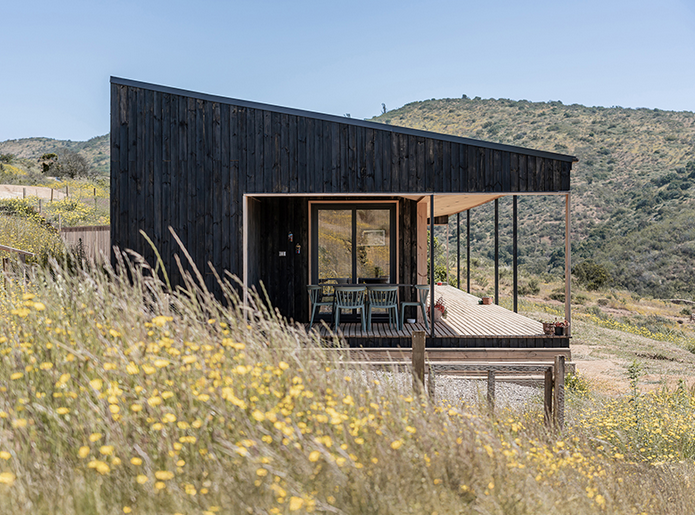 A pitched roof descends toward the west, elevating the eastern facade to increase solar exposure while managing heat gain.
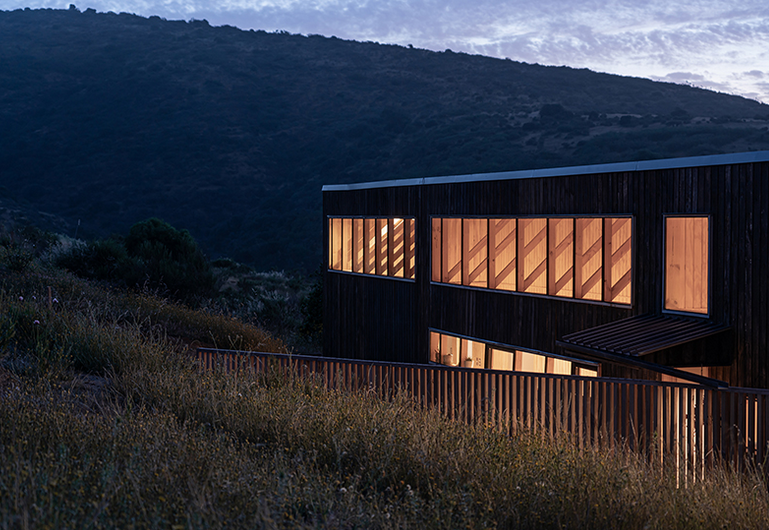
 A linear skylight is incorporated along the eastern facade to introduce diffuse natural light, while carefully placed windows frame specific views of the landscape.
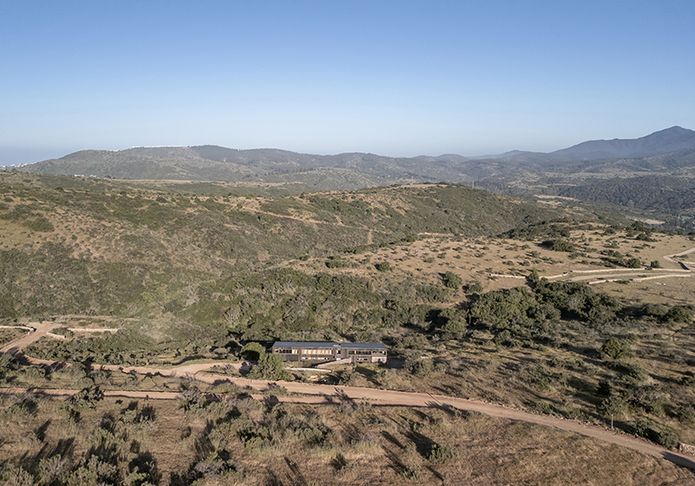 The entrance is approached via a narrow wooden bridge.
 Spaces transition from shared to private zones, beginning with an open-plan kitchen, dining, and living area.
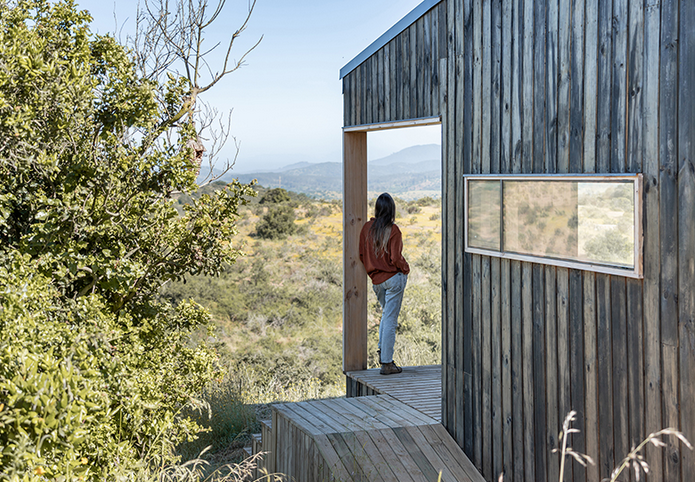 A small terrace, designed for outdoor cooking or gatherings, extends this common space.
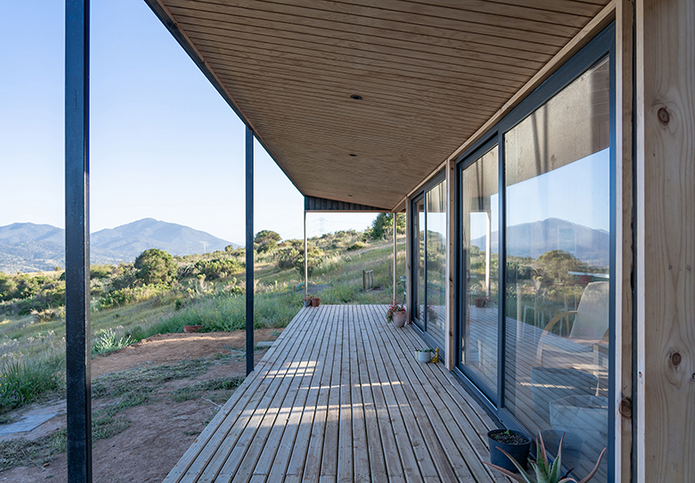 To the west, a large covered terrace runs along the facade, protected by an overhanging eave with variable height, providing shade while preserving outward views toward the Las Tupas ravine.
 Materials were selected for their cost-efficiency and environmental suitability. The use of basic structural systems, untreated finishes, and an emphasis on durability supports the house’s low-maintenance and resource-conscious approach.
 You can read the original article at www.designboom.com