Wishing Well on Jersey Island

This striking Wishing Well house, located on the coastline of the small island of Jersey, UK, has walls made of stones and rammed-earth. ‘Many of our projects explore materials that respond directly to their site context,’ say the architects. ‘In this instance, the coastal setting inspired the exploration of local granite, sand and earth as … Read more

Restoring a Mud Home in Saudi Arabia

The ancient Arabian city of AlUla had been uninhabited since the 1980s, abandoned when a new town center was established nearby. Here, hundreds of mud-brick houses, huddled around a tenth-century fortress. The old town is now being restored as a cultural district. A void, formed from the remnants of two former houses, was known locally … Read more

How Can Microalgae Contribute to Sustainable Architecture?

Microalgae‑based architecture is gaining attention as a sustainable design solution for a variety of uses, and the concept could soon become a reality in Western Australia. Amin Mirabbasi, a PhD student at Murdoch University’s Algae Innovation Hub in Australia, has spent three years designing microalgae filled photobioreactors, which can be incorporated into a variety of … Read more

An 18,000 Year Old Dwelling Made From Mammoth Bones

The archeological site of Mezhyrich, located in central Ukraine, is home to four remarkable mammoth bone structures. Ranging from 12 to 24 m2   (130 to 260 sf), they were intricately constructed using hundreds of mammoth bones and tusks. An analysis of small mammal remains recovered directly from the archaeological layers indicates that at least one … Read more

Pros and Cons of Cob Construction

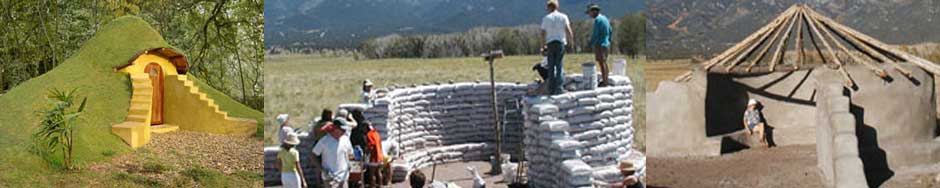
Cob building is a method in which clay, sand, and plant fibers (usually straw) are mixed manually and molded directly in place. Unlike bricks, blocks, or concrete walls, cob doesn’t use forms, doesn’t require molding and allows for the creation of curved walls, niches, arches, built-in benches, round windows, and sculpted details. There are cob … Read more

Storehouses for Life

Barns provide a multi-purpose system of storage built to accommodate living things. Barns are houses for activities that involve humans, but are not built exclusively for them. Barns are storehouses that operate as supply infrastructure for crops. The annual cycle of grain crop production often entails specific rituals or agricultural rites— procedures that entangle human … Read more