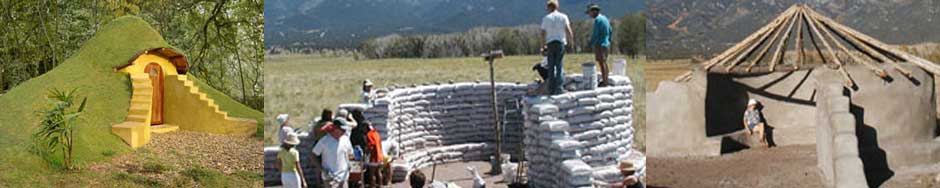
“We all grew up with the Three Little Pigs,” Greg Bossie says. “So people have a lot of misconceptions about the viability of straw as a building component.” But no one’s huffing, puffing, and blowing houses down that are constructed or renovated by Rare Forms, a unique construction company that Bossie founded in 2020.
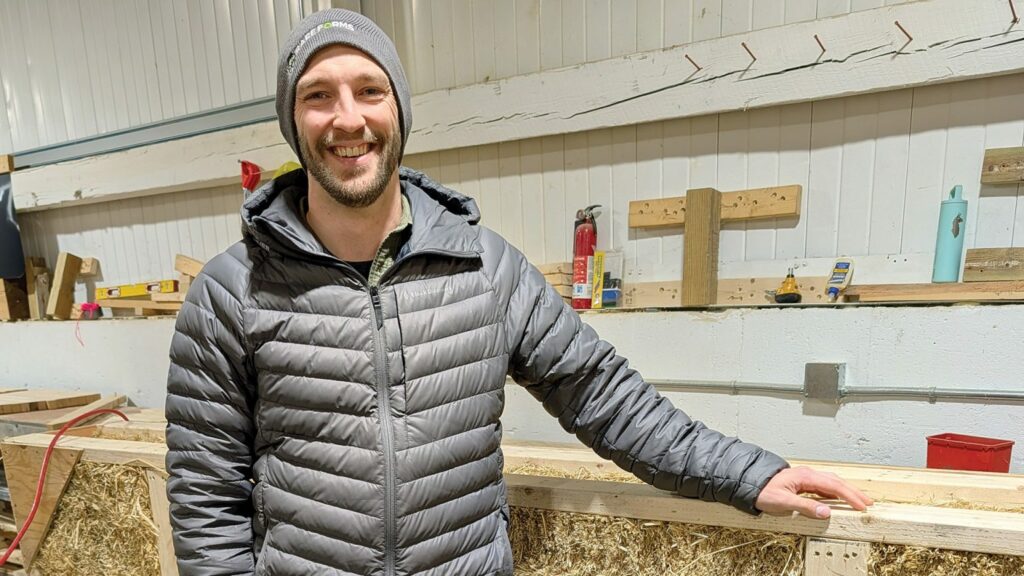 “We build a wood frame, so they are structural. We build it in a steel jig table, and then the straw gets compressed with a pneumatic press,” he explained. “So there’s no binder, there’s no lime or cement or anything like that in it. It’s just compressed straw, which performs really well in terms of the comfort and insulation of a structure.”
He explained that the hard, compressed straw, wrapped in a sealed panel, is not prone to decomposition, partly because of the way it’s airtight, yet ‘vapor-open,’ allowing any water entering the structure to exit quickly, preventing moisture damage.
 “Lots of people worry about fire, justifiably. But compressed straw, when compressed in a panel, behaves like timber, which means that, when exposed to fire, it chars on the outside and protects its inner core. With a straw panel, we can get a one- or two-hour fire rating, so it’s actually far less fire-prone than, say, any fluffy insulation that allows air movement, because you need oxygen movement to fuel fire, and when you’ve got this incredibly compressed structure that doesn’t allow any air movement through it, it’s really fire-resistant.”
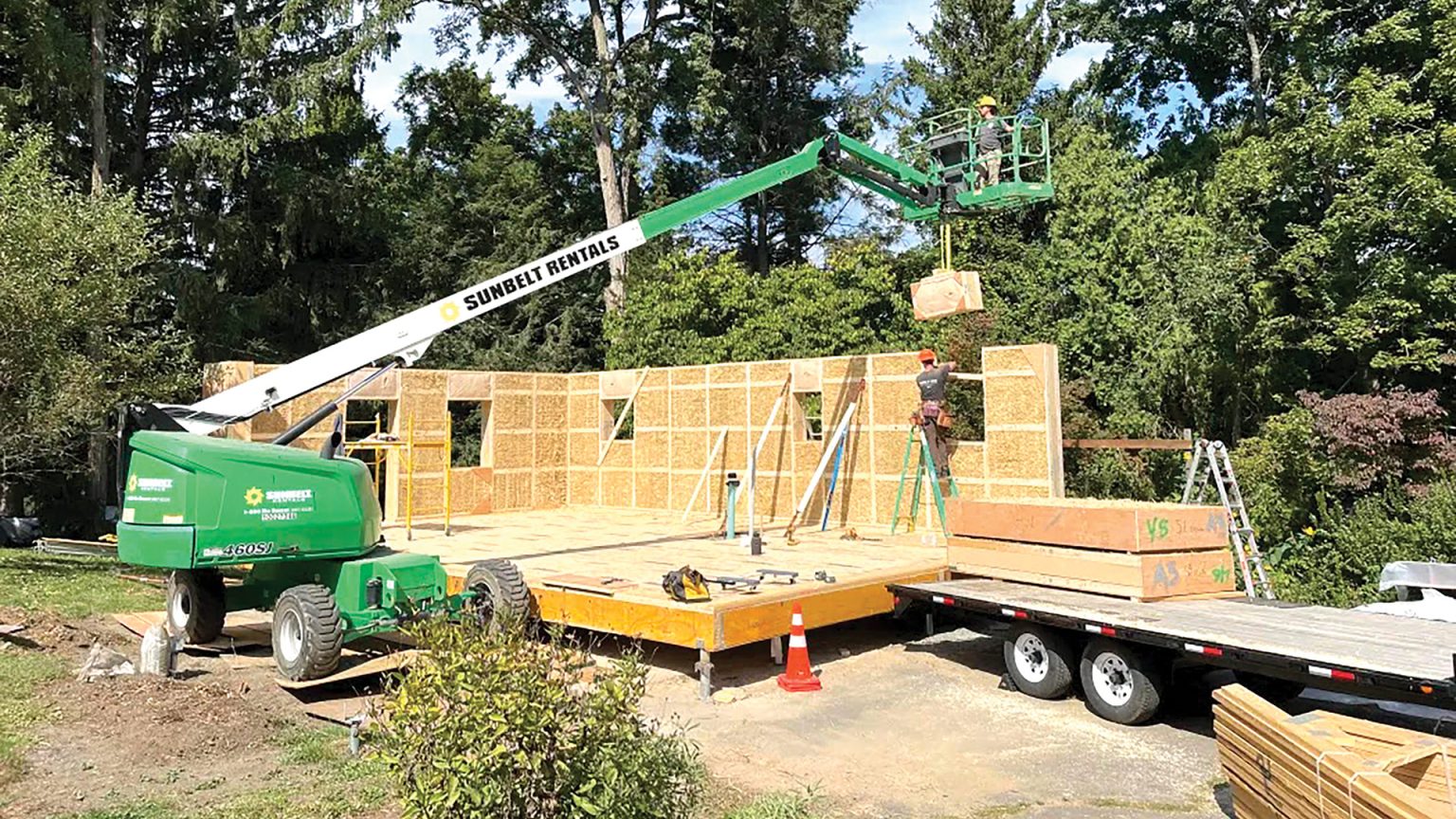
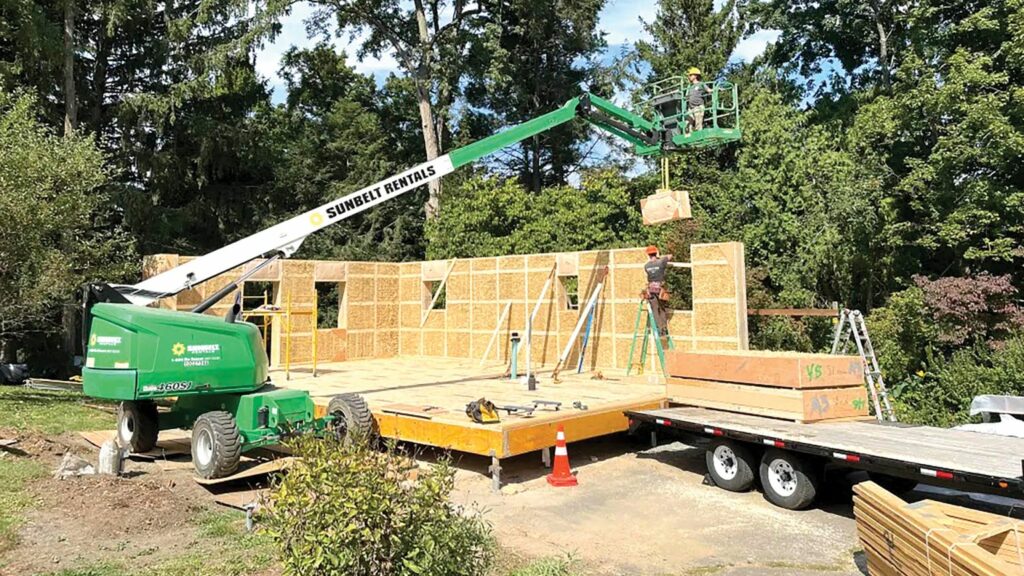
“We can utilize the advantages of off-site construction methodology, meaning that we can do all of this in a climate-controlled environment. One of the risks of traditional straw bale building is that, during construction, it can be exposed to a lot of moisture. Straw panels allow us to work in a controlled environment,” he noted. “We can compress the straw into these wood panels, wrap those panels in weather-resistant barriers, and then install them on site in a relatively short period of time, so that we can limit any potential water exposure during that time. Roof panels tend to take a little bit longer than wall panels, but we can basically assemble this high-performance envelope very quickly.”
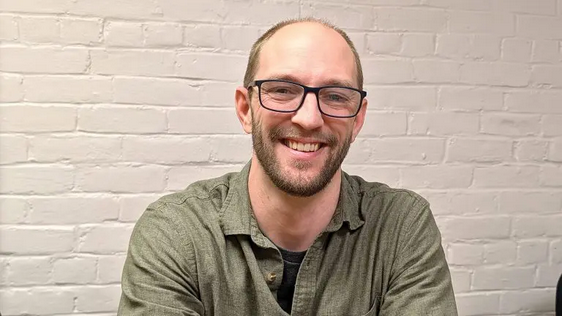 Bossie went to school for architecture and worked in that field for a number of years. “That got me into building science and high-performance building. But I really felt that I wanted to push further into a values- and mission-based structure, particularly around the use of bio-based building materials and internal structure.”
That idea became Rare Forms, which was just Bossie at first, actually doing the construction before the company started to grow; it now totals about a dozen employees. “We were doing residential design-build, primarily retrofit and addition work to start, and then got into doing some new construction homes,” he explained. “And then, a year and a half ago, we actively pushed into the straw panel aspect of things, which had been my goal for quite a while.
 “Straw panels allow us to build homes and additions that actually store more embodied carbon than they emit in the construction process,” he went on. What Rare Forms does, Bossie explained, is use bio-based building materials to substantially reduce or even invert the embodied carbon aspect of building, while also maintaining high building performance and the low energy usage. Another motivation is better indoor air quality, meaning greater comfort and health for building occupants.
While the straw to create the wall panels is sourced locally, the company’s roof panels are insulated with a product called TimberHP, a wood fiber insulation product manufactured in Maine, from waste timber from that state’s sprawling timber industry.
In short, “we think about sustainability pretty holistically,” Bossie says. “There’s the materials side of things, which is choosing what you build the house out of. There’s also the waste management, doing as much selective deconstruction as possible, meaning saving fixtures, finishes, any building materials you can, keeping as much out of the landfill to begin with as possible, either saving materials for use in the project or donating those materials.”
The seed panel system was designed by New Frameworks in Essex Junction, Vt., one of three founding member companies — Rare Forms and Building Integrity in Columbia, Mo. are the others — in the Seed Collaborative, a partnership that aims to create a broad network of companies using local materials to build carbon-positive systems.
Rare Forms has also carved out a niche in prefabricated accessory dwelling units (ADUs), tiny homes that blend efficiency, sustainability, and aesthetics. “We have a housing affordability and availability crisis, and ADUs are one way that we can increase housing density in existing neighborhoods without substantially impacting the character of those neighborhoods.
From a broader perspective, “it’s about people,” Bossie said. “The function of buildings is to provide shelter for people. Ultimately, I think that how we relate to other human beings is what defines our lives. How we take care of each other is what defines the value of a society. How we shelter people defines our culture of care.
You can read the original article at businesswest.com