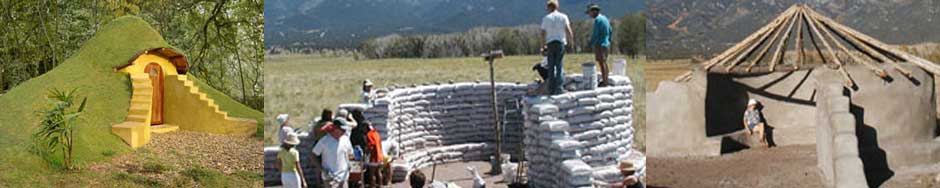
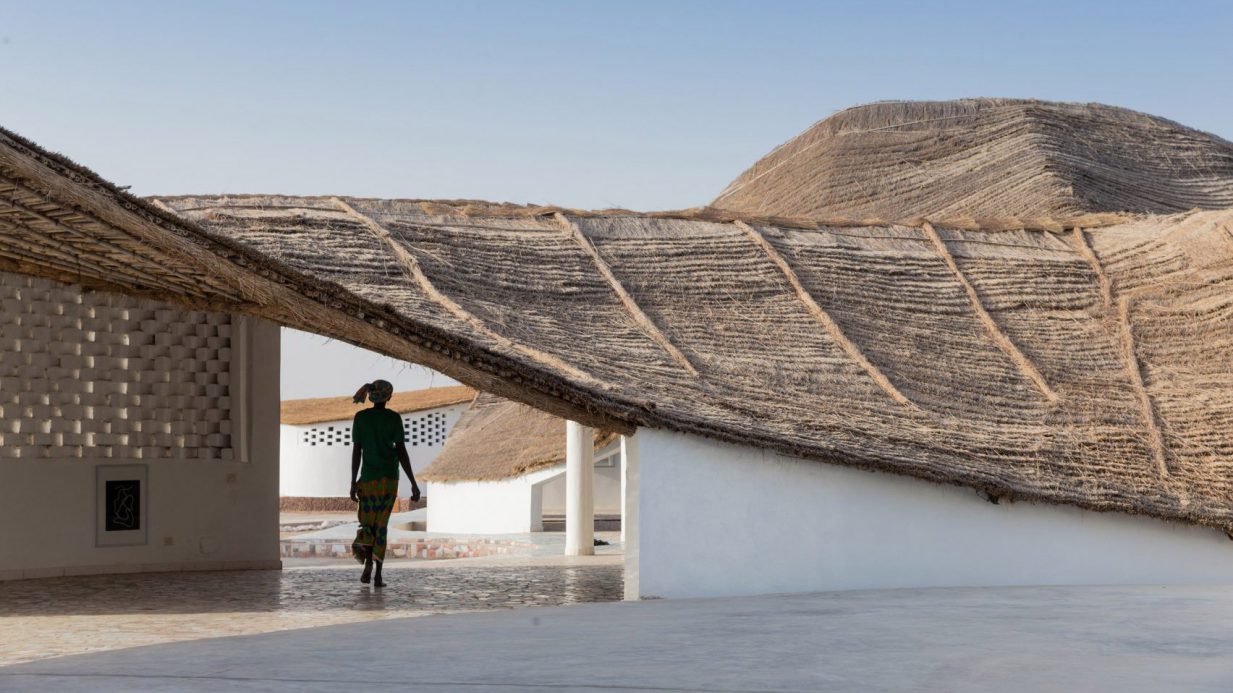
There has been a revival of the age-old craft of thatched roofs in contemporary buildings across the globe. Used to create thick, insulating shelters, a thatched roof is an ancient roofing method achieved by layering bundles of dried vegetation such as reeds. The technique is often associated with old, rustic cottages in Europe, but it has been used historically across continents, from rural farmhouses in Japan to round huts in Ethiopia.
Read on for several examples of a thatched-roof renaissance:
 Thread, Senegal
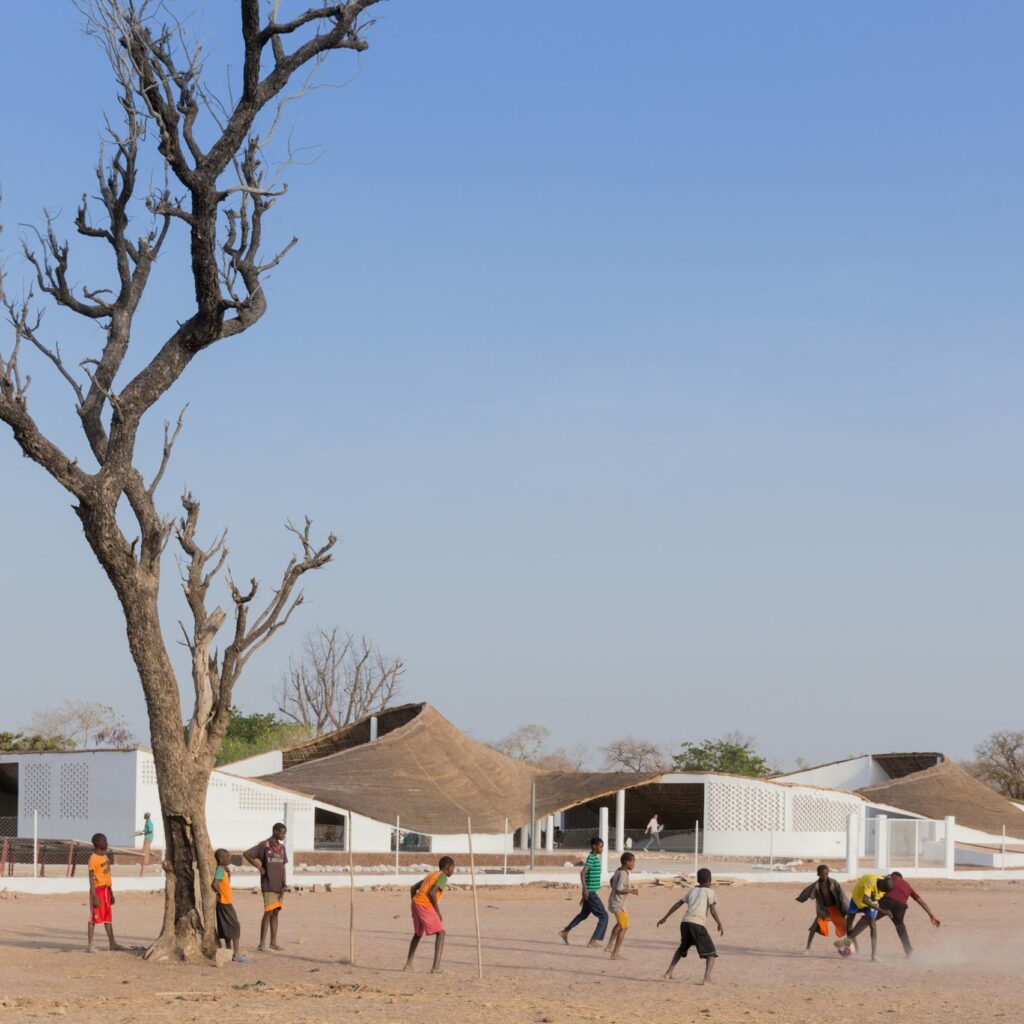
Japanese architect Toshiko Mori looked exclusively to local materials and building techniques for her design of Thread, a cultural center in a remote village. A thatched roof crowns the building, which features undulations in its surface to help collect rainwater for crops.
 Dune House, Latvia
This lopsided thatched roof shields the exterior Dune House, which was created for an avid kitesurfer in Latvia’s grassy Pape Nature Reserve. It was designed as a contemporary interpretation of local buildings that traditionally use thatched reed for roofing.
 Hata-Mazanka, Ukraine
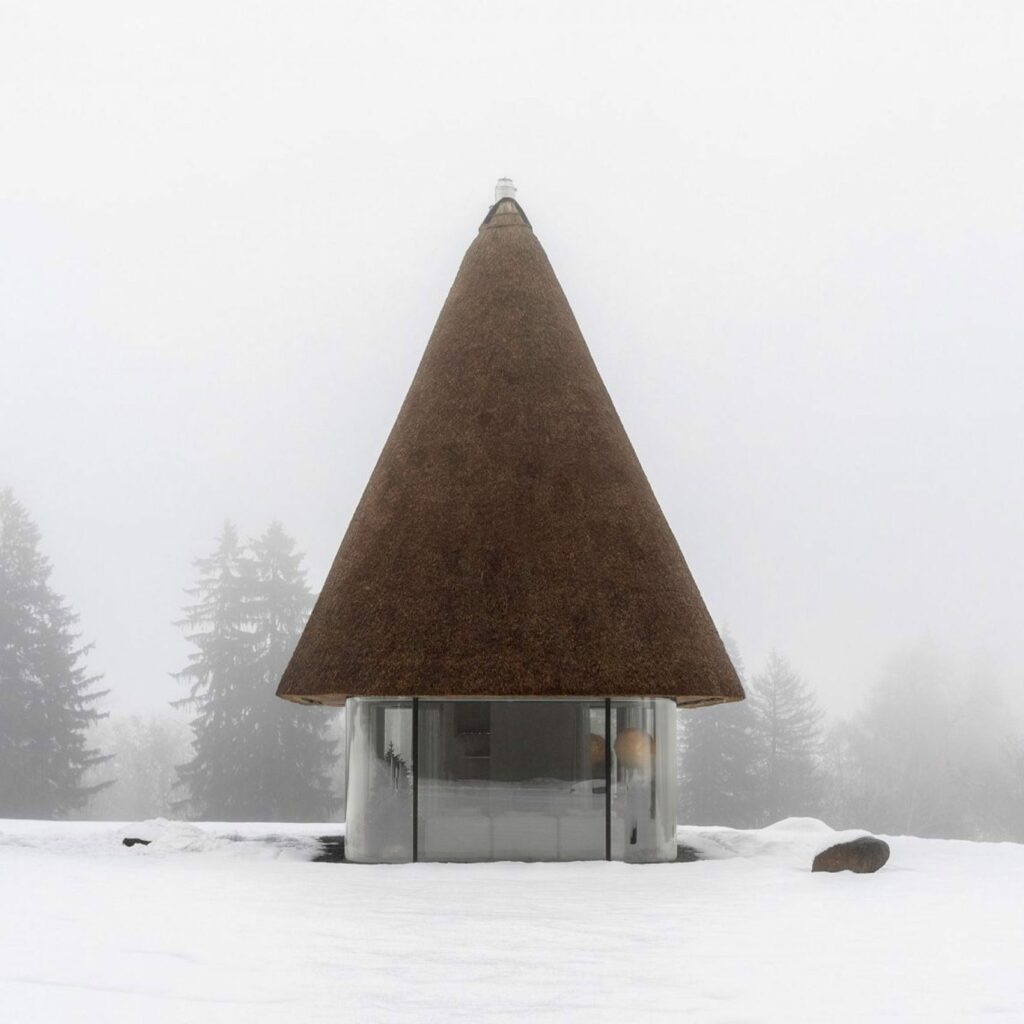
In Ukraine, the Hata-Mazanka guesthouses resemble rural Ukrainian residences with thatched roofs and white walls. Unlike a traditional mazanka, the height of the roof is deliberately exaggerated, rising to 10 meters in height to stand out in the landscape.
 El Perdido Hotel, Mexico
A series of outbuildings capped by thatch are dotted across this hotel on the southern tip of the Baja California peninsula. The roofs have long, visible straws, resulting in a shaggy look that complements the rammed-earth walls tucked below.
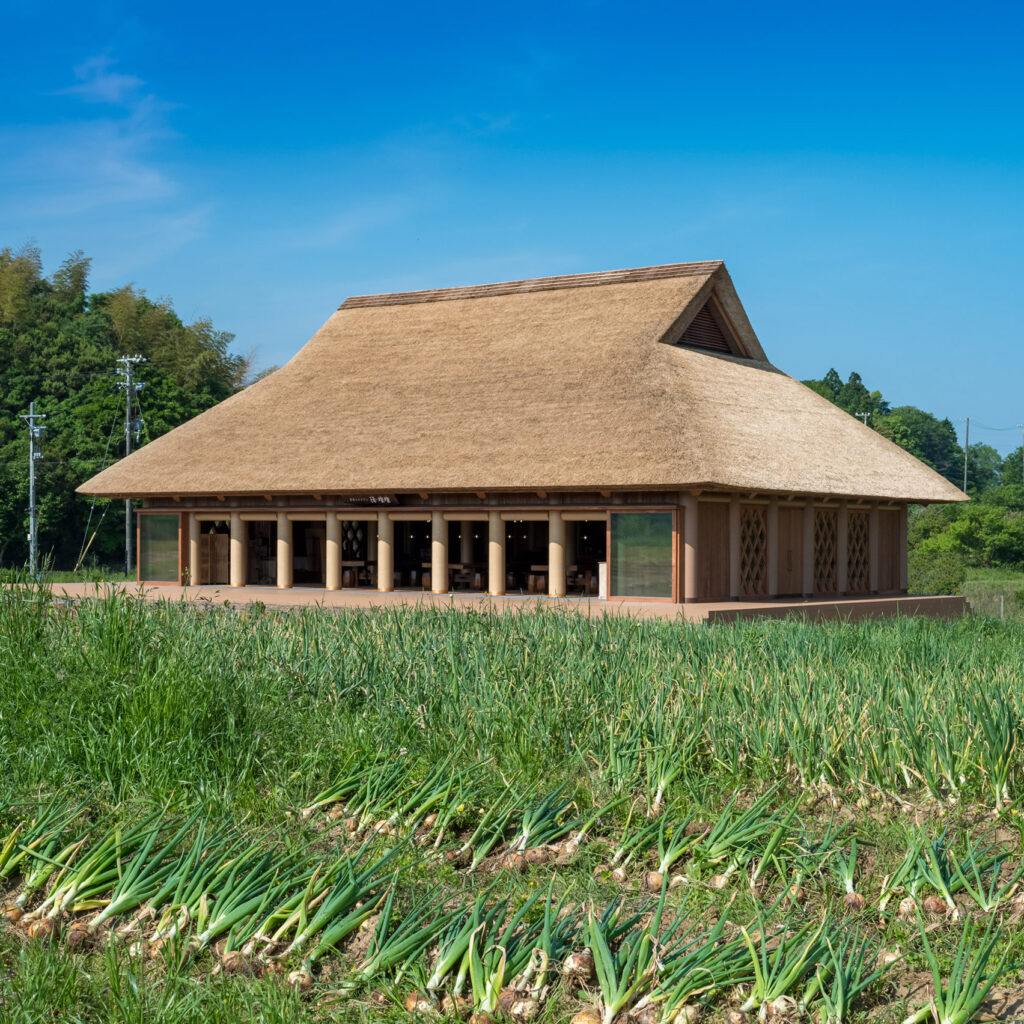 Farmer’s Restaurant, Japan
This restaurant on Awaji Island is a homage to traditional Japanese farmhouses. It features an oversized thatched roof formed from tailored and tightly packed reeds, which overhang the cardboard tubes that wrap the structural columns of the building in true Ban fashion.
 A Mental Image, the Netherlands
This observatory, temporarily installed on top of the modernist Sonneveld House in Rotterdam, was visible from afar thanks to its distinctive hexagonal roof. It was designed as a contemporary take on traditional Dutch construction methods while deliberately contrasting the white walls below.
 KinShip EcoLab, Ireland
KinShip EcoLab is a rammed-earth shelter in the Tramore Valley Park in Cork, Ireland, designed as a space for events on biodiversity. Its design draws on its natural setting and was crafted from biomaterials that can return to the ground at the end of its useful life. This includes its hipped roof, which is made from thatched reeds raised on a timber frame.
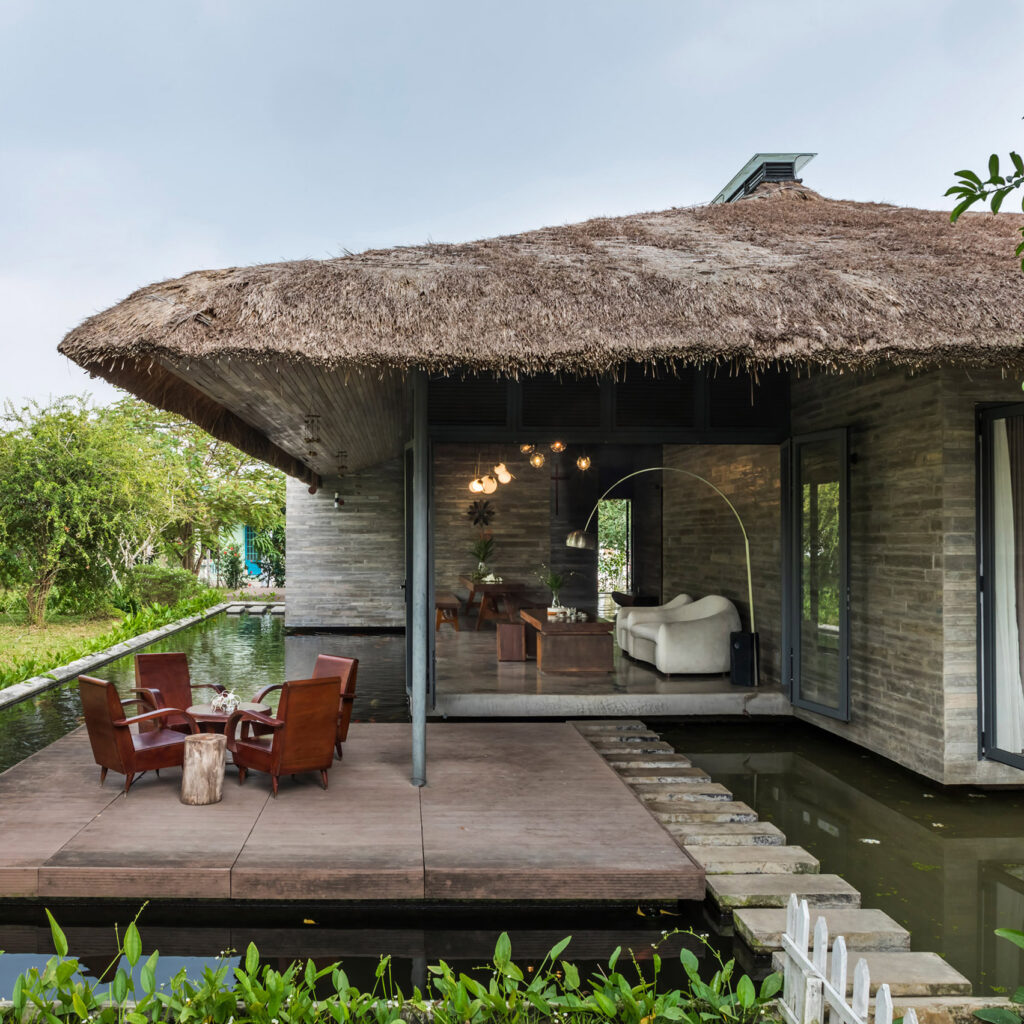 AM House, Vietnam
The rugged thatched roof of this Vietnamese dwelling contrasts with the geometric concrete walls of its living spaces. It offers a modern spin on vernacular in southwest Vietnam while introducing natural details to the home, which is surrounded by a pond.
You can read the original article at www.dezeen.com