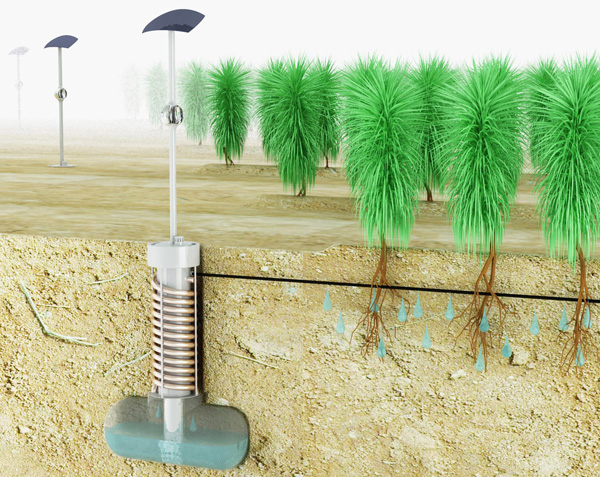
The AirDrop irrigation system extracts moisture from the air.
Developing efficient methods for extracting moisture from the air (condensing atmospheric humidity) has long been a goal of scientists and engineers. The AirDrop irrigation system by Edward Linnacre is one of the more recent inventions for extracting water from the surrounding air.
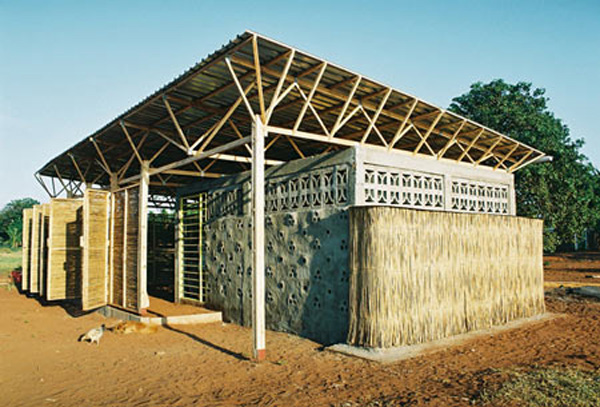
Bamboo and earthbag school by Bergen School of Architecture
“19 architect students, 5 weeks in Southern Africa, a school building in 12 days
Students from the Bergen School of Architecture in Norway have built a school building in a Mozambique village using sand bags, bottles and grass. The building consists of an enclosed room for computers and a more flexible space with grass doors for English lessons, divided by a large sliding door. A reinforced-concrete frame was filled in with sand bags and glass bottles were embedded in one wall.”
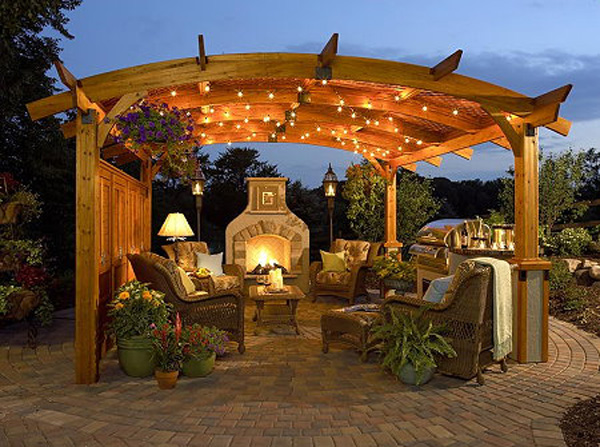
Outdoor living space is a key part of any backyard oasis
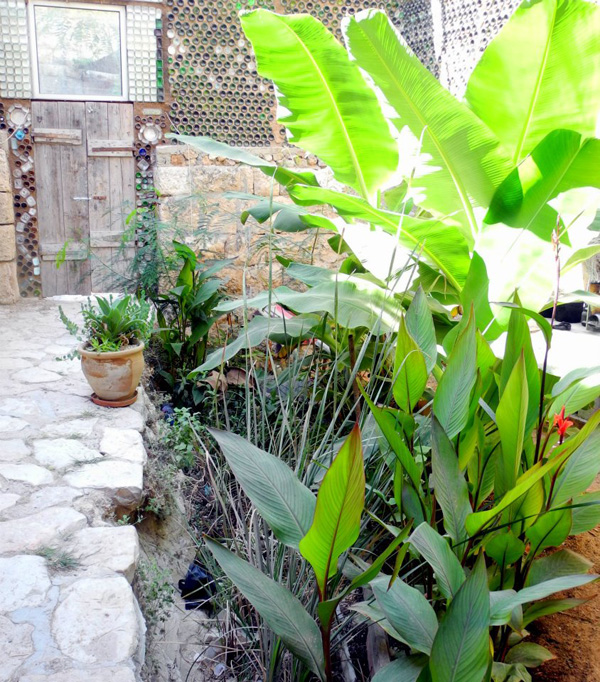
While we’re imagining Constructed Wetlands (yesterday’s blog post), let’s consider how to build a mini-oasis around our homes. What features would you include?
Turn desert wasteland into highly productive land with permaculturally inspired wetlands
Many natural builders are moving to rural areas to escape the hustle, bustle, pollution, high costs and, of course, oppressive building codes. Sometimes the areas they move to are very arid. Constructing man-made wetlands can greatly improve the environment around the home as evidenced by the accompanying photos. With a bit of time, effort and research, you could create a mini oasis that cools your home, supplies healthy food, and adds colorful and scented flowers that attracts wildlife such as birds and butterflies. And who wouldn’t want a cool, beautiful, relaxing place to hang out when temperatures are sweltering?
The WaterShed design harvests rainwater, filters and recycles greywater, and minimizes water use in general.
“Instead of focusing only on energy efficiency at this year’s Solar Decathlon, the University of Maryland is also tackling water conservancy with their entry, WaterShed. WaterShed was inspired by the ecosystem of Maryland’s Chesapeake Bay. WaterShed is an example of how natural water resources can be maintained and protected by homes and buildings, and the house features technology to manage and harvest stormwater, filter and recycle greywater, and minimizing water use in general. In addition, the house also has PV and solar thermal arrays for sustainable energy production.