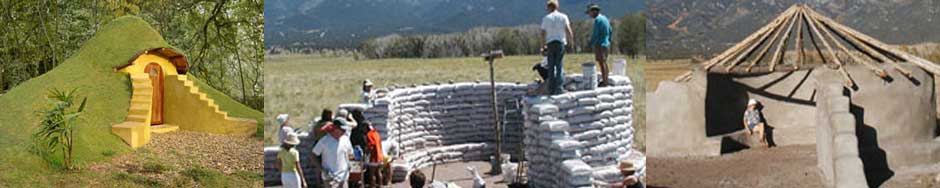
A family wants to build a house using the very material from the land. Shovel, bucket, sturdy bags, and physical strength replace heavy equipment. Can merely compacted soil support a complete structure? Loose soil does not support anything. It spreads, gives way, crumbles. The challenge, then, was to convert this raw material into something capable of maintaining shape and height.
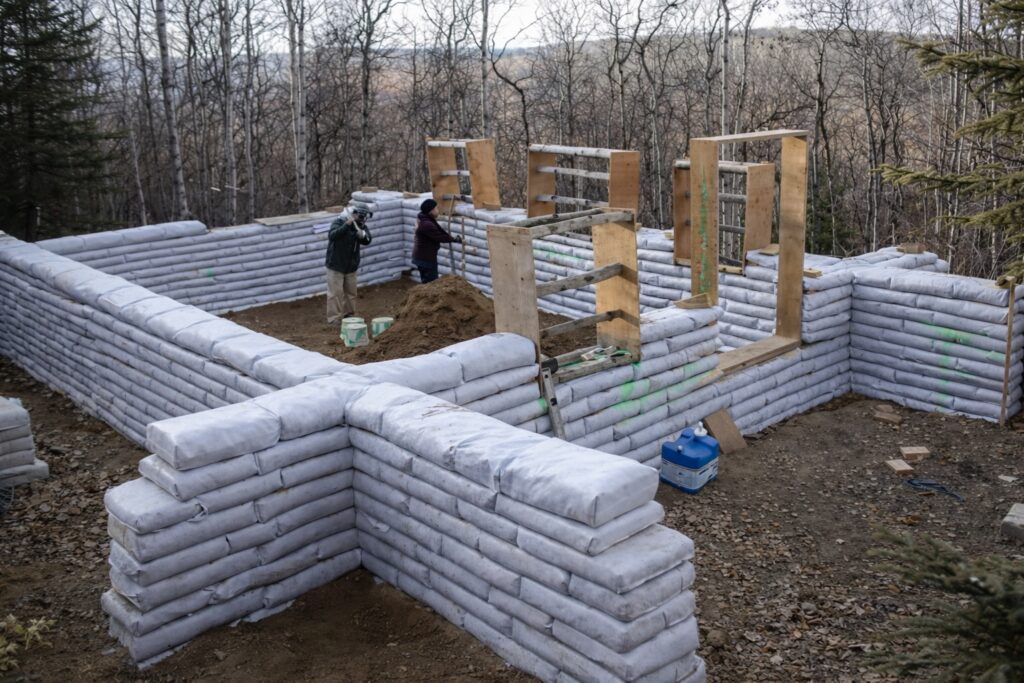 The solution came with elongated bags filled manually. The family fills each unit with soil, seals the ends, and positions them side by side, forming the first row. Next comes the manual tamping. Strike after strike, the compaction eliminates gaps and creates a firm base. With each completed layer, the wall gains density and weight.
Between one row and another, metal wires extend over the already compressed bags. When the next layer is placed, the wire becomes pressed, locking the set in place. This sequence creates a thick and continuous wall. The continuous shape distributes the weight around the base, reducing load concentration points.
As the layers advance, the house of soil bags begins to gain real height. What was once just a line close to the ground transforms into a structure above the head.
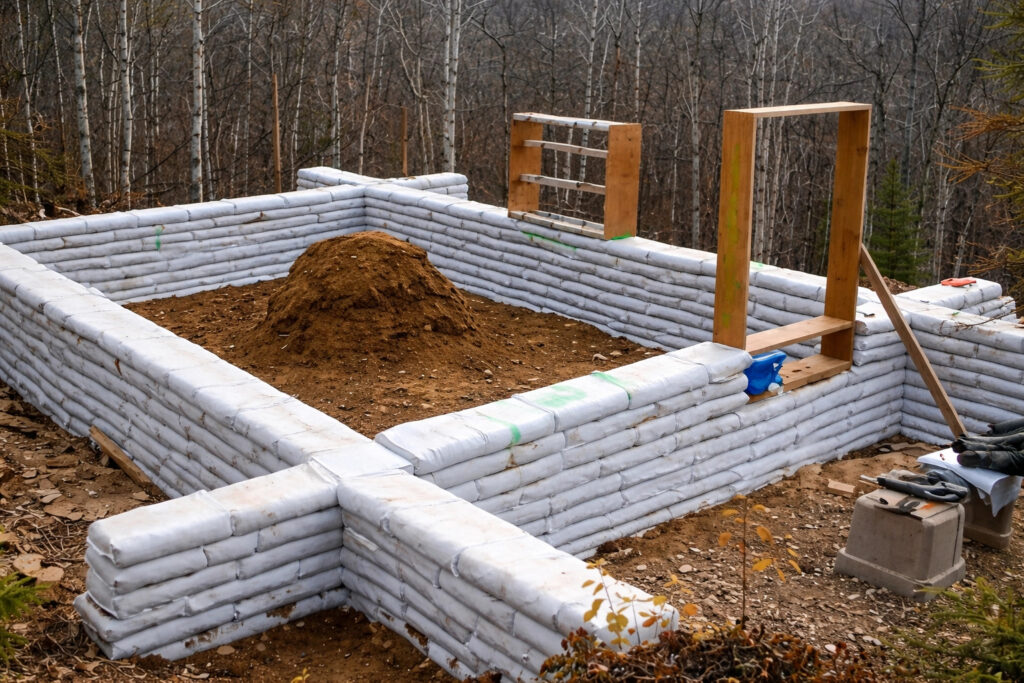 Another critical moment arises when the openings arrive. A mistake there would compromise the entire stability. Wooden frames are positioned at the locations of the doors and windows before the wall reaches full height. The subsequent rows rise, contouring these structures.
Support planks maintain the alignment while the bags are compacted on the sides. Thus, the openings are already integrated into the wall, without later cuts. This reveals that the family builds the house with planning. Nothing is inserted later. Everything is born along with the structure.
When the walls reach sufficient height, another decisive test emerges: supporting the weight of the roof. Wooden beams are supported on the top of the construction. Some receive simple adjustments for proper fitting. Then, the corrugated metal sheets are positioned and fixed with visible screws.
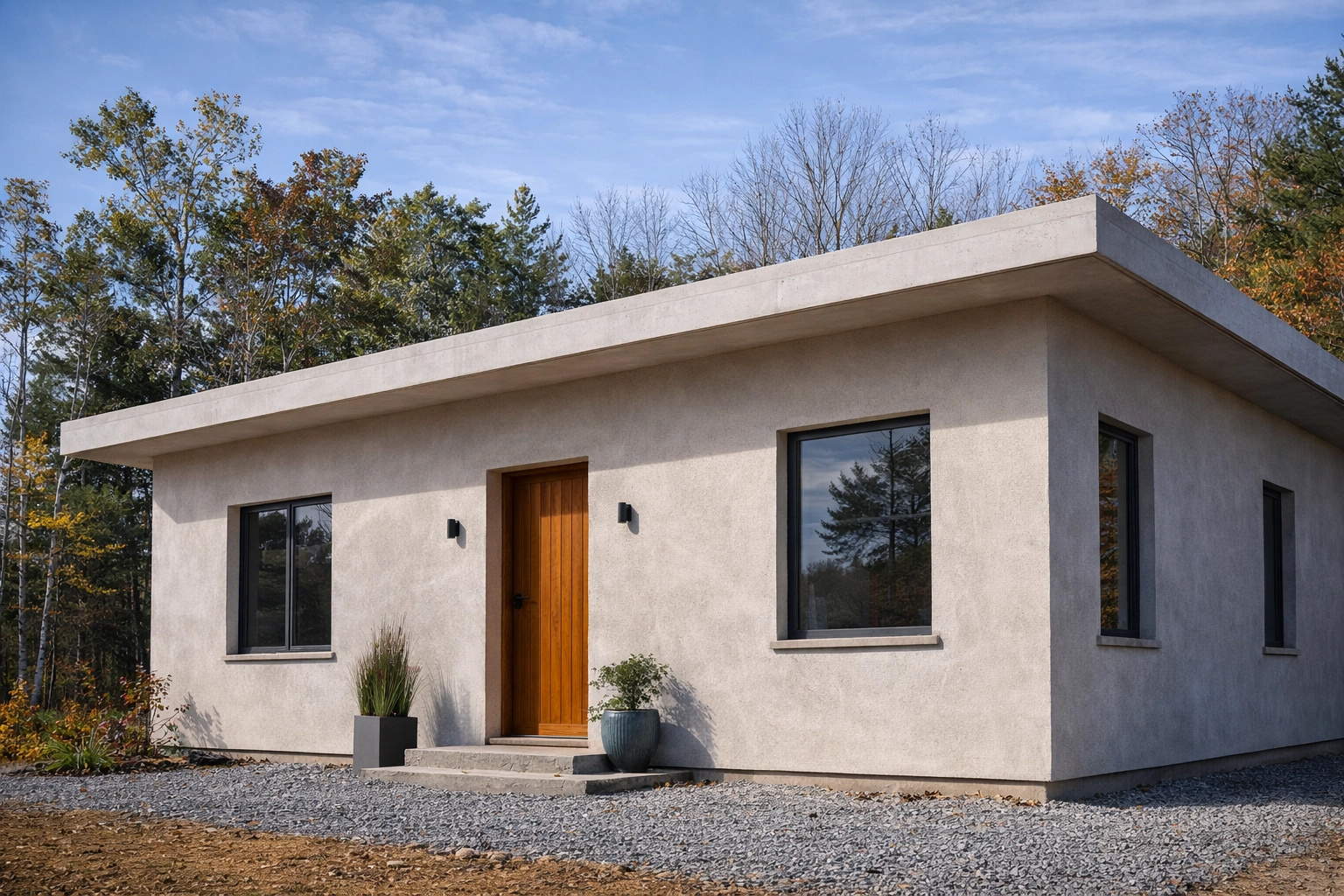
 With a trowel, plaster is pressed against the wall. The irregularities are filled, the texture changes. The wires and metal sheets become invisible. The construction takes on a uniform appearance.
Behind the finish, there is a system based on compression, weight, and mechanical tying. Nothing more than that. And yet, sufficient to support a complete dwelling. The family builds a house of earthbags. Soil, wood, and metal sheets organized with a method create a functional, resilient, and visually solid structure. This draws attention not only for its economy but also for the logic of engineering applied with simple resources.
You can watch a video at www.youtube.com
You can read the original article at clickpetroleoegas.com