
Rammed Earth House in England is a residence designed by Tuckey Design Studio, that combines renovated brick buildings with new rammed earth structures, using the clay soil on the site. The client wanted some run-down buildings on site to be demolished—but rather than this rubble being wasted, they used it as the aggregate for the rammed earth, recycling the old buildings into the new.
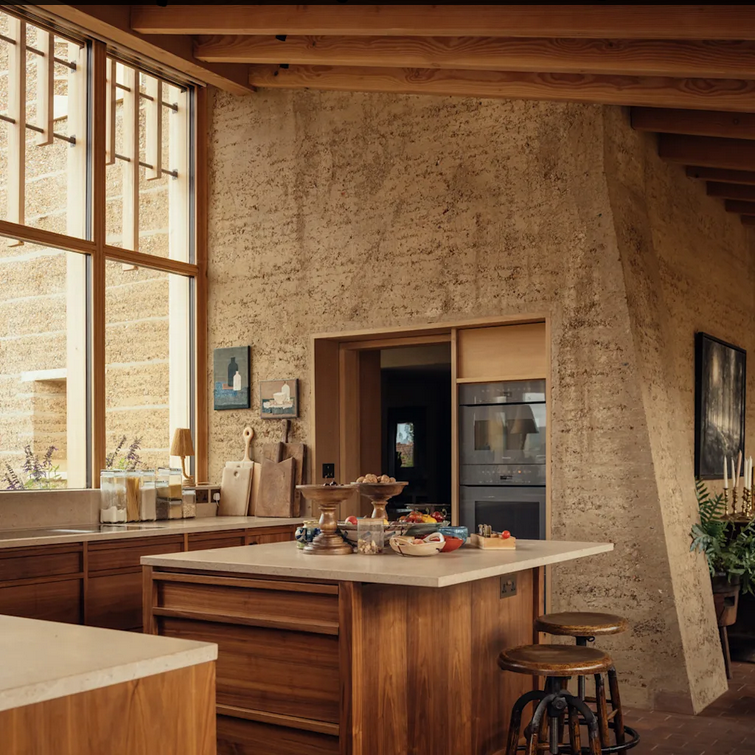 An increasing number of architects are looking to rammed earth as a sustainable, place-rooted way to build amid a climate crisis that calls for dramatically reduced carbon emissions.
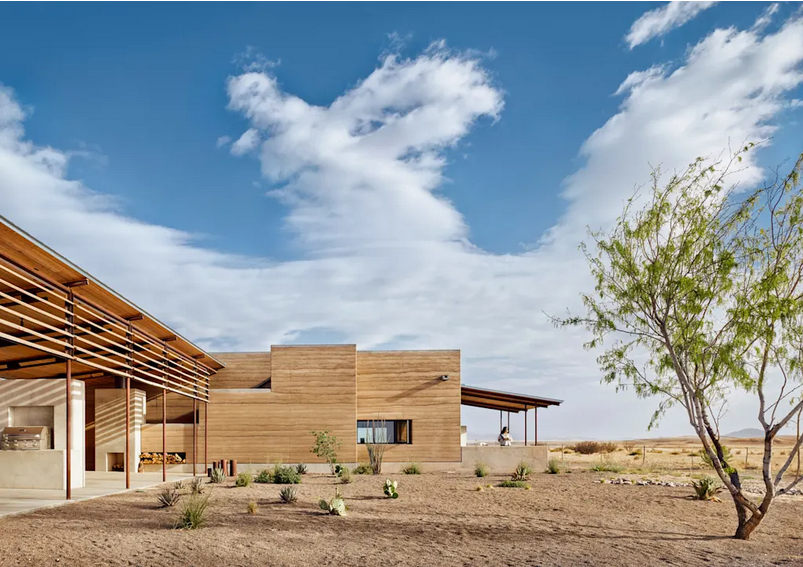 Architects also praise rammed earth’s high thermal mass that helps regulate a building’s indoor temperature. This was particularly helpful for a home in west Texas. In the desert environment, temperatures vary greatly; using rammed earth meant the dwelling could be comfortable on the hottest days of the year, and also on the coldest. The material also connected the building to its landscape, using locally sourced earth.
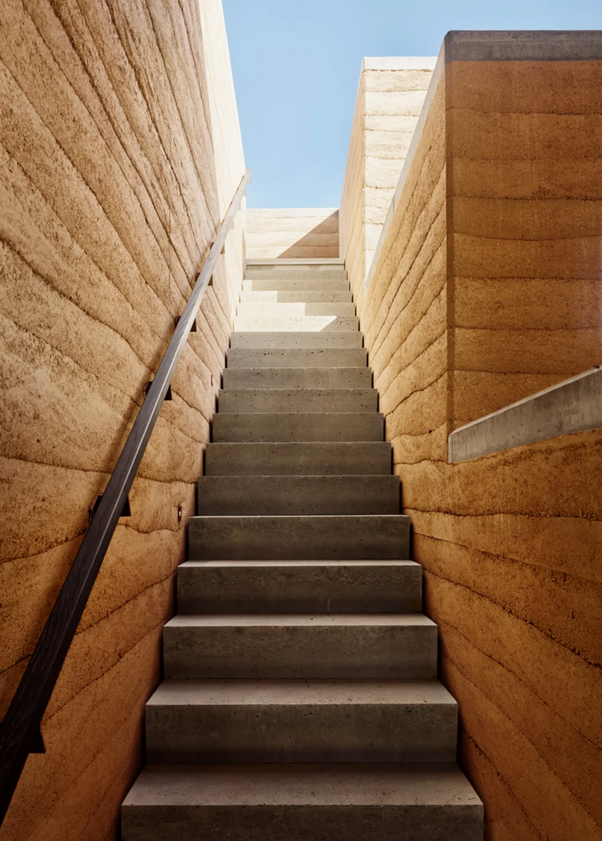
 The material has a natural, textured and warm-hued appearance that can enhance an interior.
 There are two versions of rammed earth, “stabilized” and “unstabilized,” and each demand different features and have variable ecological credentials. Stabilized rammed earth has cement in the mix to make the material more robust and resilient, especially to water. Some sustainability experts have criticized this as having a similar negative ecological impact as concrete, which also uses cement. But others insist the proportion of cement used is lower than that in concrete (10% to 15%).
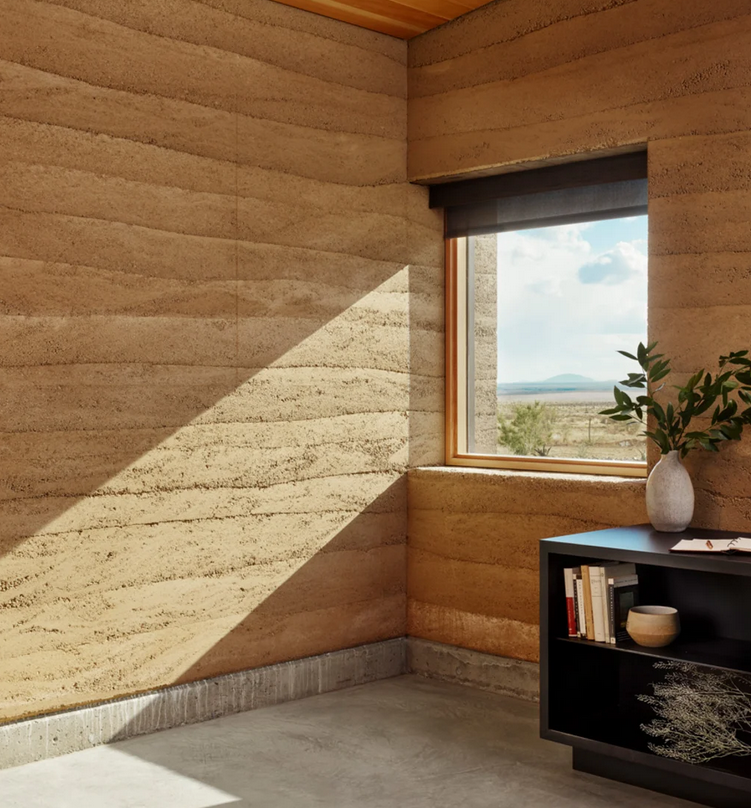 Unstabilized rammed earth does not include any cement, thus eliminating those associated carbon emissions and becoming a circular material, but it subsequently requires techniques to prevent erosion when exposed to the elements.
 In the case of Rammed Earth House, a topper of more waterproof material protects the rammed earth walls from water damage. To protect from rain, slim horizontal lines of lime rock project away from the external surface, allowing rainwater to fall off.
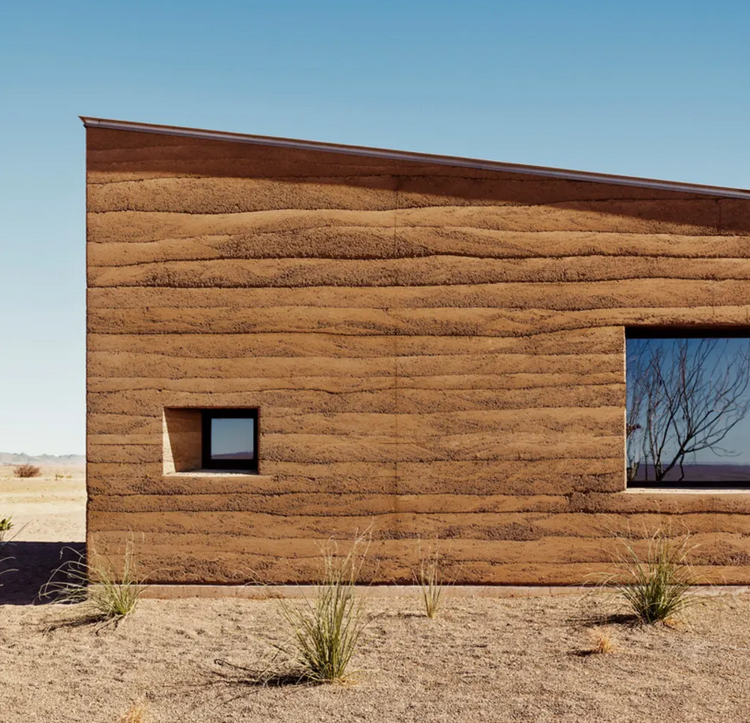 It is important is to use rammed earth in the locations and climates that make most sense. It is often best in a context where there’s low humidity and high diurnal swings.
 You can read the original article at www.fastcompany.com