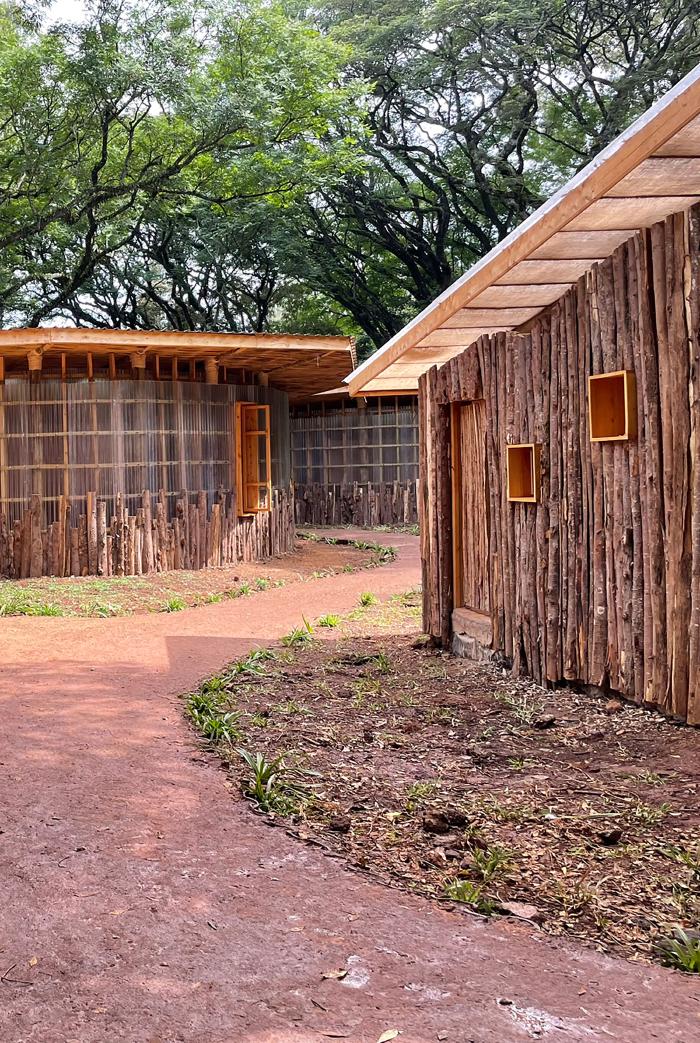
This project was commissioned by a Waldorf school in Nairobi. The buildings needed to be constructed quickly, cost-effectively (achieving a cost of $250/m² or $23/sf), and with a temporary lifespan, as the plot lease was set to expire in 10 years.
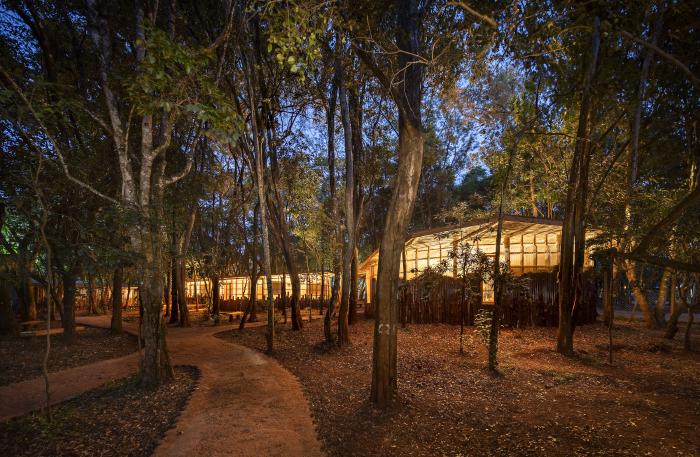
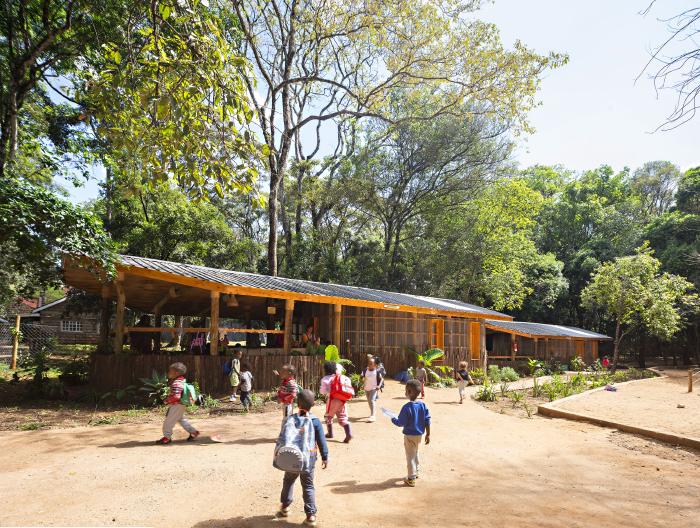 The concept was to create a small village for children nestled within the woods, preserving the old house on-site to accommodate additional classrooms and services.
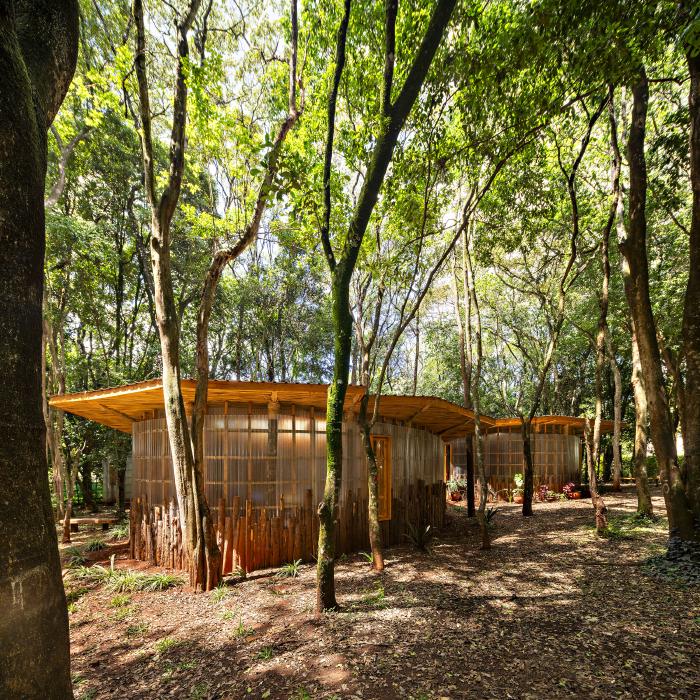 The land was a forest rich with native tree species, and the goal was to integrate the school harmoniously into the natural environment. To achieve this, classrooms were designed as a dispersed town, strategically placed in clearings within the forest.
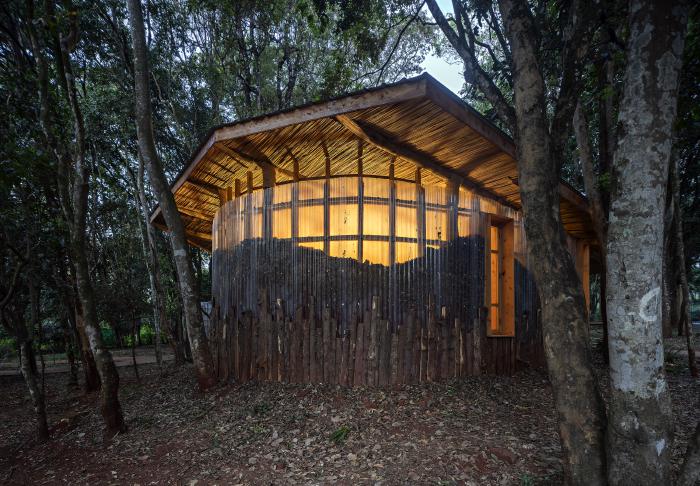
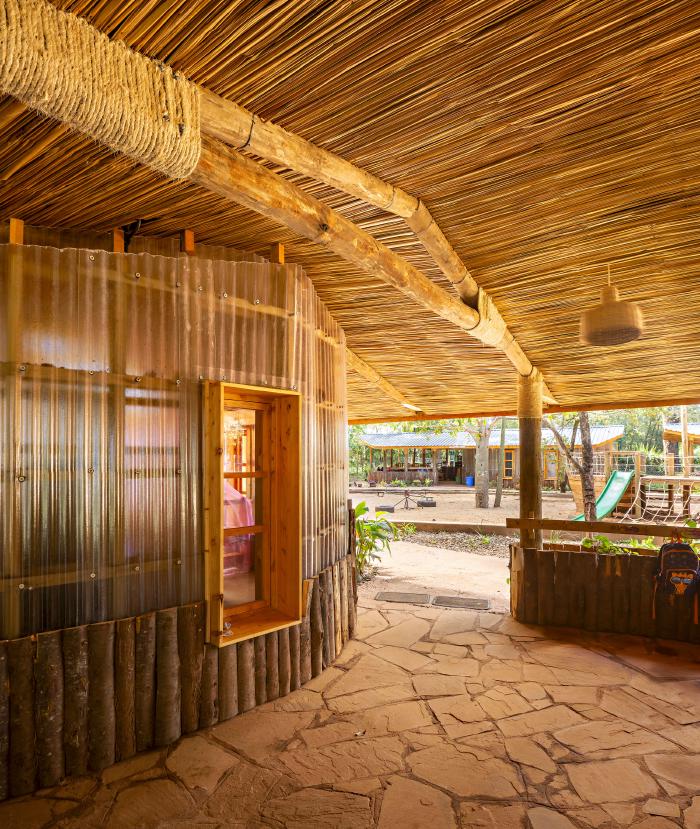 The classrooms have soft and organic shapes, with a spiral configuration, inspired by Kenyan vernacular architecture.
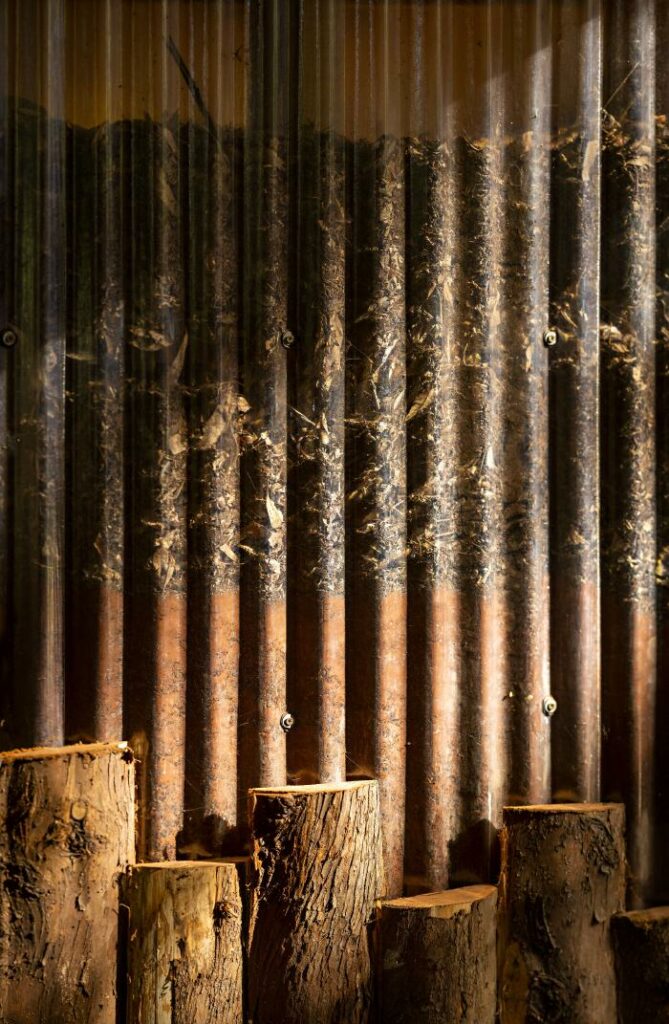
 The design aimed to foster a deep connection between students and nature. To enhance this bond, they introduced “living walls.” The walls were constructed by filling the space between two polycarbonate sheets with leftover soil from excavations and a second layer of forest leaves.
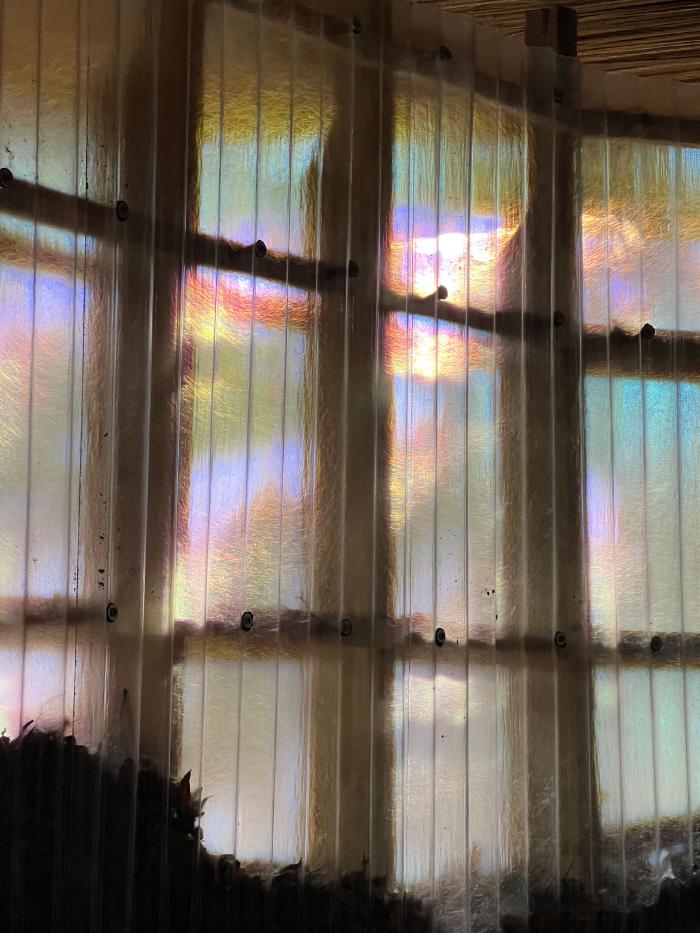 The polycarbonate’s transparency reveals the dynamic life within the walls—ants, bugs, plants, roots—and reflects natural light and colors into the classrooms. These evolving living walls transform the classrooms into vibrant, active environments, encouraging students to observe biodiversity up close.
 Whenever possible, materials from dismantled classrooms were recycled and repurposed: wooden floors and walls became parapets, and roof tiles were transformed into path boundaries.
 Oil drums were upcycled into toilet sinks, while tree trunks—removed to clear space for sports fields—were creatively used as screens in the dining hall.
 Soil was mixed into classroom slabs and concrete pathways to minimize the use of cement and external aggregates, promoting a more sustainable approach. This approach combined creativity, sustainability, and community involvement to create a truly unique learning space.
 You can read the original article at divisare.com