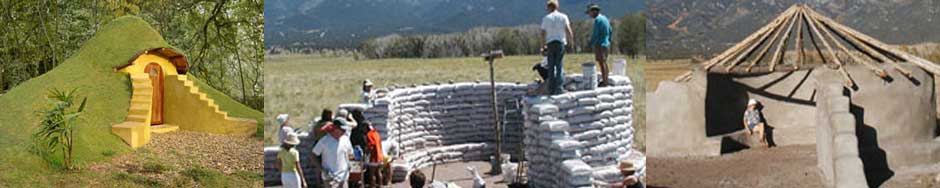
A group of researchers at RMIT University in Australia has been looking at discarded cardboard and wondering if it could do something useful. Their experiments led to a mix of cardboard, soil, and water that behaves like a building material, not packaging. Early trials point to real potential, especially for builders who are trying to cut back on high-emission materials like concrete.
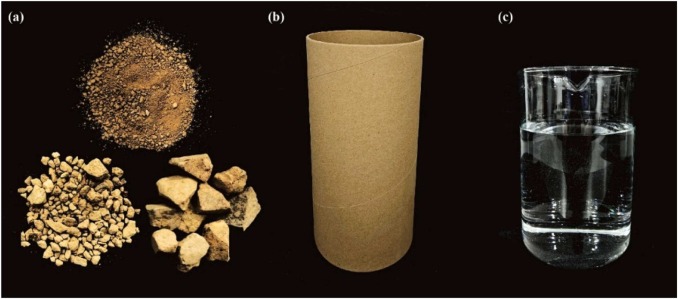 They describe their material as cardboard-confined rammed earth. The idea is pretty straightforward. They roll thick tubes out of cardboard, fill them with a mix of soil and water, and press that mix down until it becomes a solid core. The cardboard holds everything in place while it firms up, which gives the finished piece enough strength for smaller structures.
The weight of the compacted soil and the support from the cardboard tube give the material its structure, so there’s no need for cement stabilizer. That keeps the carbon footprint low and makes the whole thing easier to reuse. Crews can put the tubes together on site, work with soil that’s already available, and skip hauling in heavy loads of concrete or brick.
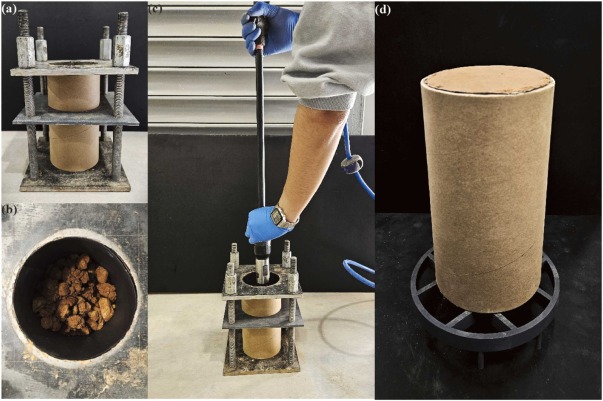 The researchers developed a design formula that connects cardboard thickness to structural strength, giving builders a clear way to size columns and wall sections. In a separate study, the team combined carbon fiber with rammed earth, achieving strength levels comparable to those of high-performance concrete, suggesting that even stronger versions of the material may be possible.
The material works well in regions with soil suited for rammed-earth construction. Because the approach relies on materials already available on site, it reduces the need for transporting bulk supplies and makes construction in remote areas more practical.
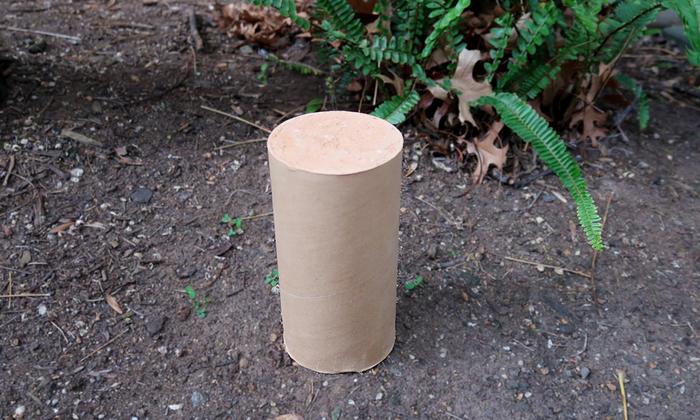 Rammed-earth walls also provide strong thermal mass. They absorb heat and release it gradually, which helps keep indoor temperatures steadier in hot climates. Cardboard-confined rammed earth offers the same advantage.
 RMIT researchers continue to refine the material and plan to collaborate with industry partners to test it in real-world projects. Their results point toward a future where familiar waste streams play a direct role in building more sustainable structures. Cardboard, often treated as a short-lived material, may become part of a new generation of lower-impact construction.
You can read the original article at www.familyhandyman.com