 Ashish Shah and his wife, Nipa, always wanted to build a farmhouse in the countryside. The couple and their two daughters lived in Mumbai. Nipa owns a brand that produces and markets organic, farm-sourced food, so they sought to set up a farm within a two-hour drive from Mumbai.
They looked for architects who specialized in sustainable design. They interviewed eight architects before finding Wallmakers, a firm known for its expertise in building with waste and alternative materials.
 Instead of the architect’s original idea of a separate bridge and house, Mr. Daniel folded both into a single structure: a house built as a bridge, suspended over the gorge.
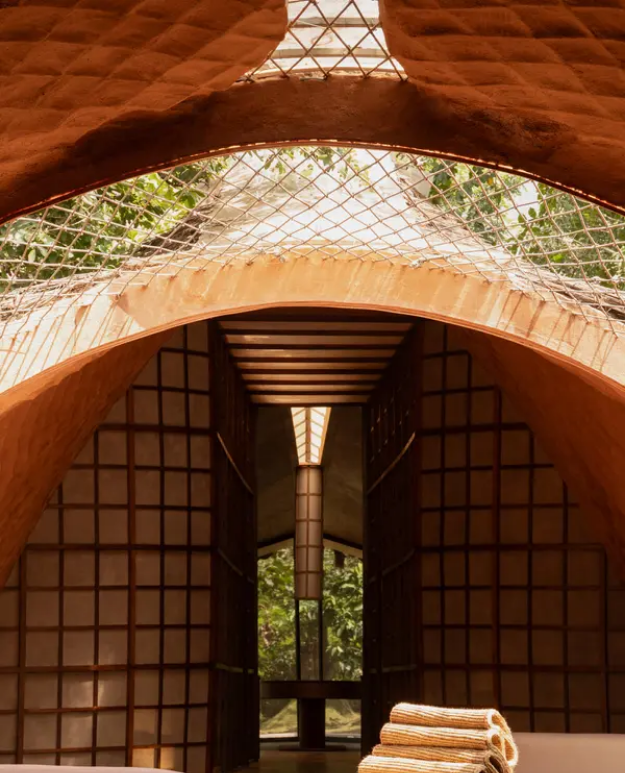 They devised a roof structure made up of a combination of four hyperbolic parabolas. Steel tendons frame the structure, supporting a thatched roof. The roof wraps around the home’s living spaces, with an oculus open to sunlight at the center of the bridge.
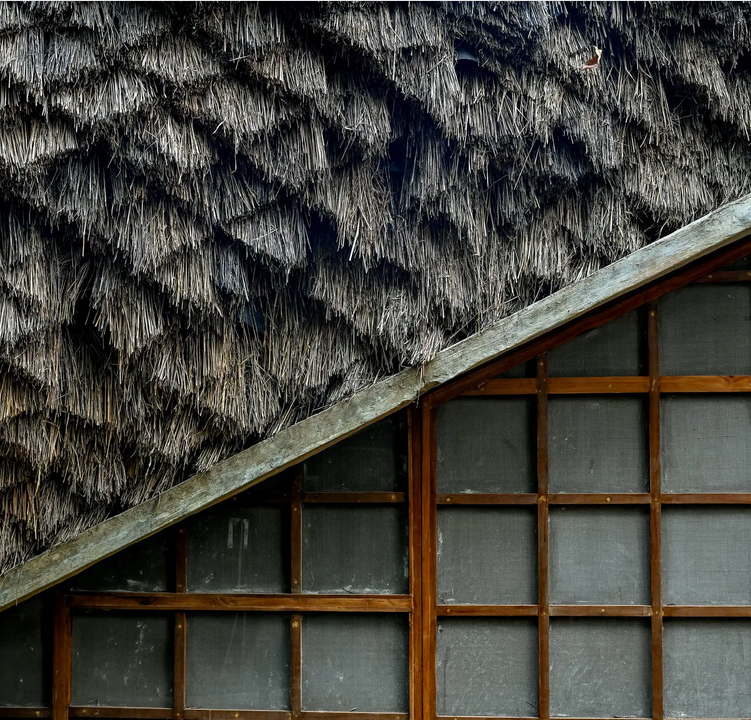 They struggled to find the right kind of grass for the roof thatch. After consulting nearby residents, the group eventually settled on a local variety with a long life span and treated it to make it last longer.
When the thatch was finally laid, they incorporated a mud plaster layer and waterproofing to ensure that pests and rodents wouldn’t tear through it. He said he drew inspiration from the pangolin — a scaly mammal — for the final textured finish, which resembles coconut husks.
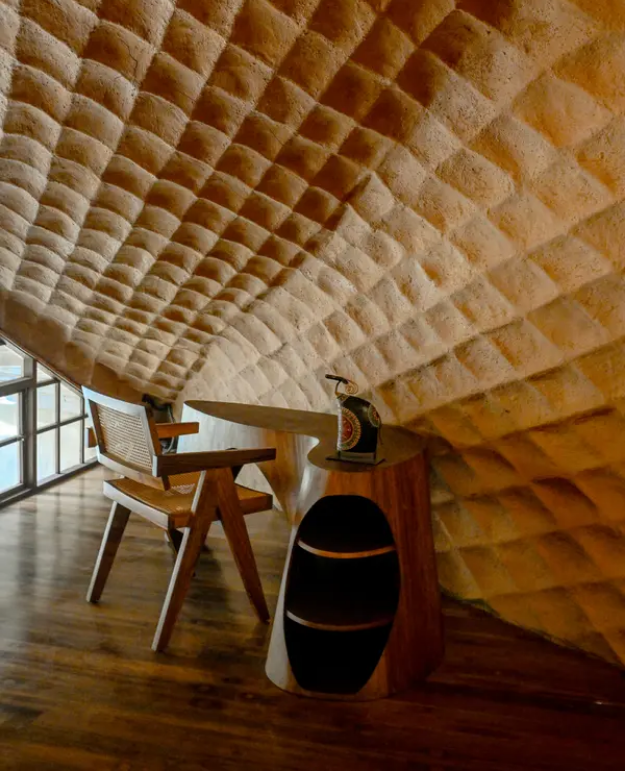 On the inside, the walls and ceilings exhibit a subtle coffered pattern. They dance and form arches, uniting at the roof’s peak.
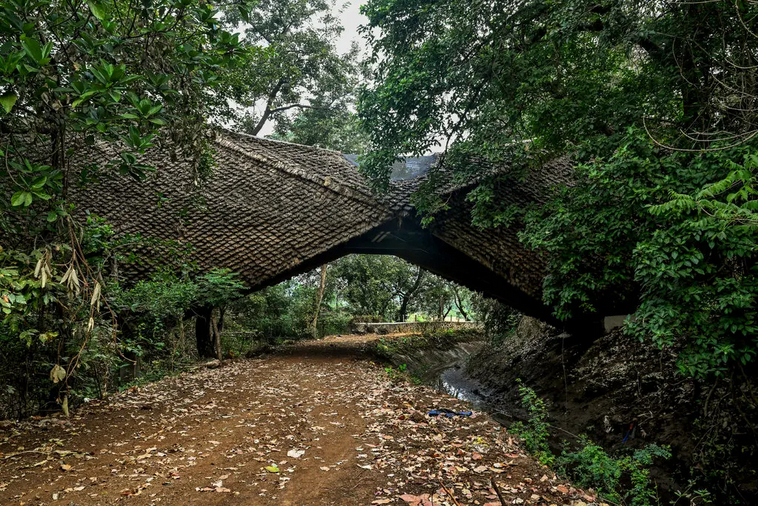 The house’s layout resembles an arrow from above. On the upper level, a triangular wood-paneled entrance leads into a foyer. Next comes the living room, with the oculus at its center.
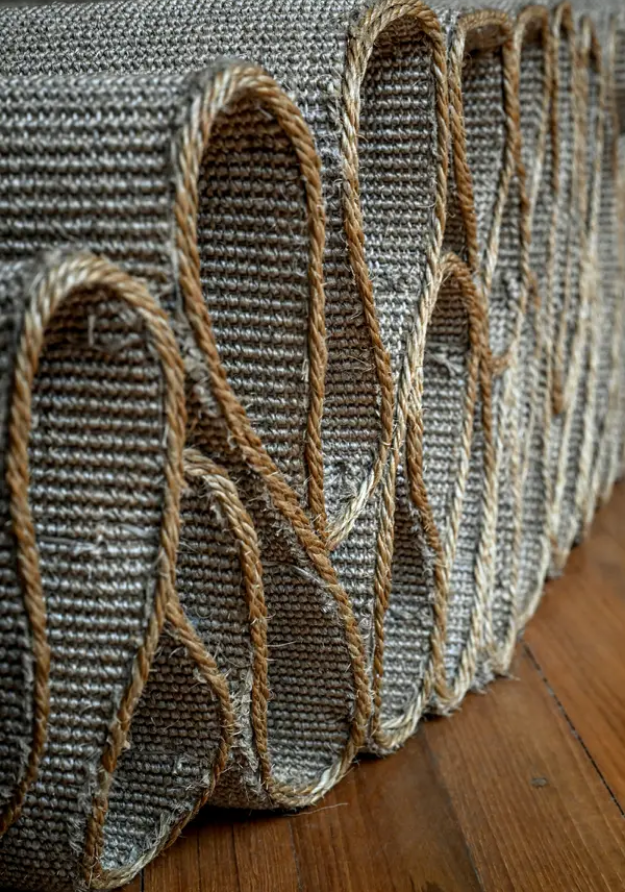 There’s also the Petty chair, a rippling mass of a folded textile made of yarn woven from recycled plastic bottles and discarded fishing nets.
 For the home’s flooring, Mr. Shah traveled to a ship-breaking yard over 400 miles away in the state of Gujarat, where he procured a large amount of salvaged seasoned wood. Despite the long journey, steep price of the wood and the rigors of treating and cutting it, he said he found joy in the process.
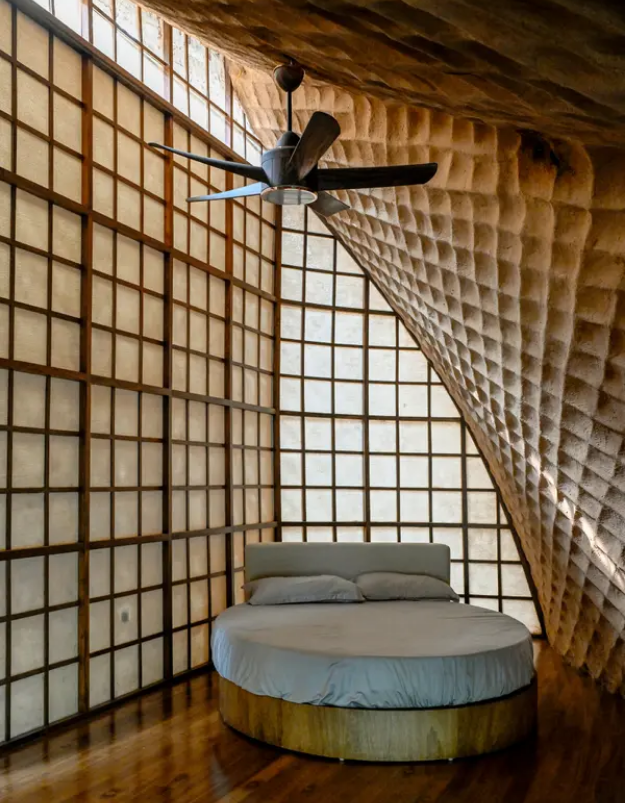 Two bedrooms flank the eastern end of the hallway on the upper level. On the floor below, two larger bedrooms are at opposite ends of the bridge. Floating wooden steps provide access to them from the corners of the living space. Jute and bamboo screens serve as walls throughout the home.
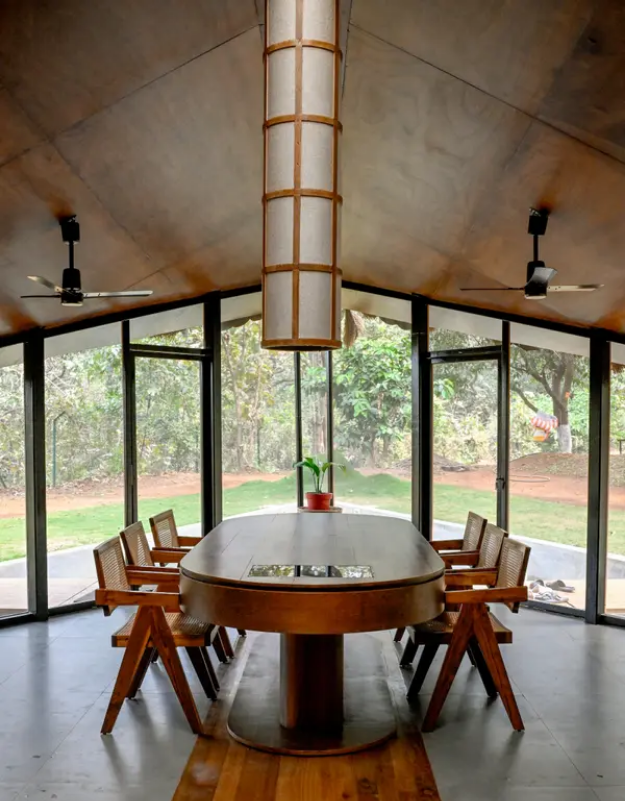 At the far end of the upper floor is an arrowhead-shaped kitchen and dining area. Floor-to-ceiling windows offer views of a triangular pool and the verdant wilderness beyond.
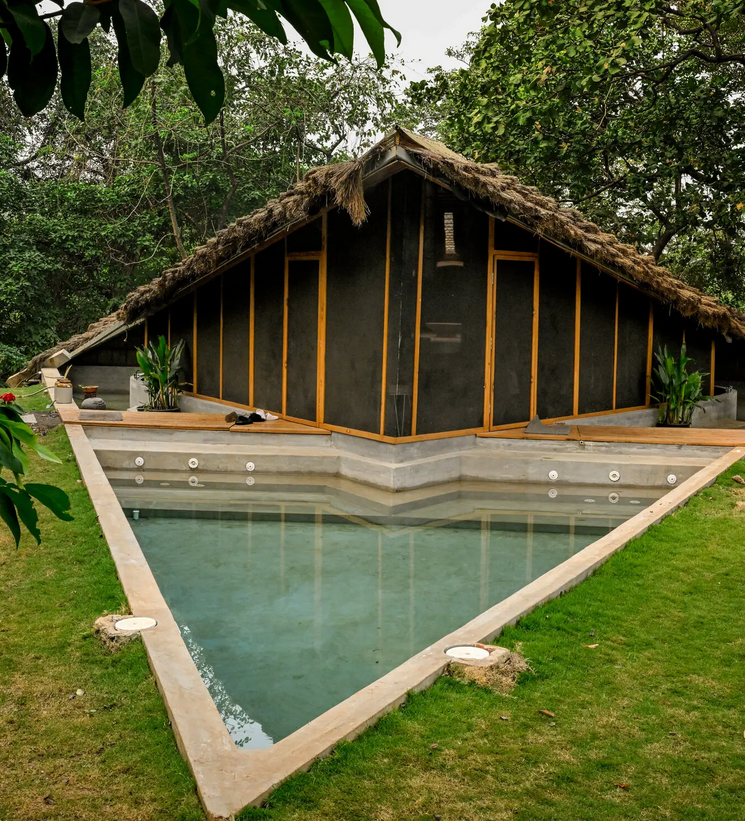 The house, completed in October 2025, ultimately took four years and about $266,000, to build.
 You can read the original article at www.nytimes.com