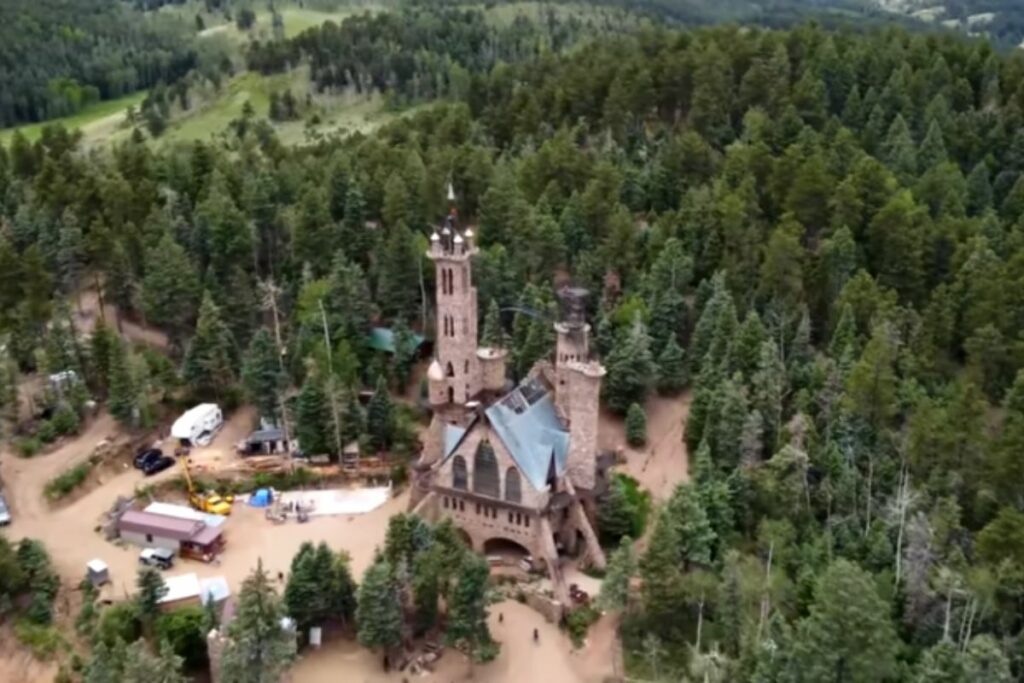
When people see the castle that Jim Bishop built for the first time, the reaction is almost always the same: How can a single man build a giant castle all by himself? The answer lies in decades of manual labor, creativity, and stubbornness.
 It all began in 1969, when he built a first room on top of a large rock, a small chalet built around a water tank. With its arched and round windows, the building began to attract the attention of passersby, who said it already looked like a castle.
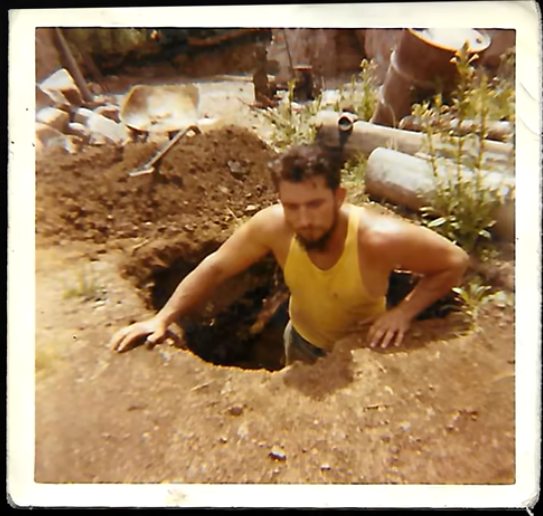 At a certain point, he decided he had already done so much on his own that he didn’t want any more help. Not even his own son, so that no one would take away his credit for having built the castle with his own hands.
He would drag the stones along the ground, place them in a basket, attach a cable to a truck, lift the load, then remove each stone from the basket and fit it into place. Then, repeat everything again, for years. Later, the scrap metal crane became part of the castle’s landscape, but the logic remained the same, always based on physical effort, improvisation, and trial and error.
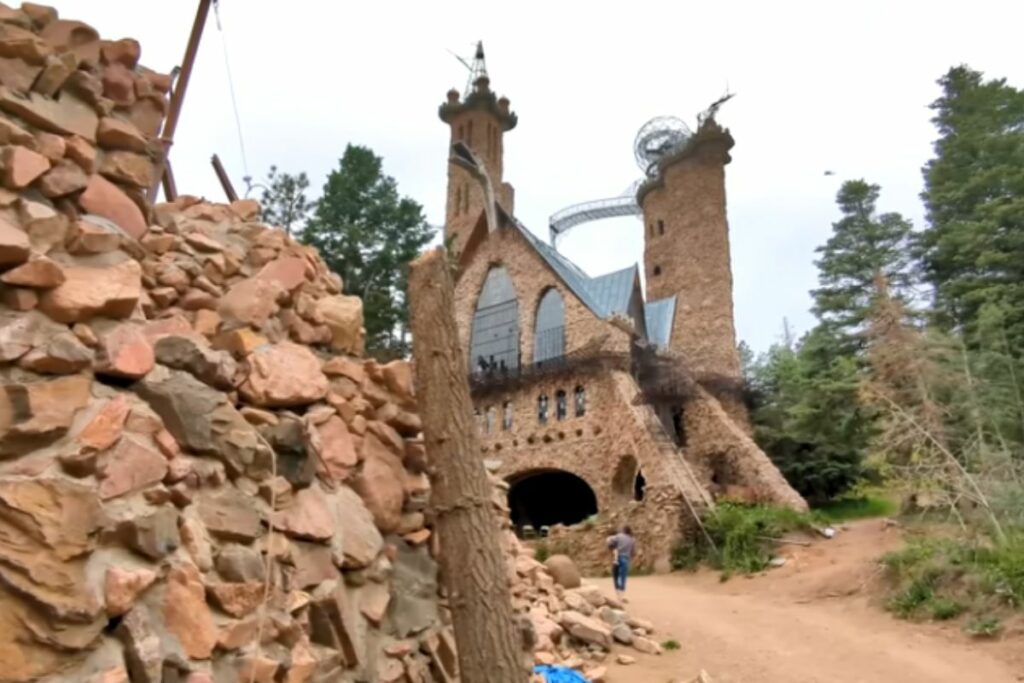 In a single summer, one of the towers rose about 60 feet, an insane feat for someone who woke up with the sun just to carry, cut, fit, and cement stones. The rocks mostly came from public lands, national forests, roadside ditches, and stream beds. The most expensive material wasn’t the stone, it was the fuel and cement needed to transform that pile of rocks into walls, buttresses, bridges, and staircases.
At a certain point, Jim realized that the walls were growing so tall that he began to fear they would collapse outward. The solution was to create flying buttresses, which act as stone and metal arms supporting the structure. One of the buttresses descends about 15 feet below ground, showing that there is a huge part of the castle that the visitor doesn’t even see because it’s buried in solid rock.
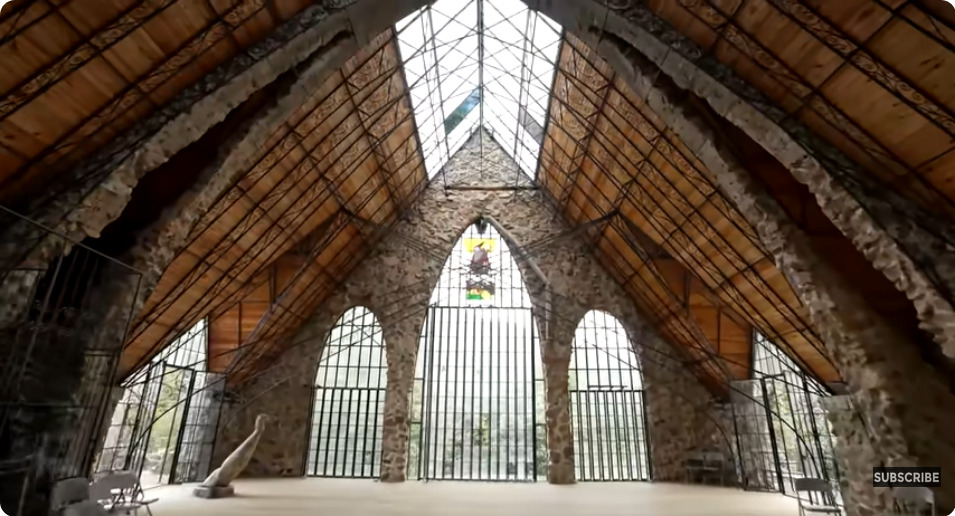 The roof also bears the mark of improvisation and obsession. Each sheet was bent by hand from flat pieces, many of them worked on during the winter months. Jim shaped the metal sheets and then used cables to hoist and fit them into place.
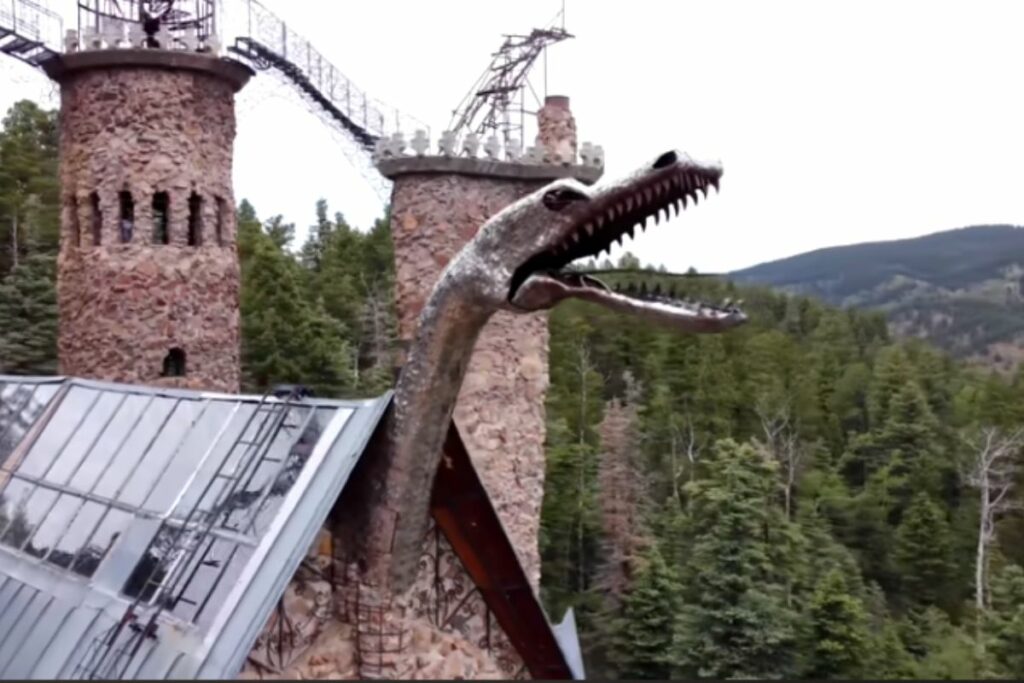 Among all the details, two immediately catch the eye of those who arrive: the 160-foot-high tower and the giant metallic dragon that guards the castle. The tower isn’t tall by accident. At a certain point on the slope, Jim simply couldn’t back the truck any further without plunging off the cliff. So, the solution was to grow upwards. Thus, The 160-foot tower became a kind of physical testament to how far stubbornness and the human body can go when someone decides to build a giant castle all by themselves.
The dragon, however, was explicitly designed to attract media attention. Jim was tired of being ignored by the local press. The piece was constructed from discarded stainless steel heating trays from a hospital. Each tray was cut into eight “D”-shaped scales, which were then riveted to the metal frame. In total, approximately 12 manually operated pressure rivets were used just to create the dragon’s skin. Then, the creature was hoisted with pulleys and fixed atop the castle. From that point on, no one could ignore that fantastic sight.
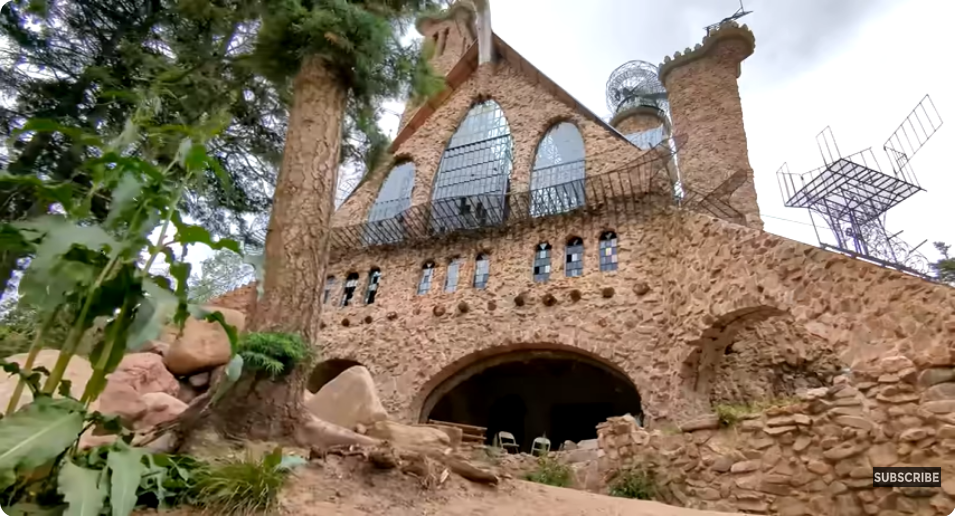 Over time, Bishop’s castle ceased to be just a personal project and transformed into a major tourist attraction. People from all over the world come to the stone castle out of curiosity, drawn by the story of how it was built, and for the experience of walking through a structure that seems to defy all the rules of a traditional park.
Unlike many tourist destinations surrounded by signs, rules, and contracts, the castle is guided by a radical philosophy of freedom. Jim Bishop believes that this is one of the last places of true freedom in the world. Anyone who enters, enters at their own risk, and that’s the basic rule of the place.
 In recent years, Jim Bishop’s health has deteriorated as Parkinson’s disease has progressed, making physical work difficult. Dan, his son, took on most of the responsibility for maintaining the structure and taking care of the most urgent renovations, such as reinforcing floors and stairs that are heavily used by visitors.
Despite the limitations, Jim wants to stay there. He prefers to sit, tell stories to those who arrive, show what he has done, and listen to people’s reactions. For Dan, his father’s wish is clear and simple, and everything indicates that the future of Bishop’s castle lies precisely in trying to keep him there, at the center of the creation he dedicated his entire life to building.
 You can read the original article at clickpetroleoegas.com.br
You can watch a video at www.youtube.com