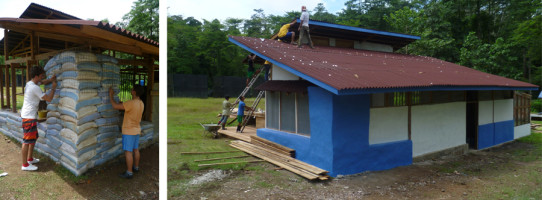
The workshop is over. I’m posting this because the house turned out nicely and maybe they’ll have future workshops.
The workshop is over. I’m posting this because the house turned out nicely and maybe they’ll have future workshops.
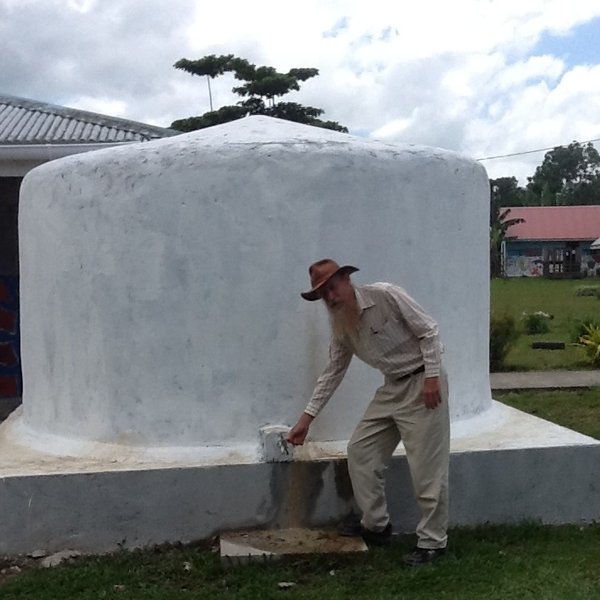
We were pleasantly surprised to see this earthbag water tank just down the road from a house we (Liz’s group) were building. The church group saw our project and on their own figured out how to use the same earthbag techniques to make their water tank. No plans, no technical assistance, nothing.
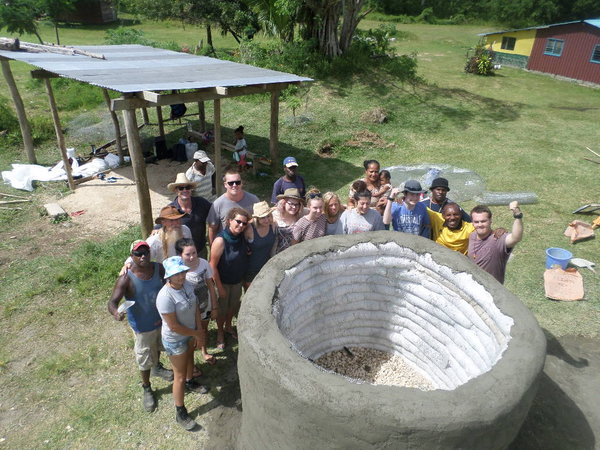
We’ve nearly finished an earthbag water tank with narrow tubes that cost $200 in materials. Plastic tanks this size retail for around $1,350 in Vanuatu, so this design costs far less than the main competing product. It won’t blow away in a hurricane, break down from UV rays or taint the water with plastic chemicals. Our water tank includes a domed ferrocement top that’s exceptionally strong. It can be built in 2-3 days by four workers with minimal skill, although plastering skill is very helpful. There’s a huge water shortage on the islands here in Vanuatu, as well as many other places. Those who learn this method could make a lot of money selling water tanks since demand is high and cost of labor is cheap.
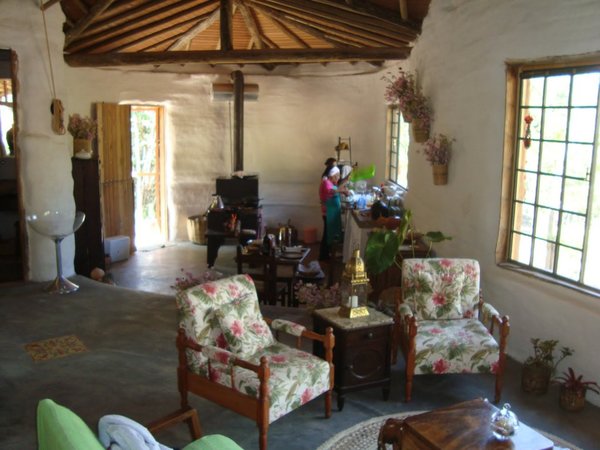
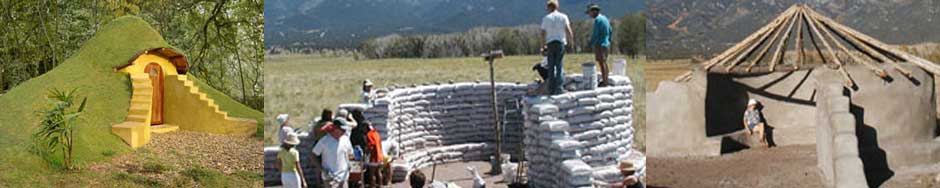
Here’s another wonderful project by AUWA Earth. We’ve profiled them before, but this little house caught my eye when browsing their website again. And by the way, check out their slideshow that shows a very fast earthbag building system using raschel mesh tubes.
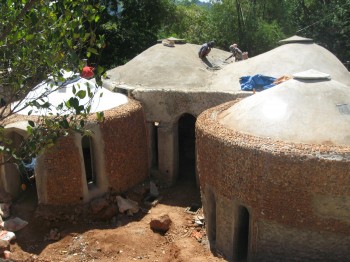
“Remote island in the Philippines turns to Indiegogo for help in earthbag construction project.
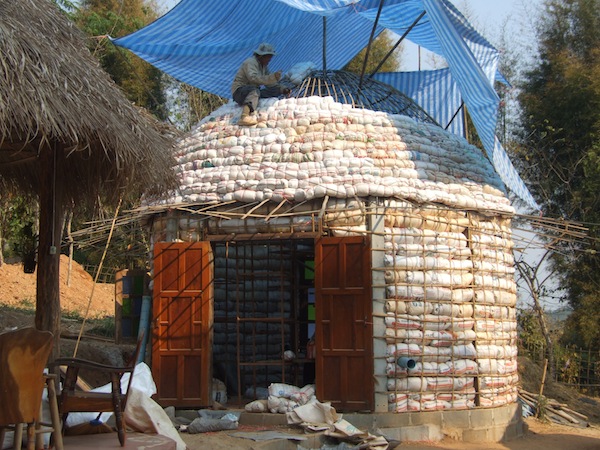
Richard, a long time reader, is really excited about building with rice hulls. He’s especially interested in using this method after learning from Maggi of Chiang Dao B&B in Thailand that rice hulls are more durable than previously thought. So, not only do rice hulls save lots of time and hard labor, and create a highly insulating walls, they should also last a long time with proper precautions. Richard sent Maggi a list of questions to learn more details.