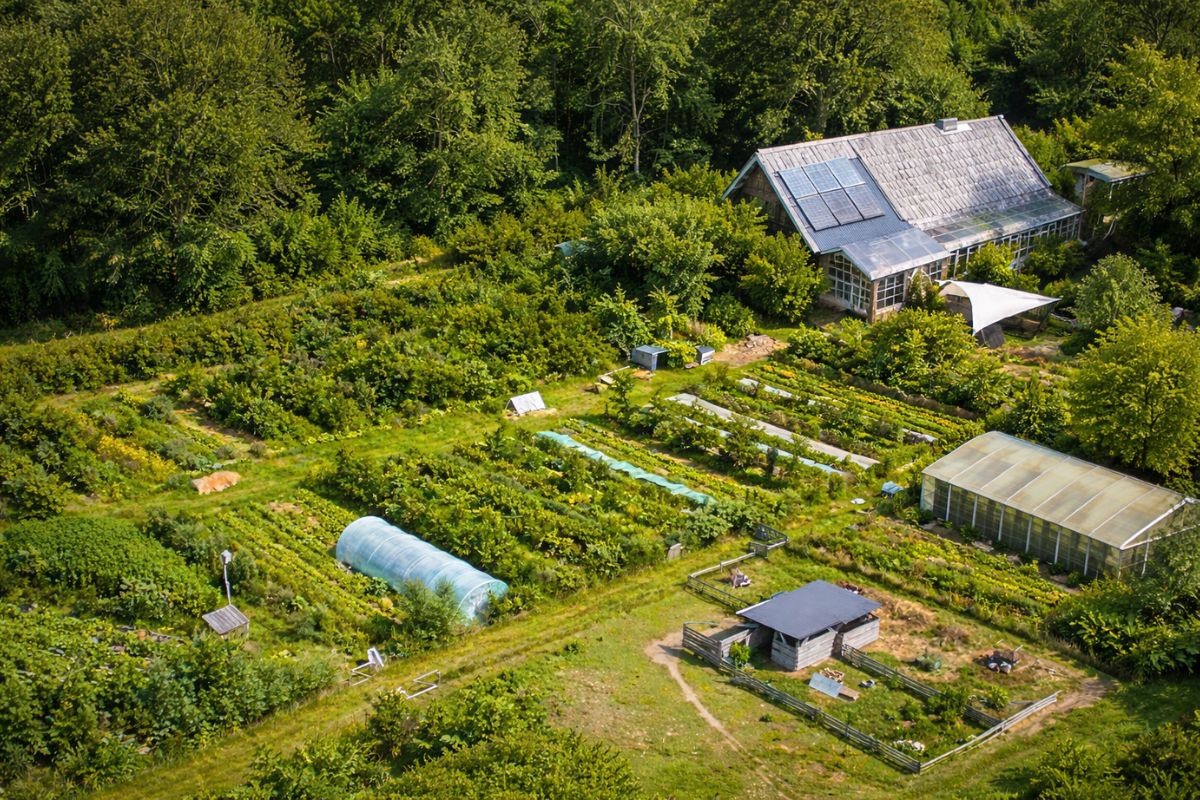
When a Danish couple found a small rural property, all they saw was a dead field with exhausted soil, devoid of earthworms, the result of years of monoculture of grains and corn sprayed with pesticides, herbicides, and fungicides. So they began a patient process of building, rebuilding, and regenerating the soil. They started observing the landscape, testing combinations of species. Instead of tilling the soil, they began to build life in it using organic matter, permanent cover crops, and planted trees, shrubs, and perennial plants, each with its own ecological function.
Within a few years, what was once a dead field transformed into a self-sustaining oasis: organic matter increased, soil structure improved, and biodiversity began to return. The entire area was planned based on permaculture principles. The house was positioned in the center, designed as the heart of the system.
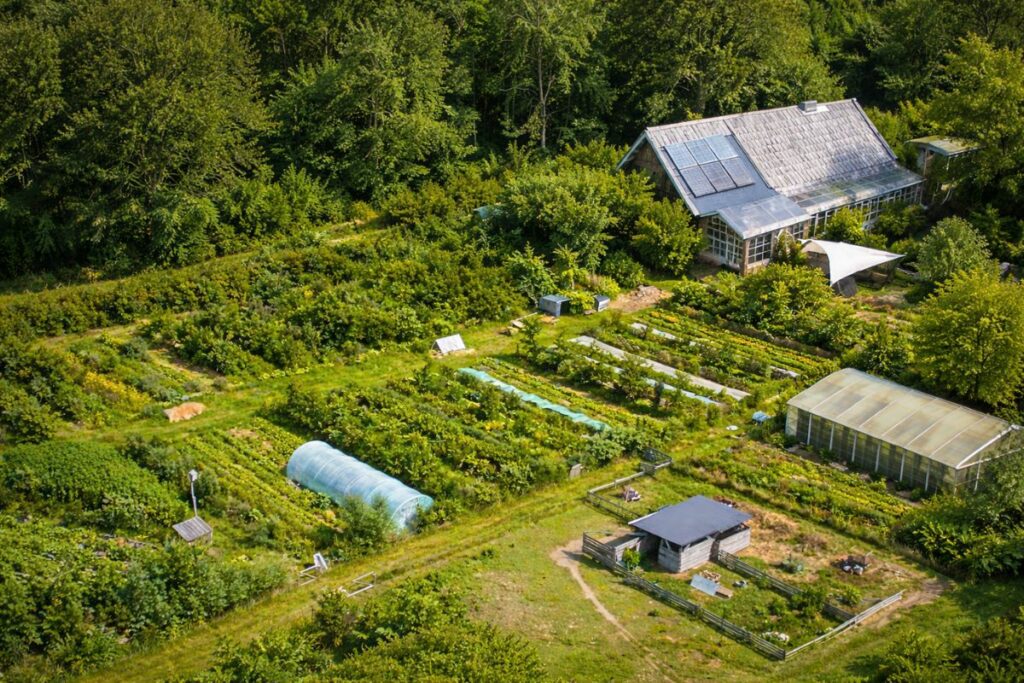 To the south, the couple installed the main vegetable garden, a greenhouse, and a small seedling nursery, ensuring a constant production of vegetables. To the north of the house, a forest garden was created, occupying approximately 300 square meters. There, apple trees, plum trees, hawthorns, and other trees in intermediate successional stages coexist, allowing light and air to enter.
Among the trees and shrubs, a layer of perennial vegetation completes the “edible forest,” producing food in the same place year after year, without the need for constant replanting. This combination ensures harvests that begin in late winter or early spring and extend until late autumn. Fruits, berries, leaves, and roots are harvested practically year-round from a relatively small area, bringing the family closer to food self-sufficiency.
Trees are planted in rows spaced 14 meters apart, in a north-south orientation, creating corridors of light between the rows. In the spaces between the rows, they cultivate vegetables that require more sun in permanent beds, without disturbing the soil. Direct planting, continuous use of mulch, and the regular addition of compost and composted horse manure transform the garden beds into veritable “fertility sponges.”
The result is a mosaic: rows of fruit and nut trees, strips of vegetables, and regenerating pastures. This arrangement allows for the harvesting of food from different strata throughout the year and also protects the soil from erosion, extreme weather, and nutrient loss.
The couple think of the farm as an integrated ecosystem in which animals are a key component. Rabbits live in mobile hutches, which they move daily through the vegetation, cutting the grass and fertilizing the soil with their manure. Dairy goats are managed in rotational grazing systems, changing areas every three or four days. This improves soil fertility, reduces the impact of trampling, and prevents overexploitation of preferred plants. Goat milk is used to make kefir, cheeses, and other preparations, reinforcing the family’s food independence.
There are also Indian runner ducks, which roam large areas in search of slugs, and musk ducks, which are calmer and equally efficient at controlling pests, in addition to providing meat. Geese, goats, and horses participate in pasture management, while a flock of sheep is managed holistically in additional areas. More than just “producing meat,” the main role of these animals is to build fertility, control pests, and maintain vegetation balance.
They created a small lake to collect rainwater from the greenhouse roof. A few days after filling up, a salamander appeared swimming there. For someone who had arrived on lifeless soil, seeing an amphibian spontaneously settling in was a powerful sign that regeneration was working. Over time, birds, insects, and other wildlife began to frequent the farm. The landscape ceased to be a homogeneous and silent field, becoming instead a vibrant mosaic of sounds, smells, and colors.
The couple’s grand vision is that this type of farm will cease to be an inspiring exception and become the standard for agriculture in the future.
You can watch a video at www.youtube.com
You can read the original article at en.clickpetroleoegas.com.br