After 11 months of no feeds or fertilisers, see the fine growth of Homeacres vegetables, many planted in summer after clearing first harvests, and no compost or other food added. In undisturbed and mulched soil, organisms manage resources better plus plants root more easily, as you see here.
Landscaping
Vegetable Garden Design Ideas
Slideshow of interesting garden ideas. Hope you enjoy.
Permaculture Neighborhood Tour w/ Costa Rica’s Stephen Brooks
Imagine a whole neighborhood full of tropical fruits on every lot, on every embankment & around any corner. Then combine the lush food forest with the most impressive community garden, river access, great spaces & even a well-planned biogas system that creates energy from each home’s septic waste. All of this intelligent design can be found at La Ecovilla’s permaculture community, in San Mateo, Costa Rica.
50 Years Ago, This Was a Wasteland. He Changed Everything
Almost 50 years ago, fried chicken tycoon David Bamberger used his fortune to purchase 5,500 acres of overgrazed land in the Texas Hill Country. Planting grasses to soak in rains and fill hillside aquifers, Bamberger devoted the rest of his life to restoring the degraded landscape. Today, the land has been restored to its original habitat and boasts enormous biodiversity. Bamberger’s model of land stewardship is now being replicated across the region and he is considered to be a visionary in land management and water conservation.
Growing Microgreens for Profit
Urban Farmer Curtis Stone talks about his three most profitable microgreens. Curtis has other videos on his microgreen operation in Canada, his soil mix, greenhouse construction, etc.
Swale Paths for Permaculture Gardens
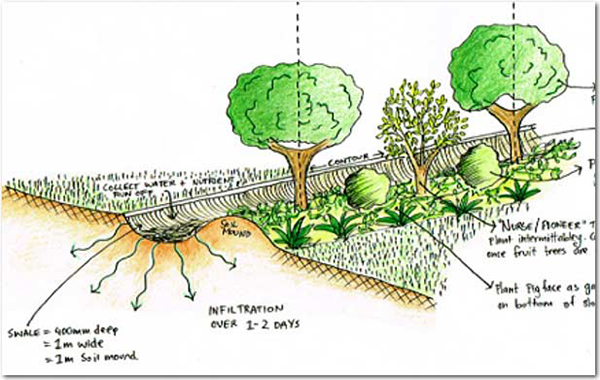
“A swale is a ditch dug on contour. This means that water is not draining in one direction — instead it spreads evenly across the slope and sinks into the soil. Traditionally, the earth that is dug out is placed on the downhill side and planted out with a mixture of perennial and annual crops (but always perennial to ensure that the earth is stabilized with good long-term root structure).”