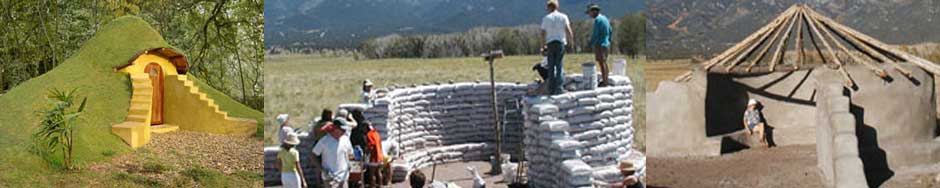
To reduce the reliance of earthbag construction on polypropylene, an environmentally detrimental material, and simultaneously address the urgent issue of fast fashion waste, this research explores the suitability of using earthbag construction to reduce postconsumer clothing waste in landfills. Three approaches to generating new earthbag geometries were explored using sewn domestic craft: alternate modular arrays, free orientation in the wall, and recycling from existing forms.
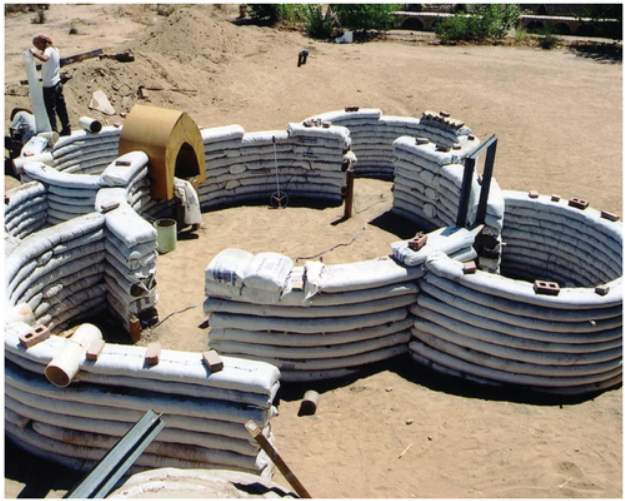 Earthbag construction has not evolved as rapidly as other construction materials. Contemporary earthbag construction utilizes tubular forms, such as Superadobe, which coils upward during the erection of a dome made from compressed earth, contributing to its resilience against earthquakes and fire. The architectural form of earthbag construction has not expanded beyond rectangular structures and corbelled domes, resulting in a copy-and-paste approach to earthbag structures worldwide. The research presented in this paper begins to challenge conventional earthbag construction field assumptions by proposing alternative geometries and materials that can be more sustainable and flexible than the norm.
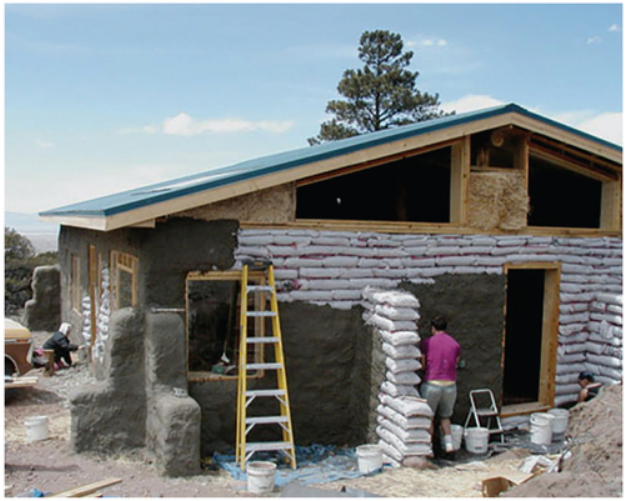 Earthbag construction is a stack-building system that utilizes virgin plastic bags (such as sandbags or similar flexible containers) for modular stacking, compression, and in-place curing of earth mixtures. Barbed wire is laid between each course to enhance the tensile strength between bag-to-bag interfaces. Also recognized as sandbag technology, earthbag construction conventionally uses two types of bag geometries: rudimentary sacks and CalEarth’s coiled tubular bags . Filled earthbags vary in weight from 50 to 100 lbs. and are often stacked in a running course.
Compared to other wall systems, such as wood frame, steel, and concrete, earthbag construction is more affordable—plastic earthbags are inexpensive in bulk, and earth is typically available for free on the building site. Economically, earthbag buildings can serve as an affordable housing option.
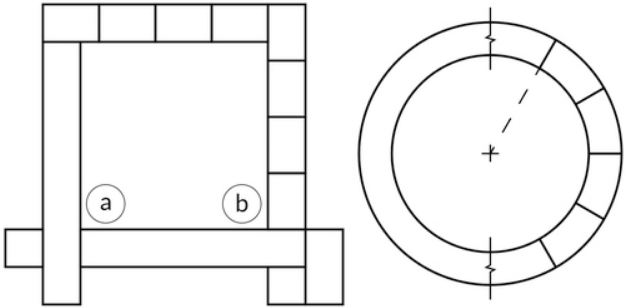 The bags can be molded and shaped using conventional earthbag construction methods to mimic traditional masonry geometries, such as blocks and keystones. The current trend in earthbag buildings, which has persisted since their conception, is the use of one-story corbelled domes and buttressed box structures stabilized with cement.
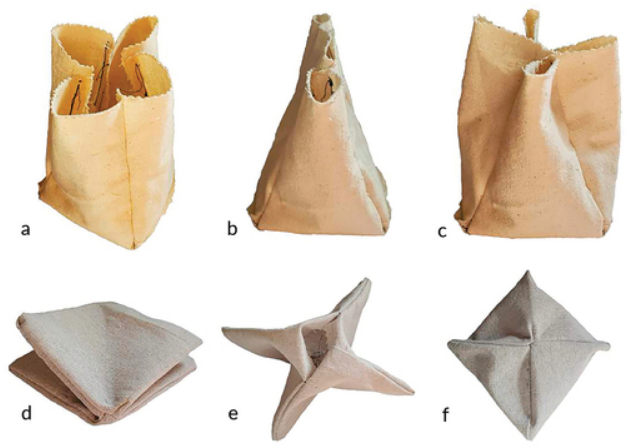 Textiles in nature can be twisted, folded, compacted, and pulled into shape. Clay, a natural binder, enables earthen mixtures to exhibit remarkable plasticity. With the bag, earth mixtures can be easily shaped into non-block geometries. Earthbag construction favors bodies with greater physical strength—a smaller module for lifting, carrying, positioning, and handling on-site would extend its purported accessibility beyond the constraints of a coffee can or scooping implement. By emphasizing the flexibility of textile earthbags, earthbag technology can be refined into a truly accessible building practice that can be integrated into existing waste streams.
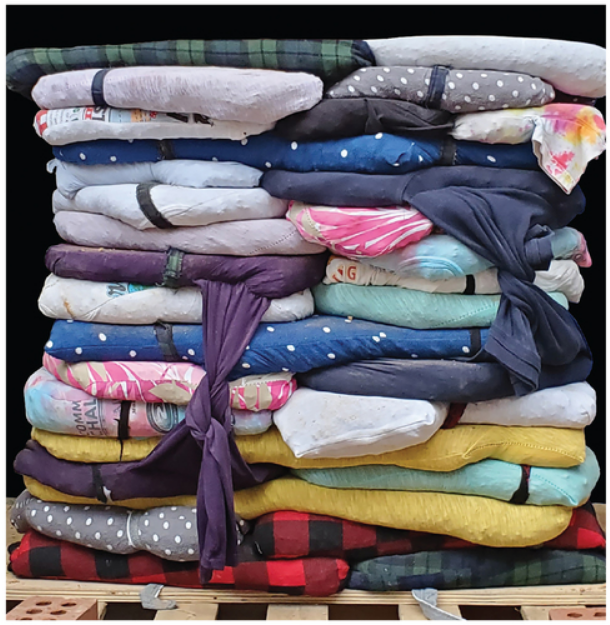 In the research presented in this paper, various materials and bag components were recycled from flexible sheets and supplementary parts, such as tarps, textiles, and strings. The materials were medium-duty polypropylene tarps with double-layered heat-adhered layers and twine. More recent prototypes were recycled from post-consumer clothing and sewn into new geometries. Depending on the quality of the materials acquired secondhand, they required post-collection treatment or cleaning to ensure sterility. The materials were then classified by fabric type and organized to produce bags. To reduce the total lifting weight of earthbags, preliminary prototypes of smaller scale and weight than the conventionally used 50-lb. (22.67 kg) and 100-lb. (45 kg) dimensions were prioritized. Weight, ease of bag assembly, and adjustments to the earthbag construction methodology were noted.
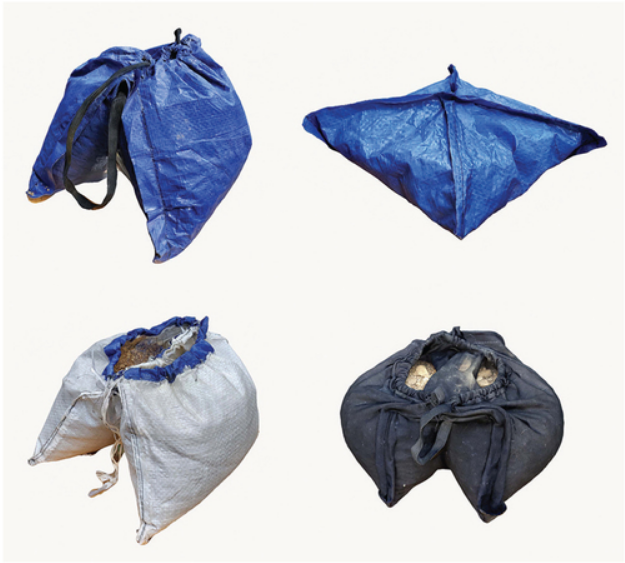 Modifications to the existing earthbag geometry involved a series of geometric adjustments, or “tailoring,” to the unfolded form and prototypes of additional parts, such as drawstring and handle components. Changes to the existing earthbag into new geometries encouraged adjustments to the earthbag construction methodology—for example, adding a handle or a noninvasive opening for vertical reinforcement that does not penetrate the earthbag protective layer. Likewise, such additions essentially embedded practice into the bag—changes explicitly responded to existing earthbag construction methodological conditions. Downsizing the earthbag decreased the weight lifted above a builder’s head and/or made lifting less laborious. Also included in this category is the introduction of parts to eliminate or optimize specific steps in the earthbag construction process. For instance, a Bi-cinch bag prototype was modified to self-seal using its weight and be actively flipped into different configurations on the wall; this is contrary to conventional earthbag construction, which staples, stitches, or overlaps the earthbag in a particular configuration.
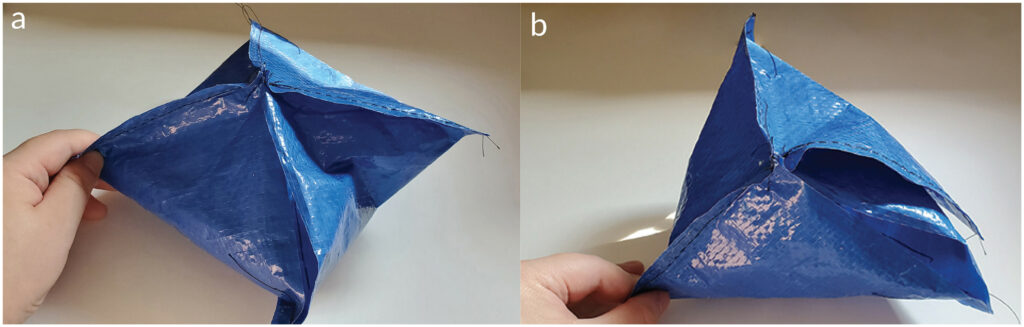
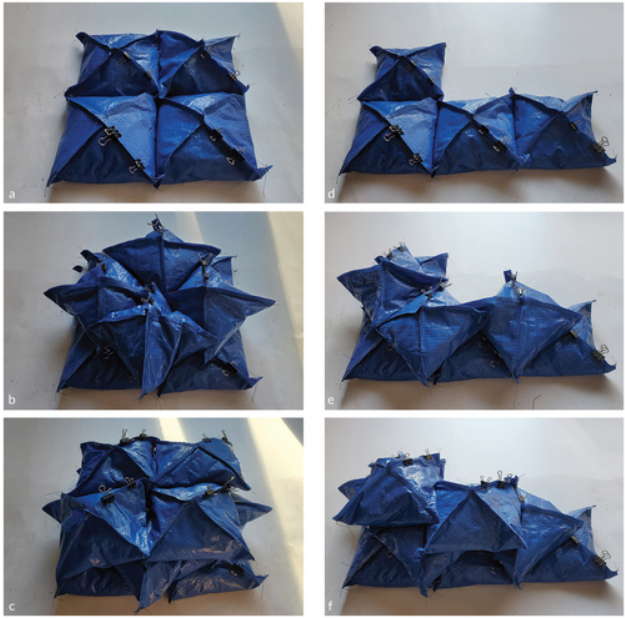 These investigations produced three approaches to alternate earthbag construction geometries, each focusing on addressing changes to stacking and earthbag materiality. The first prototype examines modifications to the planar array of earthbag modules, diverging from conventional courses and curves in sack-shaped and coiled earthbags. Earthbag structures are conventionally circular, rectangular, or a hybrid of these geometries in plan, tamped flat. Bags are laid in a line that makes up the perimeter of the building.
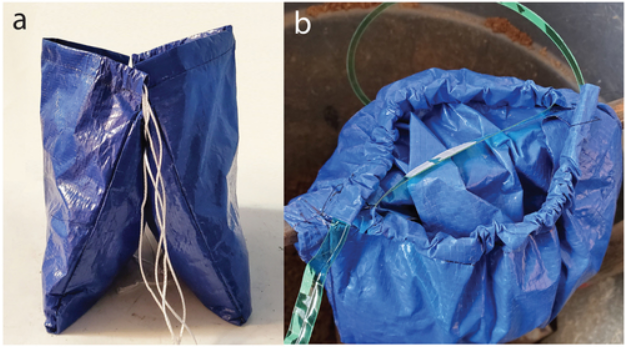
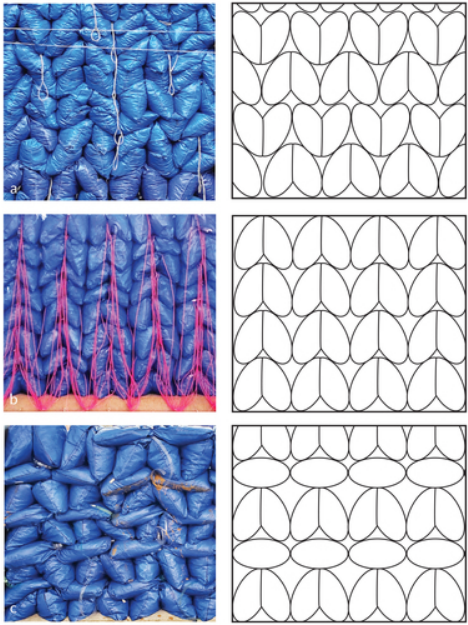 The second prototype explores freedom in in-wall configurations and enables the earthbag placements to be rotated. In conventional earthbag walls, bags are dominantly arranged in a running bond for stability and to prevent soil spillage—the ends of the bags are folded, pinned, and butted against existing bags to seal the earth on each layer. Hyperadobe and Superadobe earthbags, which utilize tube earthbags, are stacked in an elongated formation. The second prototype explicitly introduces an alternative method of sealing the bag, allowing builders to rotate the geometry freely.
 The third prototype concept investigates new earthbag geometries that respond to the material from which they are derived, which may or may not be a sheet or conventionally bag-shaped geometry. As discussed in , conventional geometries are typically polypropylene or polyethylene bags, which are manipulated with tools and external forms. The third prototype investigates earthbags derived from recycled clothing and the subsequent irregularities in shape, size, and material behavior associated with worn garments and apparel.
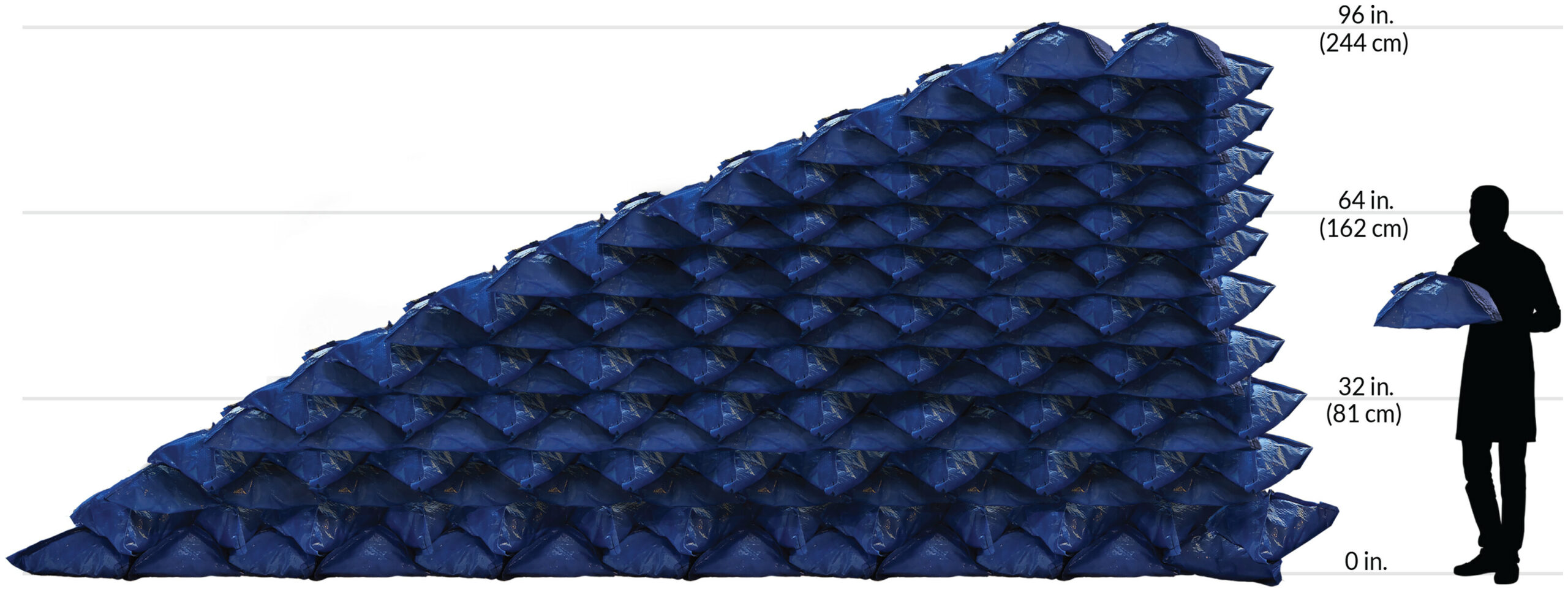
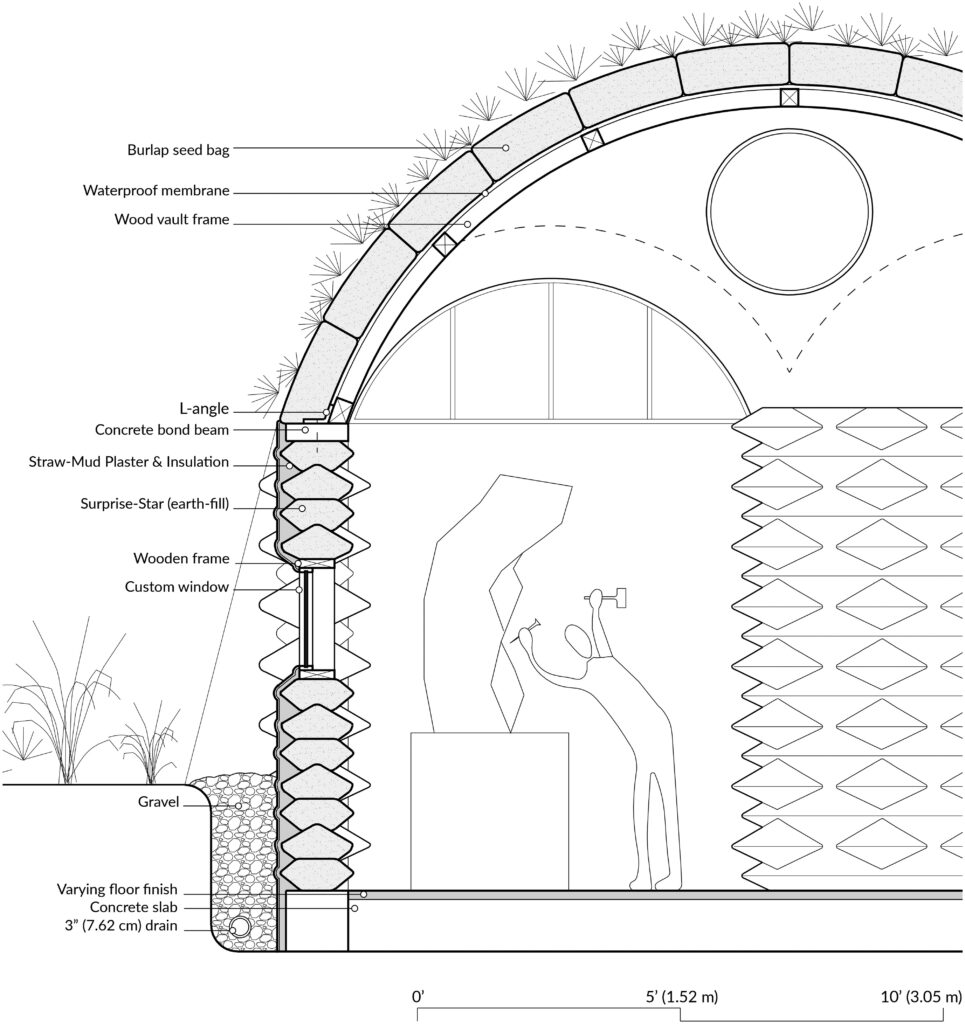 The Surprise-Star prototype is an earthbag that can be configured into a three-point (S-3) or four-point (S-4) star geometry, taking advantage of the flexibility of the bag material to freely manipulate the bag using folds and overlapping sheets, as shown in . The basic four-point shape can be constructed by sewing adjacent sides of a rectangular sheet, resulting in a flexible container cradling subsequent earthbags in a stack. Initial Surprise-Star prototypes were sewn from medium-duty polypropylene sheets commonly used in outdoor-rated tarps. When filled with earth, the bags puff out to form a rounded square or triangular profile, allowing them to nestle new earthbags in the valleys of adjacent bag-to-bag connections. This result contrasts with the conventional pattern of laying earthbags, which involves running bonds or coils and changing the module of the earthbag both in the plan and top-down earthbag interactions. Not only does this alternate form shift how the modules are placed side-to-side, but it also suggests an alternative way of interlocking earthbags on top of each other—the polyhedral shapes of the S-4 and S-3 geometries indicate a means of securing earthbags between earthbags and reduce reliance on barbed wire during the wall assembly process. Although the shape of the disengaged earthbags will warp out from the forces of the earth inside the bags, if compacted and cured within the negative form of these shapes, the earthbag can be hardened into such geometries, much like keystones and wedges in conventional earthbag construction. The Surprise-Star geometry was fabricated at a quarter of the traditional scale of the earthbag.
The Bi-cinch earthbag is a conventional earthbag sack shape modification created by introducing a crease at its midpoint. When sewn from moderately stiff fabric, such as polypropylene tarp, the Bi-cinch prototype can be propped open on the ground or hung from its center to make it easier for builders to fill the bag without the use of a conventional bag stand, which must be constructed separately. The addition of a drawstring in the new opening allows the bag to be lifted by the string and simultaneously sealed. A flap material can cover the opening and effectively seal the bag, allowing no earth infill to spill out when it is rotated and turned upside down. In conventional earthbag construction, bags are either sealed by folding the ends underneath other bags, twisted, stapled, or nailed shut. As a result, the earthbag’s performance as a container depends on its orientation in the wall and the existing modules in the assembly. The ability to freely manipulate the earthbag container within the wall opens the façade design of earthbag structures to be more creative, as shown in . When folded and filled, the Bi-cinch earthbag transforms into an earth container that can be manipulated into an A, V, or unfolded flat orientation. Bags can be placed between the crowns of previous layers and nest in the valleys within each course. Given the earthbag’s flexibility, the modules can also be treated as space-filling containers to fill in gaps, offering alternative textures to the earthbag wall that cannot be observed in earthbag structures made from coiled tubes and sack geometries.
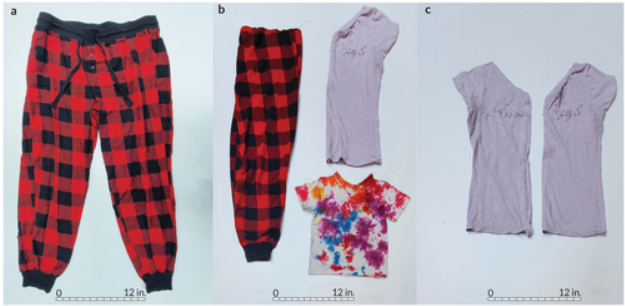 The third geometry innovates the earthbag’s materiality while addressing the wastefulness of the global clothing industry. Conceptualizing clothing as containers for the human body, it is not a stretch to consider clothes as alternative containers for the earth. Pants, for instance, possess two tubes to cover the legs, which can be separated (or not) into long earthbag geometries. Depending on their size and dimensions, the shirts and tops can be sewn shut or divided to create earthbags by simply sewing the ends together. This process is more straightforward than cutting out a specific earthbag shape from a sheet and reduces the amount of unused textile waste from cutting out pieces of cloth.
An initial earthbag wall prototype was filled with Hagerstown soil, which has a texture of 60% sand, 10% silt, and 30% clay. The ideal sand-to-clay ratio is 70-75% sand to 25-30% clay, so sand additives were mixed into the earth and moistened before compaction. The first two rows, which totaled 4 in. in height, were filled with gravel to account for the wet climate. Earth-filled earthbags made from garments measuring 10, 20, and 30 in. in length weighed 9.3, 28.3, and 42.5 lbs., which is lighter than the average weight of conventional bags at 90–100 lbs. (40.8–45.3 kg). Each layer was tamped to a 2 in. thickness and exhibited varying degrees of stretch when compacted. A strand of four-pointed barbed wire was laid between each row and held down with cords made from salvaged waistbands from pants.
An earthbag production process that transforms secondhand clothing into bags suggests integrating earthbag construction into circular streams for textile disposal or recycling. Can textile waste and/or post-consumer clothing be used for earthbag construction? Can earthbags be a suitable alternative to unwearable textiles, rather than bundling them with municipal waste and filling the landfill? Could earthbag construction respond to the unsustainable production of fast fashion products, thereby preventing wearable yet out-of-fashion textiles from entering landfills?
Investigations into alternative earthbag geometries with various textile materials yielded several expected and unexpected challenges that can be improved or addressed in future stages of research. For instance, when filled with different earth infills, a fabric’s elasticity impacts an earthbag’s ability to support compaction forces and affects its geometry’s distortion beyond its resting state. The Surprise-Star prototypes tended to sink into a flat pack when filled with fine sand, whereas a mixture with more clay, on the other hand, could adhere to the inner walls of the bag, which helped it retain its shape better before being tamped. Regarding tamping, specific geometries and orientations were more conducive to improved translations during downward compaction on the wall. For example, the A and V configurations of the Bi-cinch prototype allowed the halves of the bags to be wedged together.
Meanwhile, a space-packing method using bags to level the course resulted in the ends of the Bi-cinch being more flattened. Additional research is needed to assess different types of fabrics in terms of their moisture absorption and ability to retain shape. The type of earthbag fabric used affects the wall’s breathability and the type of earth used as infill in construction. Burlap bags with coarse weaves were unsuitable for infills containing fine aggregates, such as sand. Polypropylene is moisture-resistant but less breathable. The research presented in this paper explored the impact of novel earthbag geometries on stacking patterns and on-site filling practices. Still, it did not consider their effects on the curing period of earthbags during the construction process. The curing period, which ranges from three to four days depending on the climate, influences the stability of the bags as the wall is assembled, as premature exposure to water can degrade the compaction of the earthen wall mass. Understanding how different textile materials, which have varying moisture absorptions, aeration, and wicking properties, can impact earthbag stability would provide insight into a more comprehensive selection of alternative earthbag materials for future research and comparisons.
You can read the original article at www.tandfonline.com
I used to love earthen construction. Then i realized, no one mentions labor, the largest cost in construction. Marriages fail when people try to build their dream home every weekend. Construction is always hard work.
Then i found out what you need to do to satisfy building codes in earthquake areas. They surround my beloved rammed earth walls with concrete cages.
Insulation is always a problem, but especially with masonry. Without it… well, you know what cold is.
In europe and most of the world, concrete construction is king. In the US…..we still have lots of trees, though that is wearing thin….
It will be good to see truely low cost housing, in both labor and materials, evolve. I constantly see advertizing for it, but nothing on the market, just like in energy production….it would be good for so many people now struggling with high energy and housing costs.
I truely believe that everyone on earth can, and should have their own home. It is one of the most wonderful things that can happen to you.
“Insulation is always a problem, but especially with masonry.”
I’m using foamed recycled glass, with clay and sand, in a continuous tube.
The foam glass is supposed to have an insulating value of R=2.4 per inch. So my fifteen-inch walls should have the insulating value of eight inches of fiberglass insulation.
Here’s a time-lapse of the doors going in and the foundation backfill:
https://youtu.be/qL2jjdQVtKA?si=8yfMUcodOU8ksYWg