The ancient Arabian city of AlUla had been uninhabited since the 1980s, abandoned when a new town center was established nearby. Here, hundreds of mud-brick houses, huddled around a tenth-century fortress. The old town is now being restored as a cultural district.
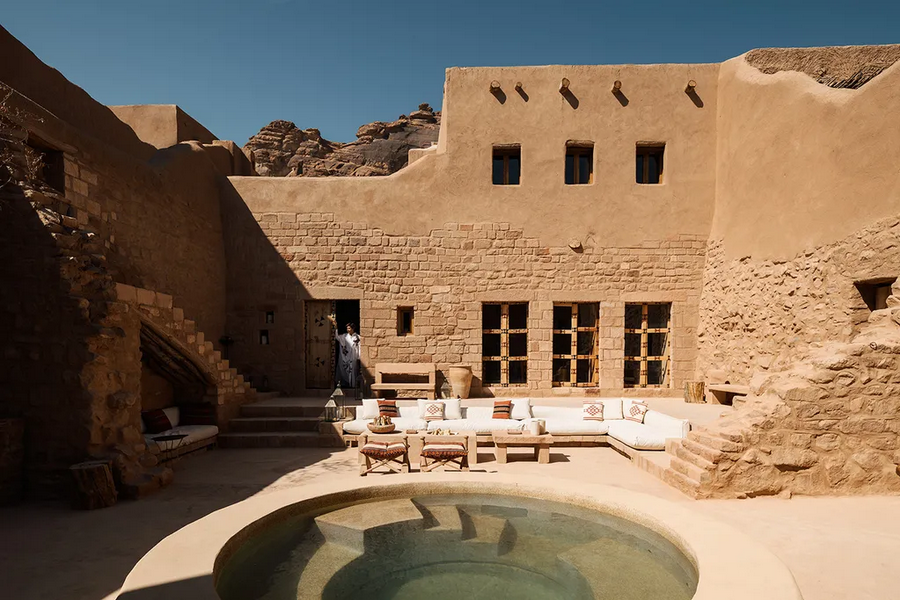 A void, formed from the remnants of two former houses, was known locally as Beit Bin Nouh, named after the family that had used the space as an open courtyard for gatherings.
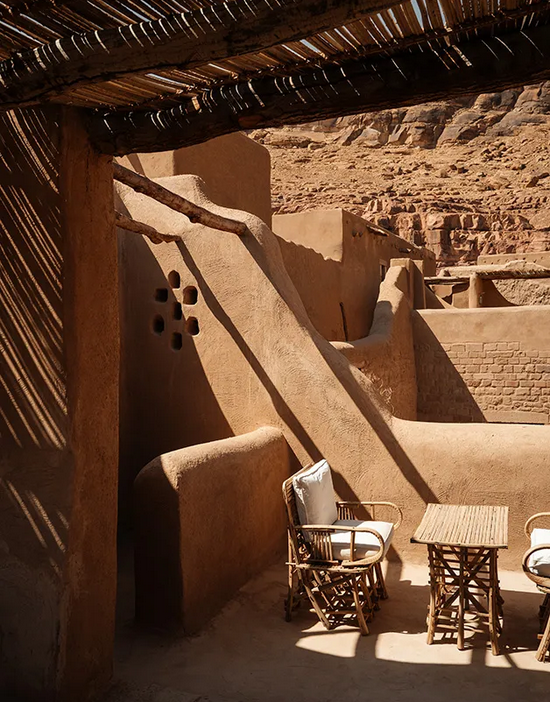 The mud-brick houses had followed a layout that was repeated across the old town: three rooms on the ground floor were used for working, cooking and storage, with private rooms upstairs for sleeping and family life. It was a simple model that was shaped directly by the region’s climate and conditions: a thick stone footing was there to withstand flash flooding; the mud-bricks, made from local soil, clay and straw, insulated the interiors; small windows controlled heat; narrow alleys created shade; and courtyards brought ventilation.
 Fahmy’s team conducted a detailed reading of the topography, identifying original floor levels, thresholds and circulation patterns to ensure the rebuilt structures followed the logic of the earlier homes.
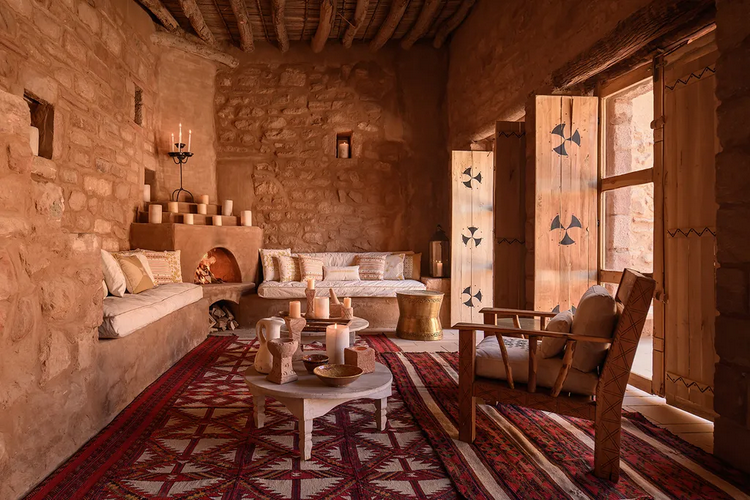
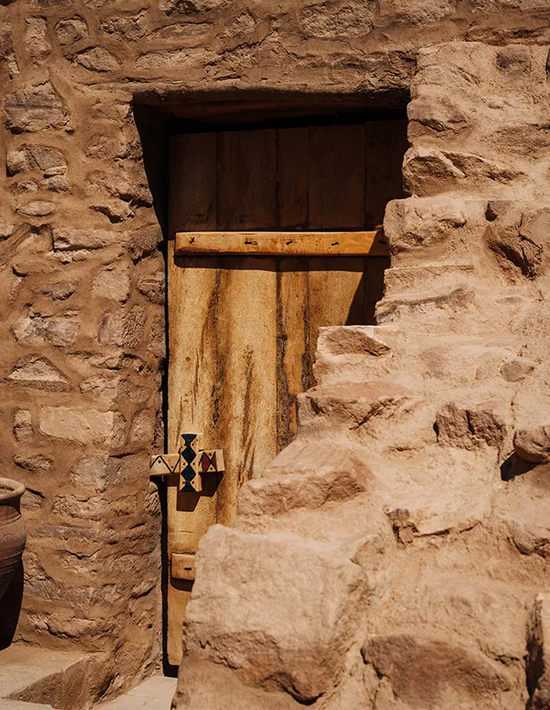
 Every material and design choice ties the building back to its environment and historic construction methods. Stone was sourced from local quarries; the tamarisk wood beams and door frames are treated with natural oils.
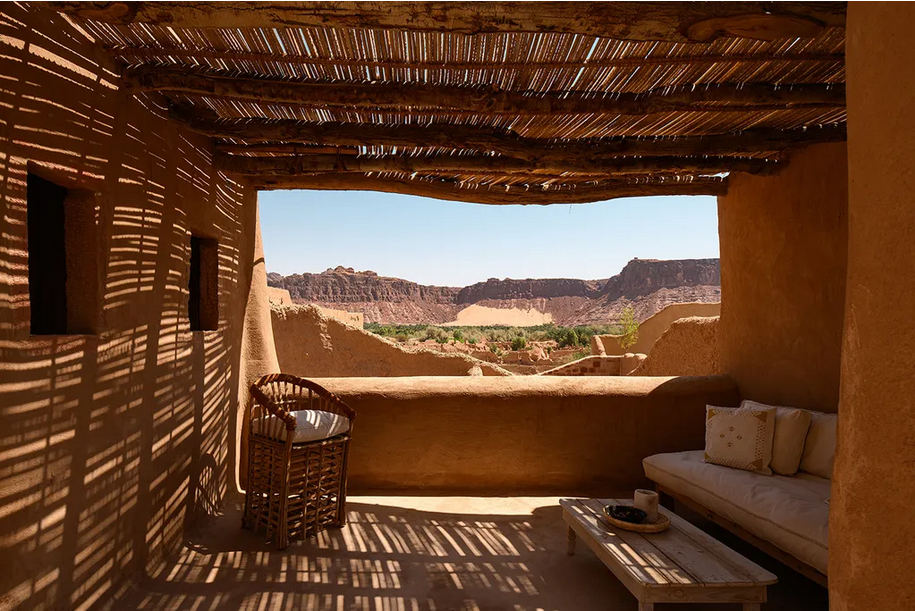 Woven palm fronds line the ceilings to create a breathable layer. The pipes and wiring are wrapped in palm rope, while the ancient system of subterranean water channels was partially revived to handle drainage and reduce water consumption.
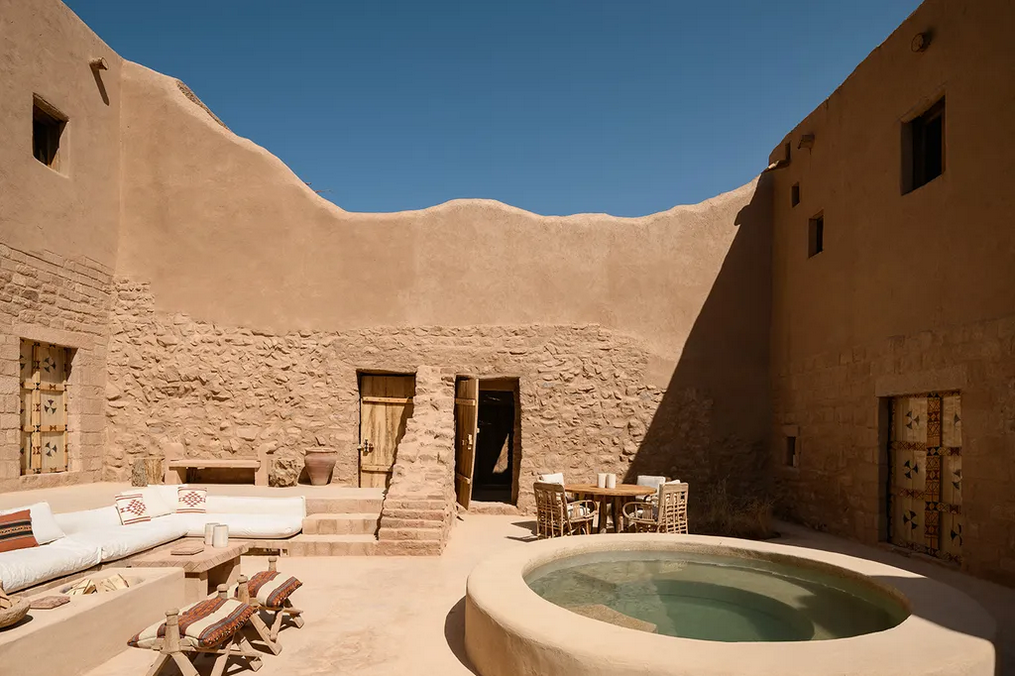 ‘The first lesson was about sustainability,’ says Fahmy. ‘Water management, materials, how people lived with this climate. We followed what the place was already telling us.’ As a result, Beit Bin Nouh is a masterly example of how earth construction, when guided by the site itself, can carry a historic home into a contemporary context without losing its character.
 You can read the original article at www.wallpaper.com