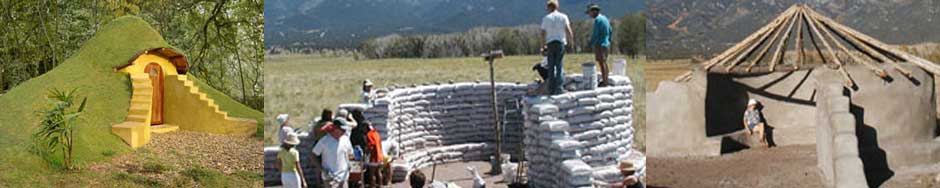
In 1999, a 6.2 magnitude earthquake devastated Colombia’s coffee region. Concrete buildings collapsed. Brick houses turned to rubble. Bamboo constructions stood firm. The phenomenon was so perplexing to Colombian engineers that, in the following years, the country did what no other had done before: it included bamboo in its national seismic code as an official structural material, with calculation standards as rigorous as those for reinforced concrete and steel.
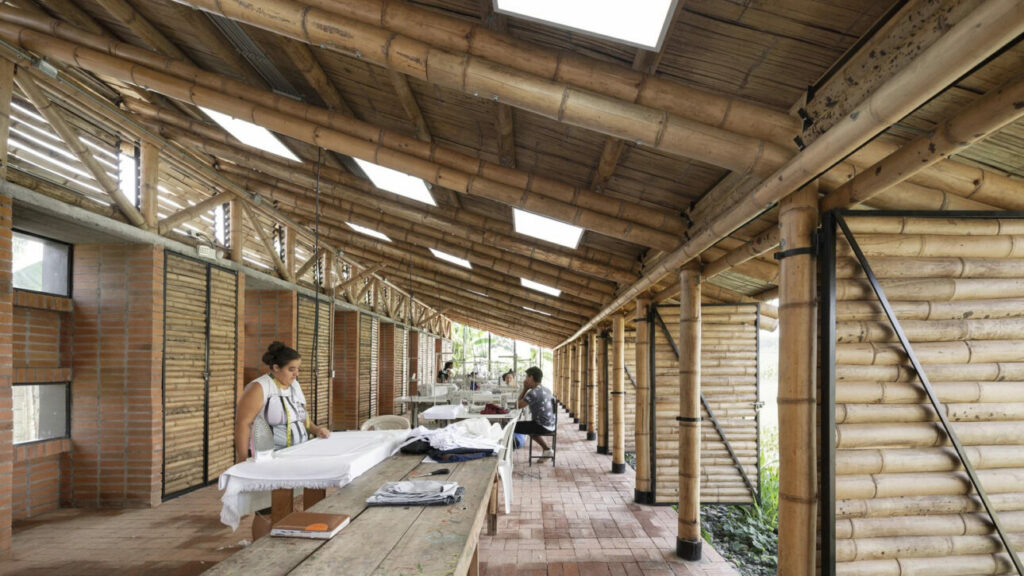 When a bamboo stalk is cut, the underground root system automatically starts generating new shoots without human intervention. The same area of land can be harvested indefinitely. Some Asian species grow up to 91 centimeters in 24 hours, which earned bamboo the official title of fastest-growing plant on the planet.
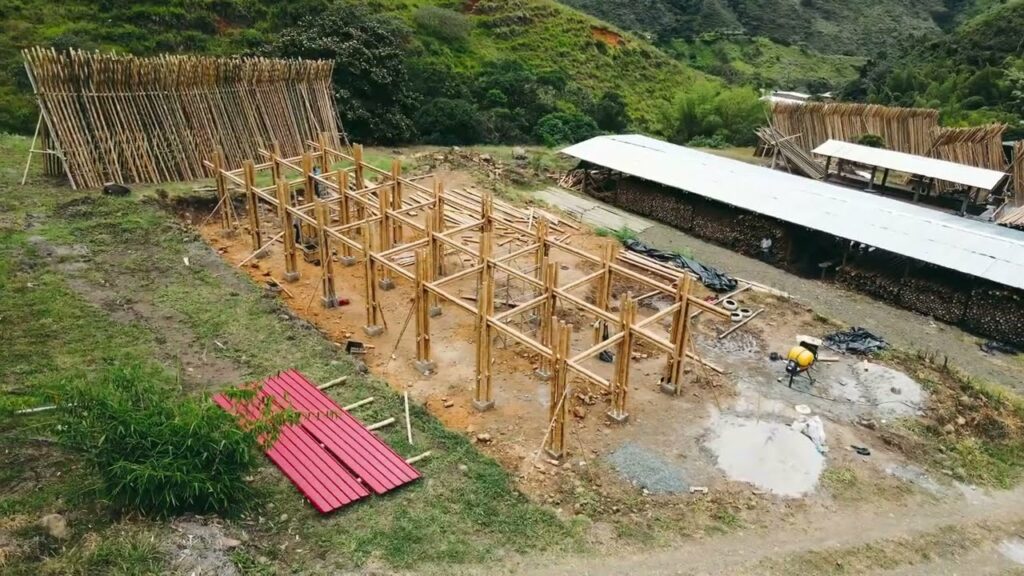 The species Guadua angustifolia, native to Colombia and considered the most resistant for structural use in the Americas, grows 12 centimeters per day and reaches full structural maturity in three to five years — while a tree used in construction takes thirty to fifty years to reach the same stage.
 The reason bamboo is so resilient is related to its geometry. The stalk is hollow and cylindrical, with walls that increase in thickness at the base. This shape distributes compression and tension forces just as engineers do with steel pipes.
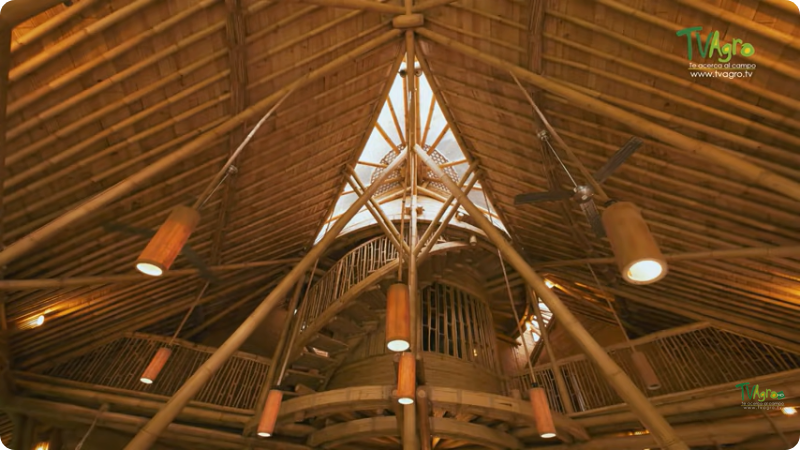 Cellulose fibers run longitudinally along the stalk, where the actual stress takes place. The result is a strength-to-weight ratio three to four times greater than that of steel when measured per unit of mass.
 During its growth, one hectare of bamboo absorbs an average of 17 tons of CO₂ per year — almost three times more than one hectare of conventional mature forest, which sequesters an average of 6.4 tons.
 When the stalk is processed into construction material, the carbon captured during growth remains locked in the building’s structure throughout its useful life. And when the building is demolished, the material returns to the soil without leaving toxic waste.
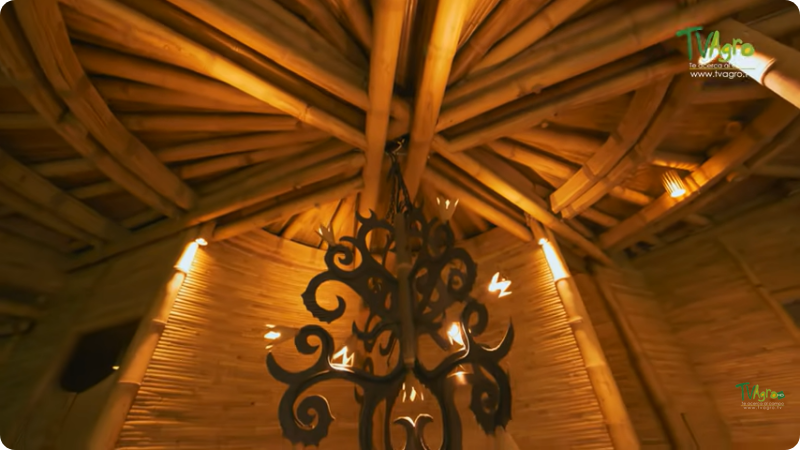 If you inject liquid cement into the nodes of the stalks before inserting metal connectors, this will create a joint point that efficiently transferred load without cracking the bamboo. This technique transforms the material capable of bearing loads equivalent to steel in beams and columns.
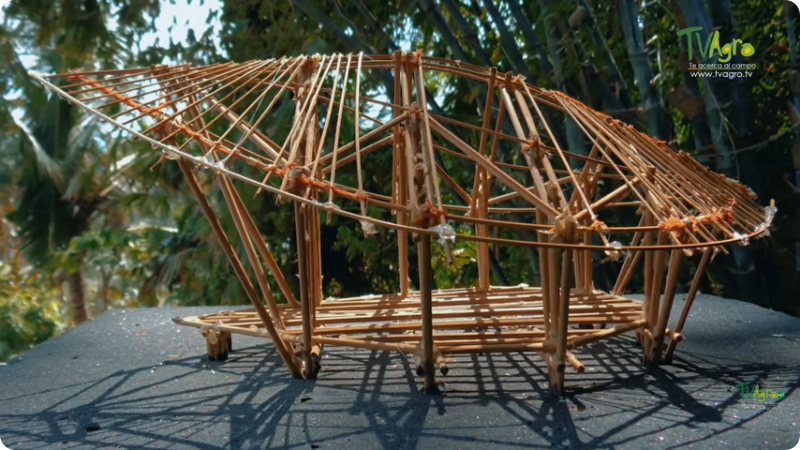 Degradation by fungi and termites is a real threat that requires proper treatment — usually immersion in borax — and an architectural design that keeps the material permanently dry and elevated from the ground.
Today, bridges, commercial buildings, and residences are designed with Guadua following the same structural calculation requirements applied to reinforced concrete. The Colombian code is considered the most rigorous and comprehensive in the world for this material.
You can read the original article at clickpetroleoegas.com