
A wall in Theopetra Cave in Greece was built during the Last Glacial Maximum, a period of extreme cold when much of Europe was blanketed in ice. Researchers believe early humans constructed it to partially seal the cave’s entrance, blocking freezing winds. Theopetra Cave offers a continuous archaeological record spanning 130,000 years, making it one of Europe’s most significant prehistoric sites.
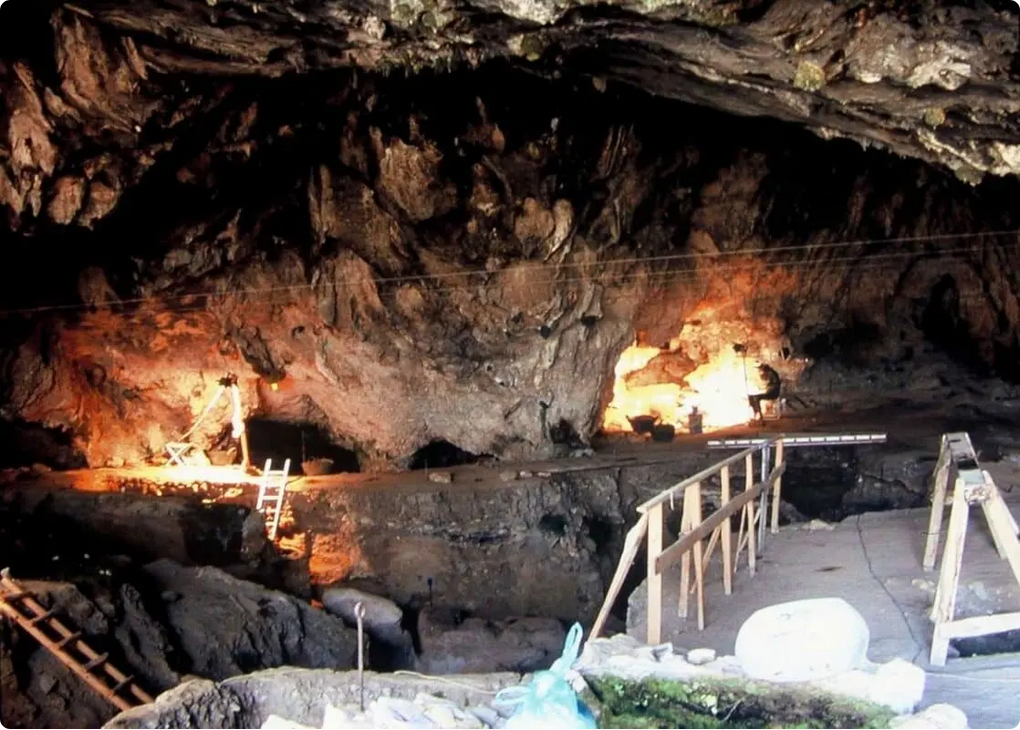 Sediment deposits reach six meters deep. Within these layers, archaeologists found stone tools, hearths, shell ornaments, and children’s footprints believed to be 135,000 years old.
The stone wall itself was built from unshaped rocks bound with clay. Its construction happened roughly 23,000 years ago, during the coldest phase of the last ice age. The wall represents deliberate environmental modification. Early humans weren’t just seeking shelter, they were actively reshaping it to survive harsh conditions.
Theopetra documents how humans adapted to dramatic climate shifts. As glacial and warmer periods alternated, the cave’s inhabitants adjusted their diets and toolmaking. Analysis has identified multiple cold and warm phases, including evidence of a major flood that left residues two meters above the current cave floor.
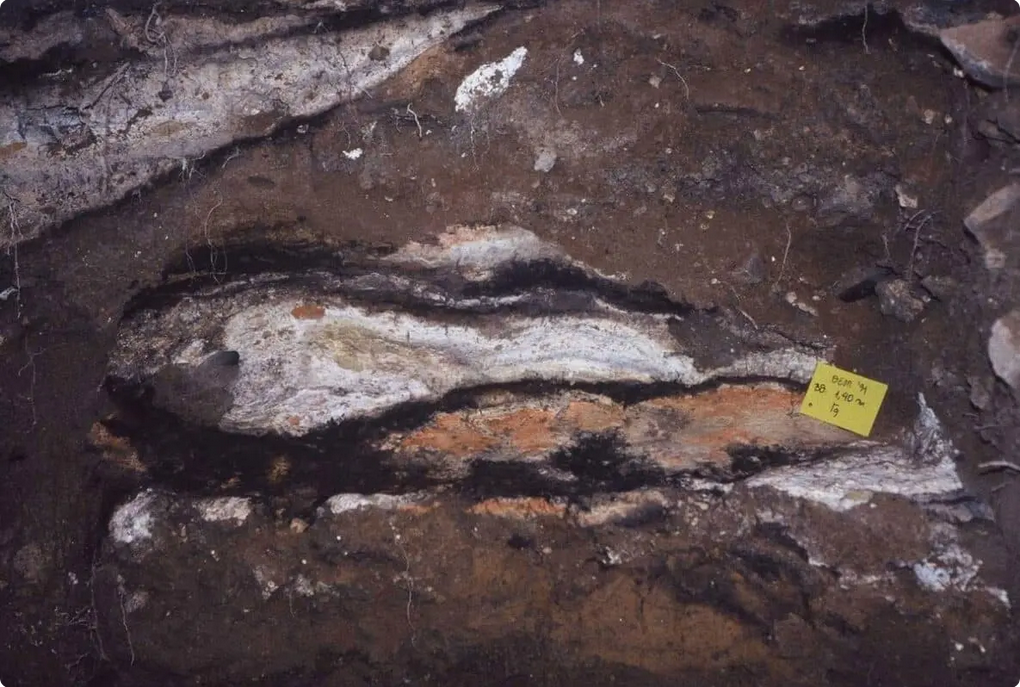 Later occupation layers reveal a gradual shift in subsistence. Remains show diets including barley, wheat, olives, and meat. Evidence of early ceramic experimentation during the Mesolithic period appears near hearths; clay formations and cylindrical objects over 10,000 years old, predating full development of Neolithic pottery.
Five skeletons were discovered at the site. One burial, dated to around 15,000 years ago, ranks among the earliest known modern human interments in the region. DNA analysis revealed genetic links between remains from different layers, suggesting remarkable continuity of habitation over millennia.
The uppermost layers show signs of early Neolithic society: animal enclosures, organized burial areas, food storage. These findings suggest a gradual transition toward structured community life. At certain points, the cave appears to have served as a refuge during periods of instability.
 The wall represents what may be a transitional step toward true architecture, long before farming communities emerged. Today, visitors can explore portions of the cave and view selected artifacts in nearby museums. The 23,000-year-old wall stands as evidence that human inventiveness emerged far earlier than conventional timelines suggested, not in grand monuments, but in the simple act of blocking the wind.
Theopetra is a benchmark for interdisciplinary research bringing together geology, anthropology, paleoclimatology, and genetics.
You can read the original article at www.futura-sciences.com