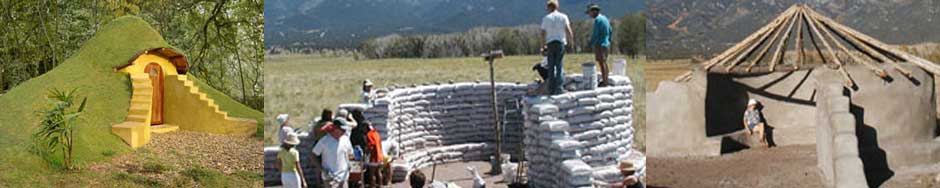
In some of the world’s harshest desert landscapes, people learned to build entire cities using mud. Made by mixing earth, water, and straw, mudbricks were shaped by hand and dried under the sun, creating a building material that was inexpensive, accessible, and surprisingly effective in extreme climates.
Described below are ten of those desert cities.
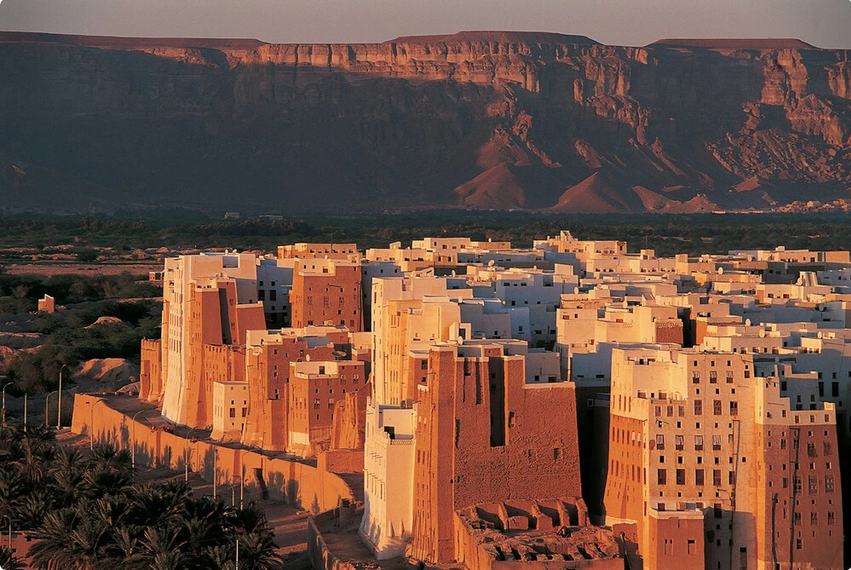 Often called the “Manhattan of the Desert,” Shibam in Yemen is considered one of the world’s earliest examples of vertical urbanism and the most iconic mudbrick city in the Middle East. The fortified settlement dates back to the 16th century, when repeated floods forced local communities to rebuild the city on elevated ground. What distinguishes Shibam is its dense cluster of multi-story mudbrick tower houses, some rising to 11 stories. Constructed with adobe bricks reinforced with timber, the buildings were designed to maximize space within defensive walls while protecting residents from tribal conflicts and extreme desert conditions. The city’s compact layout and narrow shaded streets helped reduce heat gain and improve airflow, making it an early model of climate-responsive urban planning.
The tower houses typically followed a vertical domestic hierarchy: storage and livestock occupied the lower floors, family living spaces filled the middle levels, and upper floors were used for sleeping and ventilation during hotter months. The structures require constant replastering and maintenance due to the fragility of earthen materials.
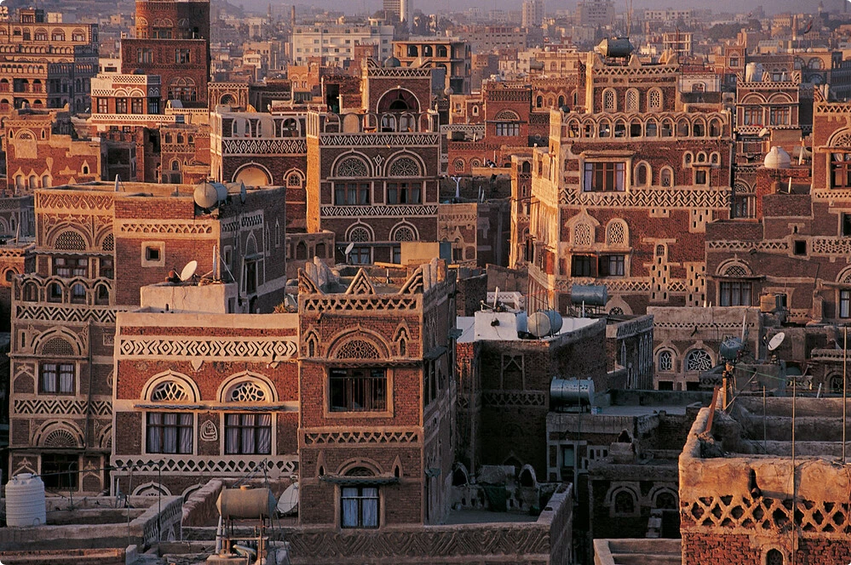 One of the oldest continuously inhabited cities in the world, Sana’a in Yemen is renowned for its distinctive mudbrick tower houses and a rich Islamic urban fabric. The historic city developed over centuries as a major political, cultural, and trade center along ancient caravan routes linking Arabia with the Mediterranean and East Africa. Its multi-story earthen houses are often decorated with intricate white gypsum patterns and stained-glass windows. The buildings were traditionally organized vertically, with storage at the ground level, reception spaces above, and private family quarters on upper floors.
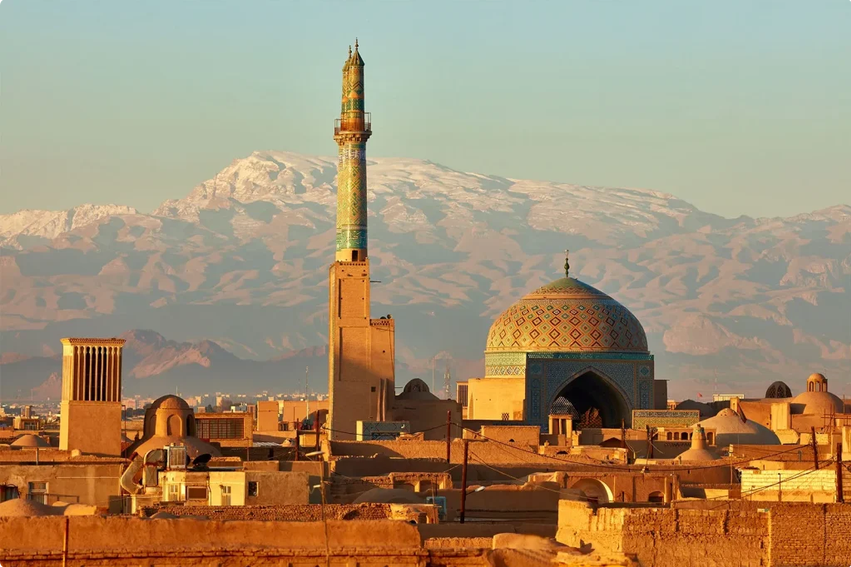 Located between two major deserts in central Iran, Yazd is a masterclass in climate-responsive urbanism. The city developed as an important stop along the Silk Route, where traders, travelers, and artisans contributed to its economic and cultural growth over centuries. Yazd is best known for its passive cooling systems, particularly its windcatchers, which capture and direct cool air into homes and public buildings. The city is characterized by its earth-toned skyline, domed roofs, vaulted spaces, and tightly packed urban morphology designed to minimize heat exposure.
 Arg-e Bam, located in southeastern Iran, was once the largest adobe citadel complex in the world and an important fortified settlement along the ancient Silk Route. Built almost entirely from mudbrick, rammed earth, and palm-trunk reinforcements, the citadel was organized as a self-sustaining desert city enclosed within massive defensive walls. Its urban structure included residential quarters, bazaars, mosques, caravanserais, military barracks, and an elevated governor’s complex overlooking the settlement. In 2003, a devastating earthquake destroyed much of the site, prompting one of the world’s largest heritage reconstruction projects through international collaboration. Today, the citadel has been largely restored to its former glory.
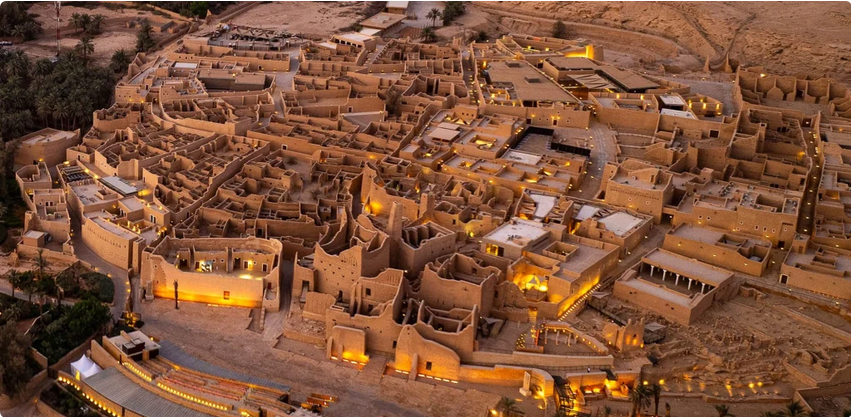 Diriyah is located on the outskirts of present-day Riyadh and is considered the birthplace of the first Saudi state. Founded in the 15th century, the settlement emerged as a major political and religious center during the 18th century under the Al Saud dynasty. Diriyah’s urban planning reflected defensive and social priorities, with fortified walls, watchtowers, palaces, mosques, and densely arranged residential quarters integrated into the landscape. The Salwa Palace complex, once the political heart of the first Saudi state, remains one of the site’s most important architectural landmarks.
 Located northwest of Riyadh, Ushaiger was established more than 1,500 years ago. The oasis town served as an important stop for pilgrims and trade caravans crossing the Arabian Peninsula. Its name, derived from the Arabic word for “little blond,” is believed to reference the surrounding red mountains illuminated by the desert sun. The settlement is characterized by tightly packed courtyard houses, narrow shaded alleyways, defensive walls, and small windows designed to reduce heat gain and maintain privacy. Unlike many historic desert towns that underwent extensive modernization, large parts of Ushaiger have retained their original earthen character.
 Aït Benhaddou in Moroccois situated along the former trans-Saharan caravan route between Marrakech and the Sahara Desert. The architecture reflects traditional Berber building techniques adapted to the arid climate and rugged terrain of southern Morocco. The settlement rises organically along a hillside overlooking the Ounila River, creating a dramatic stepped skyline of terraced dwellings, granaries, and communal spaces. At the highest point stands a fortified granary that once safeguarded food supplies and valuables for local communities.
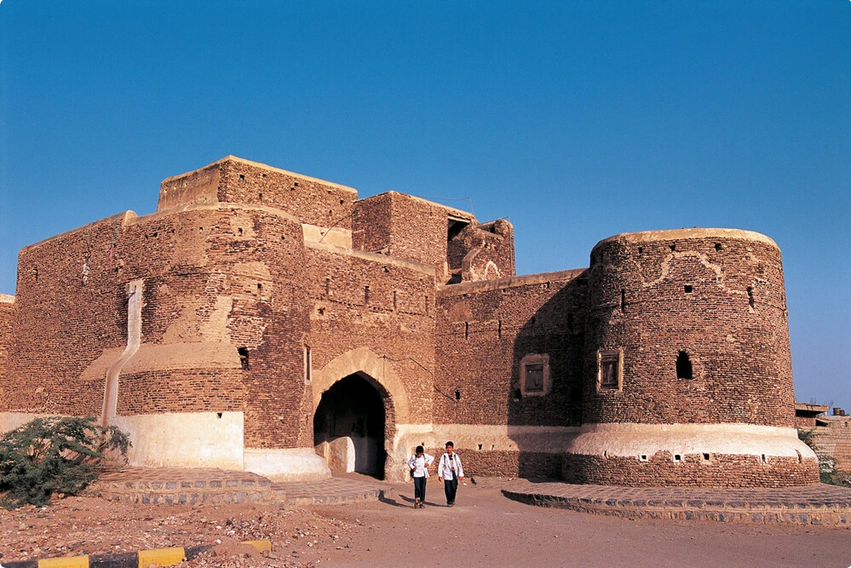 Founded in the 9th century, Zabid emerged as an influential center of Islamic learning in the Arab world. Located on Yemen’s western coastal plain near the Red Sea, the city prospered through trade, agriculture, and scholarship, eventually becoming home to hundreds of mosques, madrasas, and religious institutions. Unlike the vertical tower houses of Yemen’s highland cities, Zabid’s structures were generally lower in scale and organized around religious and civic spaces. Architecturally, the city is distinguished by its mosque complexes, decorative brickwork, and traditional courtyard houses. The Great Mosque of Zabid, founded in the early Islamic period, became a major intellectual center where Islamic sciences, philosophy, and literature were taught for centuries.
 Located at the foothills of Oman, Bahla is one of the region’s oldest oasis settlements that flourished between the 12th and 15th centuries and is a political and commercial hub connected to regional trade and agricultural networks. Bahla developed around an extensive oasis sustained by the traditional falaj irrigation system. The city is best known for the Bahla Fort, a monumental mudbrick fortress enclosed by nearly 13 kilometers of defensive walls that once protected the oasis and surrounding settlements. Residential quarters, mosques, watchtowers, and marketplaces evolved organically around the fortified core, reflecting the relationship between water management, agriculture, and urban life in Oman’s desert environment.
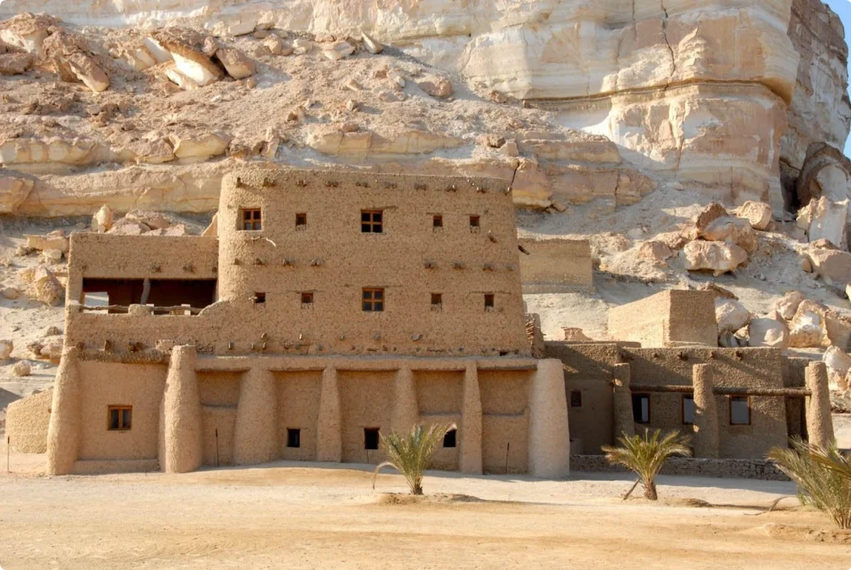 Siwa Oasis, located deep within Egypt’s Western Desert near the Libyan border, is one of the most isolated and culturally distinct settlements. Historically positioned along trans-Saharan trade routes, the oasis became known for its Berber heritage, date cultivation, and the ancient Oracle Temple of Amun. Unlike conventional adobe settlements, Siwa’s architecture was built using kershef, a local material made from salt, mud, clay, and sand sourced from the surrounding salt lakes. This unique earthen construction technique produced thick insulating walls that protected interiors from extreme temperatures. The old fortified settlement of Shali, established in the 13th century, formed the heart of Siwan urban life. Its tightly clustered houses, narrow winding alleys, and elevated defensive layout were designed to protect residents from raids and harsh climatic conditions. Palm trunks and olive wood were commonly used to reinforce roofs and structural openings.
As conversations around sustainability and climate-responsive design become urgent, these mudbrick settlements offer valuable lessons in building with local materials and designing in harmony with the environment.
You can read the original article at parametric-architecture.com