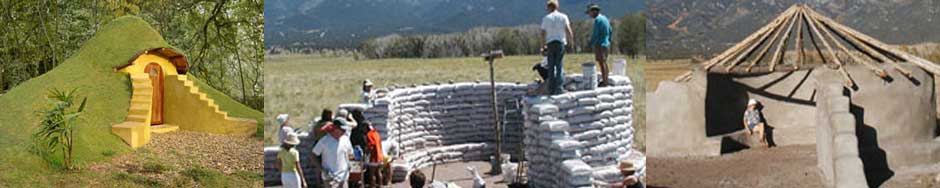
Architect Yasmeen Lari‘s practice is driven by the belief that design can help people rebuild their own worlds with the materials, skills, and knowledge already around them. This Pakistani architect has shaped a body of work that reduces harm, shares power, and harnesses architecture for climate resilience, social dignity, and collective repair.
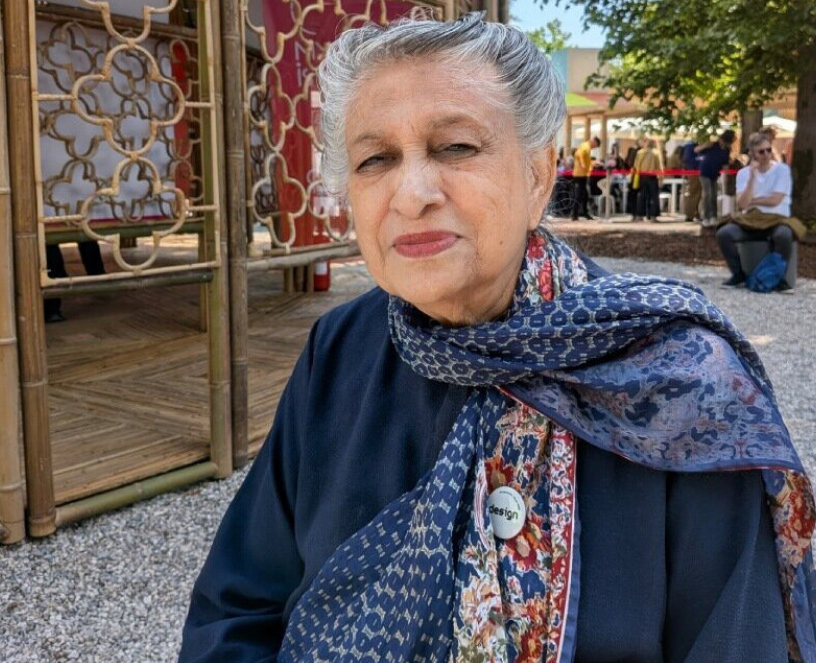 For Lari, design begins with the needs of people who have been displaced, underserved, or left to rebuild after climate disaster. It also extends beyond human comfort, toward a larger network of materials, land, animals, water, and repair.
Born in Pakistan in 1941, she studied architecture in the UK, returned to Karachi at 23, and established Lari Associates with her husband, Suhail Zaheer Lari. Her early practice included housing, commercial buildings, and civic projects, while her long study of Pakistan’s historic towns and earthen traditions led to the founding of Heritage Foundation of Pakistan in 1980.
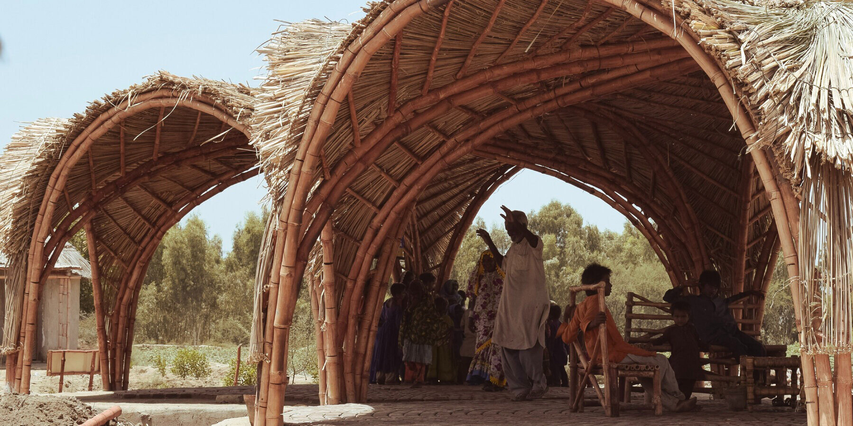
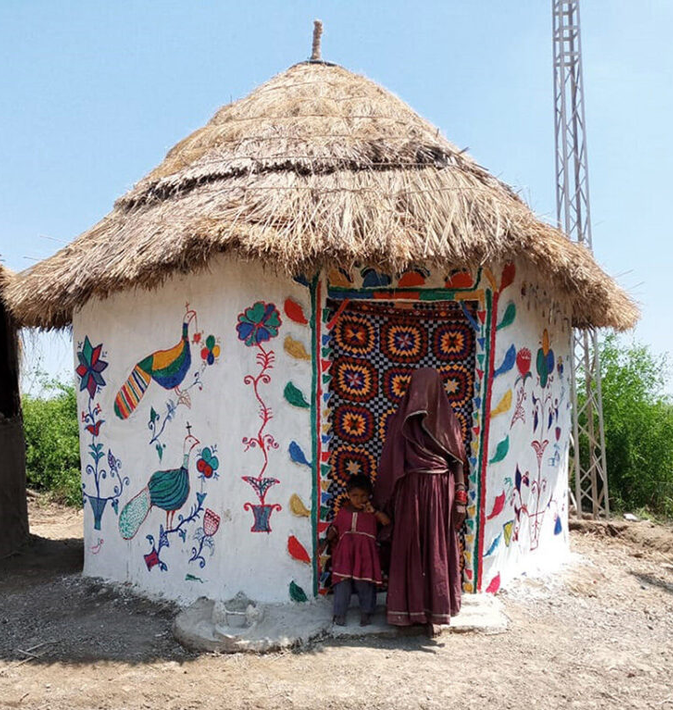 After retiring from conventional practice in 2000, she turned her attention to humanitarian work, especially after the 2005 earthquake and later floods in Pakistan. Since then, her architecture has become a system of shared knowledge, with communities trained to build with indigenous techniques, local labor, and low-carbon materials. Bamboo, mud, lime, thatch, terracotta, and palm matting become tools for dignity as much as construction.
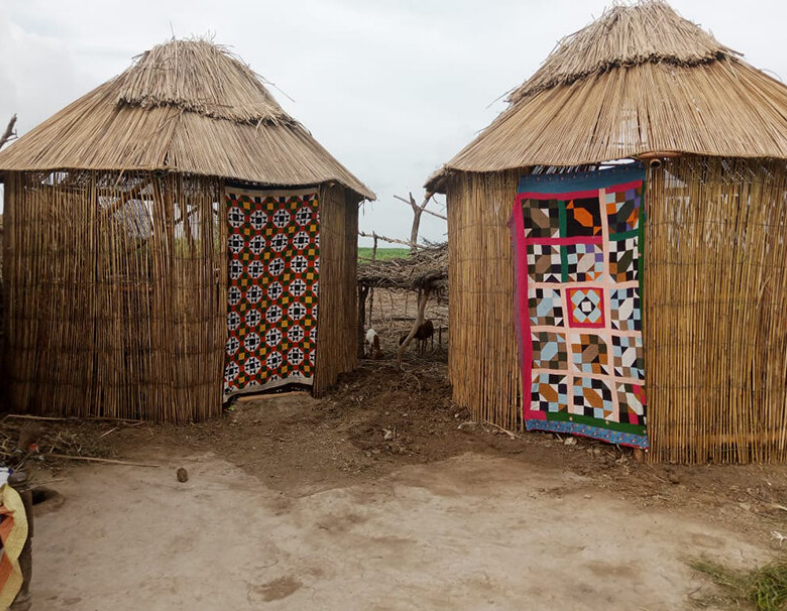 The octagonal bamboo structures, lined with date palm matting and finished with conical thatched roofs, were created for flood relief and emergency rebuilding. Their geometry is direct and legible, allowing the system to be assembled quickly while offering more spatial grace than a temporary enclosure usually provides.
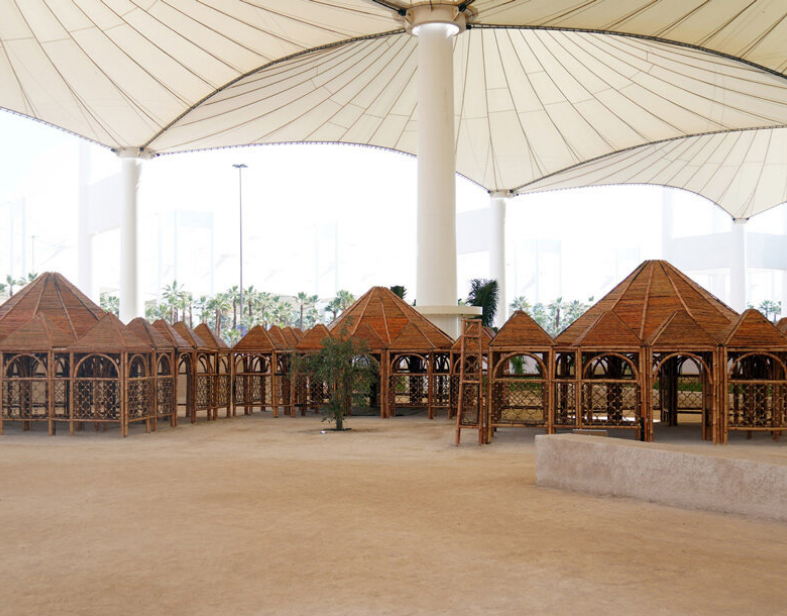 Her ambition grew in scale after the devastating 2022 floods in Pakistan, which displaced millions of people and destroyed or damaged vast numbers of homes. Through Heritage Foundation of Pakistan, Lari set out to support the construction of flood-resilient homes using raised platforms, bamboo structures, lime-stabilized mud walls, thatch roofs, raised hand pumps, eco toilets, and Pakistan Chulah stoves.
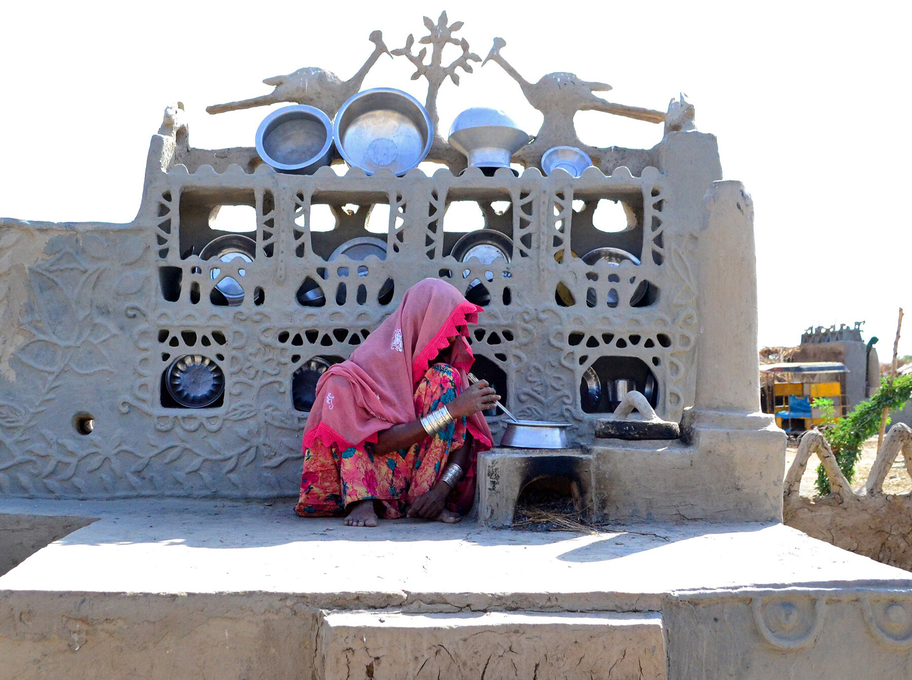 The Pakistan Chulah, Lari’s raised earthen cooking stove, expands the scale of design into the household. It reduces smoke, lifts cooking from the ground, improves hygiene, and can be built with local materials.
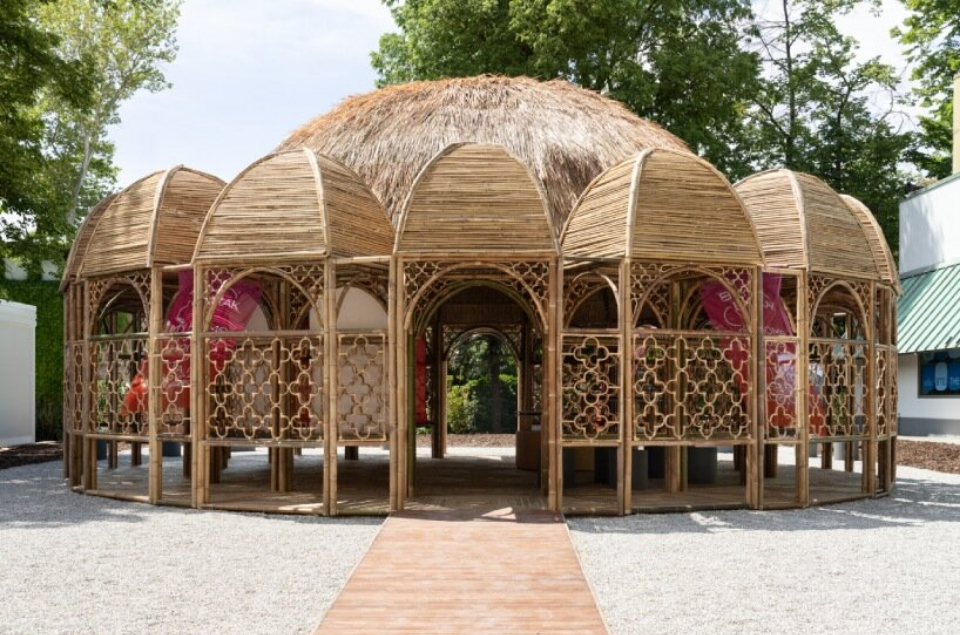 This attention to domestic infrastructure gives her work its emotional force, as she does not treat architecture as an isolated building, finished at the edge of its walls. Her practice moves through water points, toilets, cooking platforms, shaded verandas, workshops, and community rooms. Each piece supports another. Each piece makes survival feel more possible and more dignified.
 Across her body of work, Yasmeen Lari asks architects to give up some control in order to expand the industry’s reach. Her buildings and initiatives carry a strong formal identity, yet their deeper value lies in distribution. The design succeeds when others can copy it, repair it, teach it, and change it for their own ground conditions.
 You can read the original article at www.designboom.com
This is exactly what I was looking for, thanks!