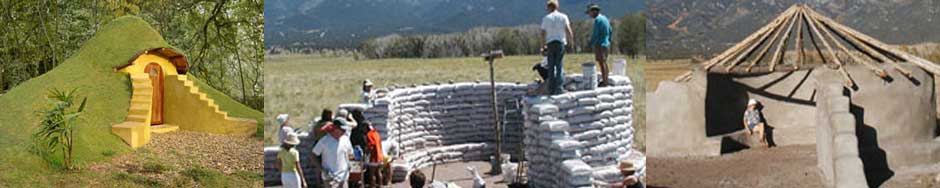
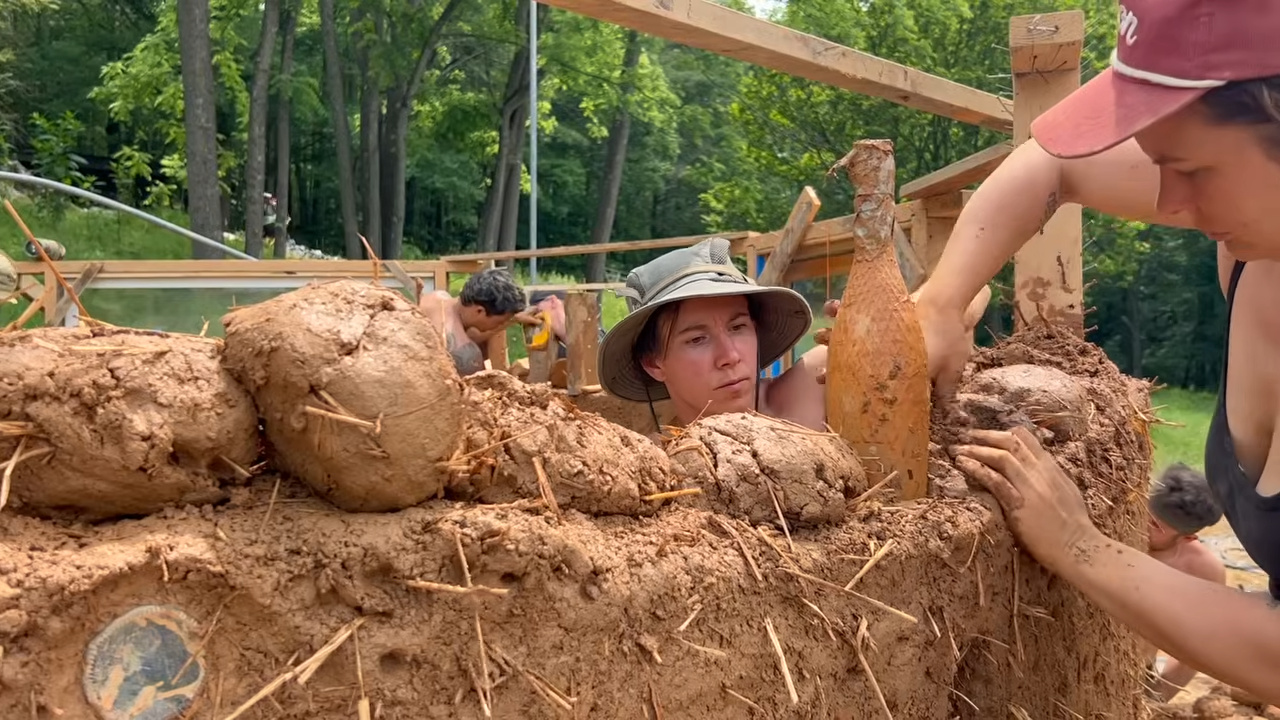
Cob building is a method in which clay, sand, and plant fibers (usually straw) are mixed manually and molded directly in place. Unlike bricks, blocks, or concrete walls, cob doesn’t use forms, doesn’t require molding and allows for the creation of curved walls, niches, arches, built-in benches, round windows, and sculpted details.
There are cob houses over 300 years old still inhabited in the United Kingdom, especially in the regions of Devon, Dorset and Cornwall, where the damp and cold climate has not prevented the structures from surviving.
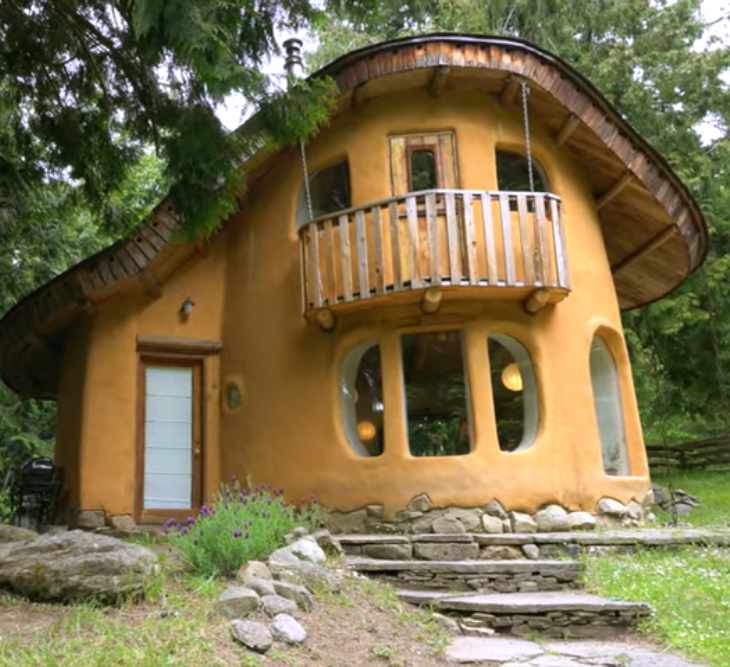 The system, despite its handcrafted and “medieval” appearance, is surprisingly effective due to its real and little-known technical features. The straw acts as mechanical reinforcement for tension and bending, similar to what steel does in reinforced concrete.
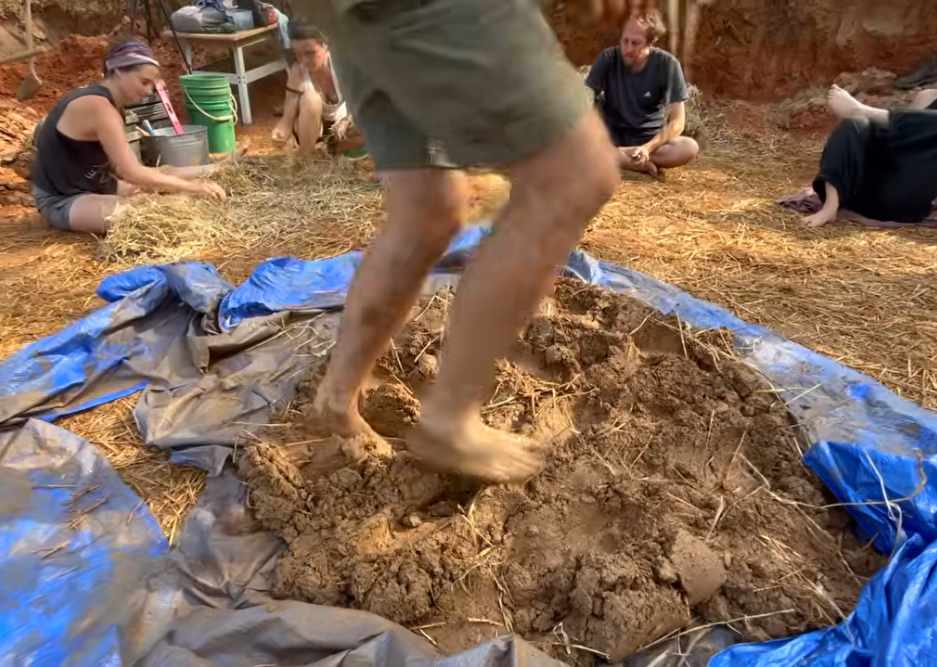 The mixture is made until it reaches a “plastic” consistency, capable of being punched, molded and joined layer by layer. Since there are no blocks, there are no mortar joints, and the wall is a single monolithic body, which brings surprising advantages:
• It doesn’t crack due to weak joints.
• dissipates deformations better
• allows for simple repairs (just apply fresh material)
• does not require industrial tools
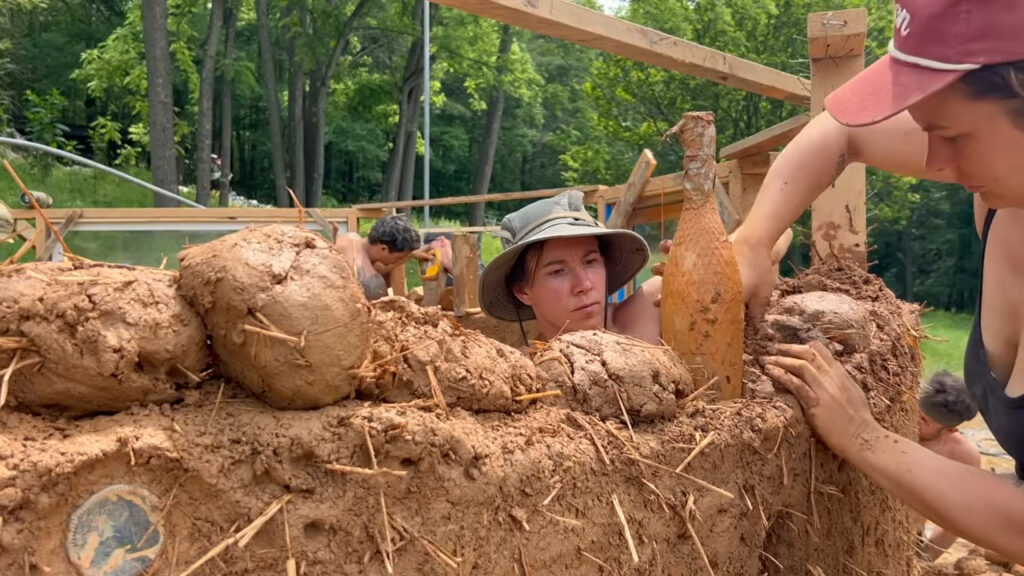 Drying time varies depending on the climate, but in humid regions it is common for walls to dry over weeks or months, which contributes to the consolidation of the structure.
Although it may not seem like it, cob provides high thermal stability because of its large thermal mass. This means that:
- It slows down the entry of heat during the day.
- It slowly releases the heat accumulated overnight.
- maintains more stable internal temperatures.
This behavior has been proven over centuries. Cob houses keep interiors warmer in winter and cooler in summer, even without modern insulation systems.
 In warmer and drier regions, such as parts of California, Australia, and New Zealand, this characteristic makes the cob compete directly with the adobe and rammed earth, with the difference that cob allows free and organic forms.
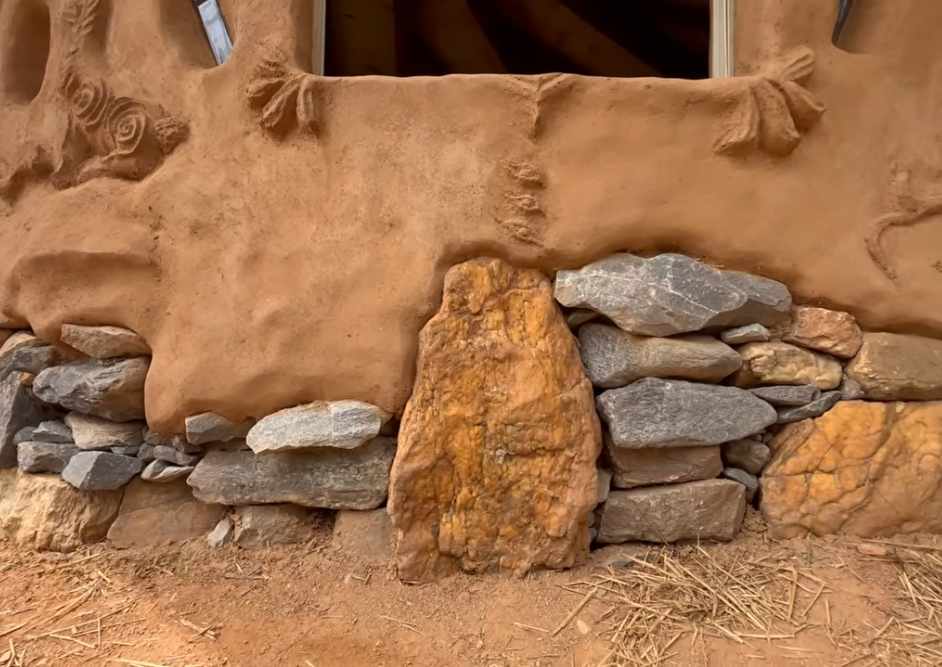 To survive for centuries, cob needs two basic protections, which builders summarize as: “big shoes and a wide-brimmed hat.” An elevated foundation keeps the wall away from soil moisture, and roofs with eaves protect the walls from rain. Cob walls can endure storms, fog, snow and coastal salinity without losing structural integrity.
Because the material is molded while it is plastic, cob allows you to create elements that don’t exist in conventional construction, such as
• curved and organic walls
• built-in cabinets
• structural cob sofas
• internal and external niches
• round windows and arches
• sculptures applied to the wall
Cob stands out for:
- low carbon impact (almost zero if materials are local)
- minimal industrial processing
- high recyclability (simply moisten and reuse)
- low embodied energy
- renewable and abundant materials
Despite its advantages, COB is not perfect. The main challenges are:
- The method is slow, requires layers, and gradual drying.
- In many countries, there is no specific building code for raw earth construction, which makes approval difficult.
- Constant rain and the absence of eaves can damage the walls. Even so, none of these limitations invalidated the system—they only made its use more effective.
Cob combines raw materials, sculptural architecture, thermal comfort, longevity and low carbon emission in a single package.
You can read the original article at clickpetroleoegas.com.br
You can watch a video about building with cob at www.youtube.com
Another thing to mention is that Cobb has an insulation value the same as earth… Zero
The mass is not the same as insulation
This is a problem in cold climate. Once the walls assume the ambient outdoor temperature, you will not be able to heat the Several people up north that I know have built Cobb houses abandon them in the winter
This construction works great in the Southwest, you need the temperature flywheel effect to really get the full benefits
Otherwise look at earth bags filled with lava rock/SCORIA or look into aircrete