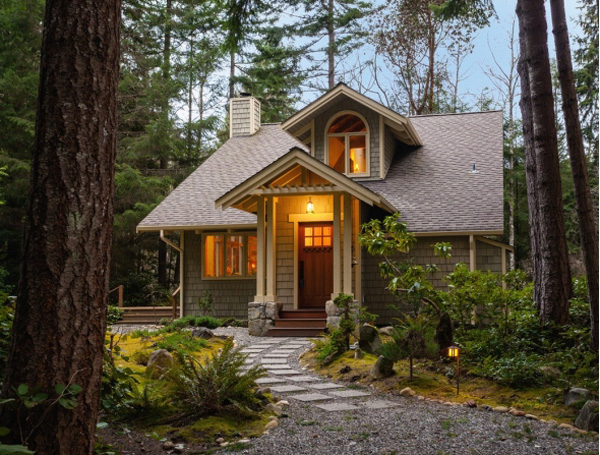
“The unpredictable economy, recent natural disasters and the fickle housing market are driving many working class Americans to live more frugally. Although downsizing, living simply and being environmentally-conscious are not new ideas to any generation, Millennials graduating with unprecedented amounts of student debt are looking to own, rather than rent, a home. Deciding to turn their backs on the McMansions and SUVS of their forebears, more and more Millennials are buying into the tiny house movement.
low cost
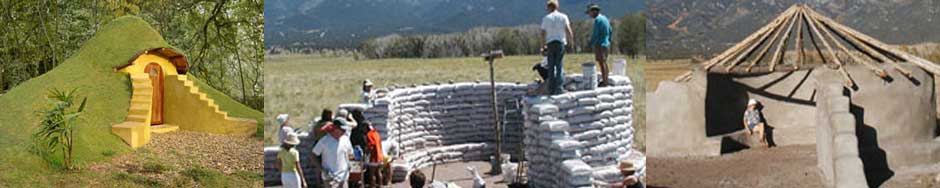
Real-life Hobbit Houses – Cae Mabon
“Eric Maddern creates an award-winning “Shangri-la” of natural building in Snowdonia. His buildings re-create indigenous house styles around the world, using natural materials such as wood, mud and straw. He has an octagonal Native American hogan with reciprocal frame roof, strawbale walls and a lime render, a roundhouse with thatched roof, a cob cottage, a cordwood log lodge and a real-life replica of a Hobbit hut!”
Earthbag School in Aagra, Nepal
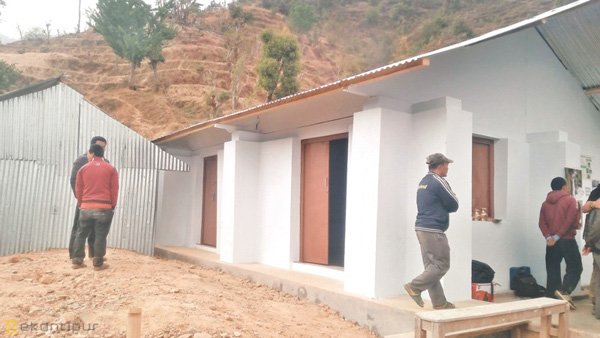
“Mar 1, 2016- A building of Mahankal Primary School at Aagra-8 in the northern Makawanpur district built with Earthbag technology has reprieved students from studying under makeshift shelters. The April 25 earthquake had destroyed the school building.
Risking it All – Living Off the Grid TV Series
“American’s have become accustomed to what is considered essential for a good quality of life. Running water, electricity, central heat and air, a spacious home with a fully stocked pantry and at least two cars in the garage is considered ideal. So why would three families decide to turn their backs on modern conveniences to live off the grid?
Developing Eco-construction at Ecovillage Madagascar
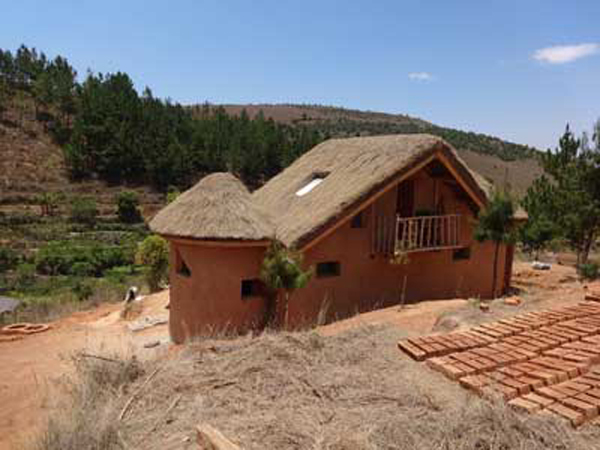
“Ecovillage Madagascar wants to be an example in the development of diversity and replicability of eco-construction buildings.
SuperAdobe Home in Costa Rica
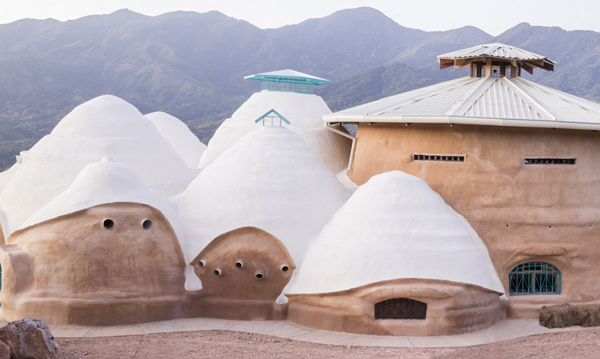
“Ayal Bryant from Barro Vivo CR told Inhabitat because they live in a relatively hot and dry climate, where they receive about 3 months of rain and the rest of the year is pretty much dry, they wanted to build a house that would remain cool during the day without air-conditioning or fans. “So we decided to go for super adobe mainly because of its thermal properties but also because one of how it feels almost primal to live within,” she said.