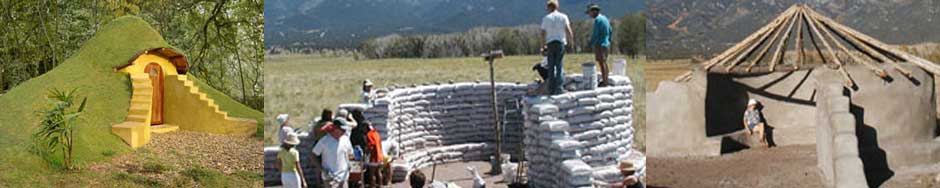

Steve built a £4000 ($6,260) unpermitted house in Scotland a few years back with local materials. (He hopes to build it for less next time.) The results are marvelous as you can see. His websites are packed with wonderful photos and drawings that show the details. Now you know why I get so excited about natural building, especially when there are no codes to deal with. At just a little over $6,200, just imagine how many hundreds of thousands of homeowners (or millions) could build their own debt free homes. This is something most Americans can afford. Compare this to paying $500/month rent for one year = $6,000. Or invest $6,000 in a natural house and live rent free for the rest of your life. Lots of people are already living this way, and there’s obviously a groundswell of interest as this information spreads.
sustainable
Tiny Tech Plants
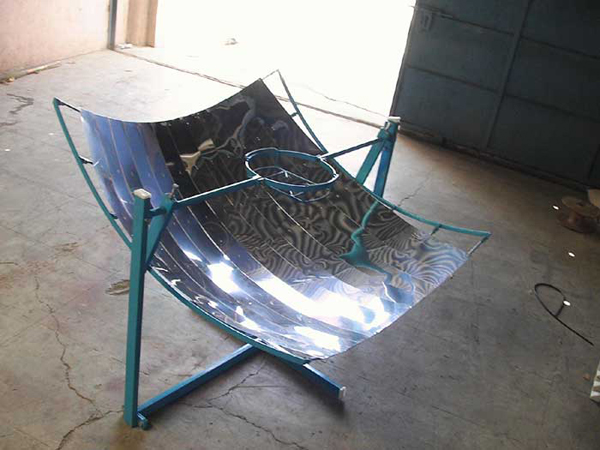
“Tiny Tech Plants is a manufacturer of a wide range of renewable energy devices including domestic and community solar cookers.
Tiny Tech Plants: “promoting tiny enterprises in various industrial fields, through human technology for rural development, local self reliance, poverty eradication, exploitation removal, employment and income generation by breaking company centered economy & promoting family centered economy all over the world.
Building a Work of Art
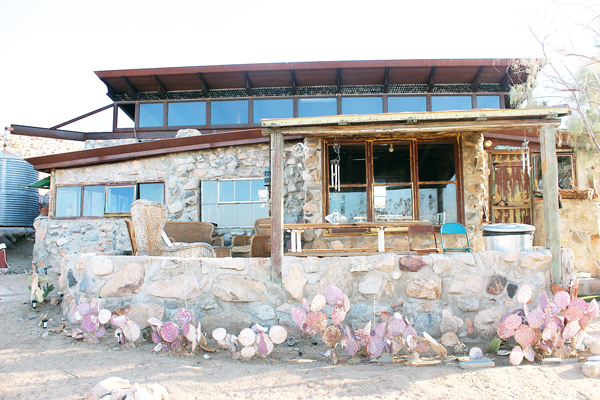
JOSHUA TREE — “Some of the most grandiose and uncanny pieces of desert art aren’t hanging in local homes. They are the homes. Using stones, concrete and an assemblage of recycled and found objects, Randy Polumbo created the rock and glass house — or as some call it, the “trash house” — in Joshua Tree. The home is representative of the area’s signature art movement, using glass bottles, scrap metal, reclaimed windows, used military ammunition cases and anything else Polumbo could weld or meld into the structure.
Solar Food Steamer
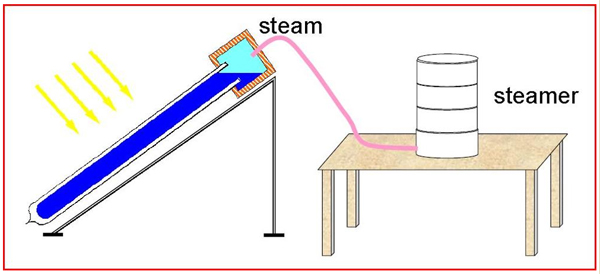
“As the solar steamer is using steam as heat transfer medium, it is an indirect cooking system. This allows the design of a split system where the thermal solar collector can be placed at some distance (e.g. on the roof) apart from the place of cooking (e.g. in the kitchen). The cook is not exposed to the sunshine and can use the steam at whatever height or location is convenient and culturally acceptable.
Ferrocement Roofed Domes for Tropical Climates
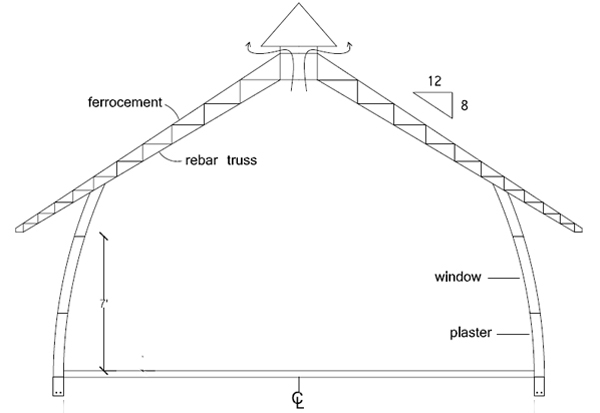
Domes are vulnerable to water damage, so what to do in rainy climates? I say add a roof. There are various roofed dome houses on our main website at EarthbagBuilding.com that you peruse here and here. Those are earthbag domes. The design I’m first presenting here is made of ferrocement. It’s just one more way to do things.
Another Post Footing Alternative
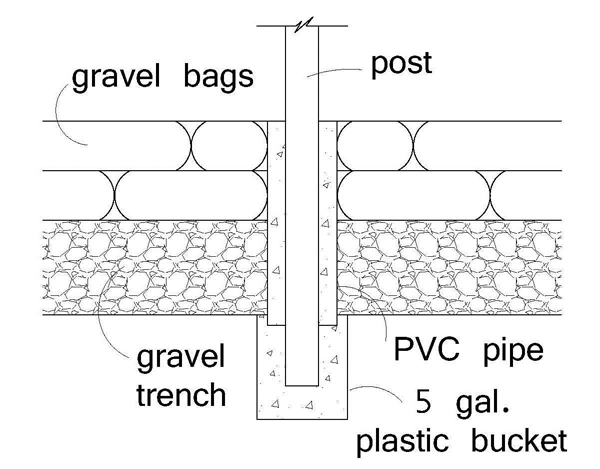
Many of our readers use post and beam frames for their natural homes and so it’s important to know various options for setting posts. I’ve been corresponding with Zafra, one of our readers and the lady who helped translate my Earthbag Building Guide into Spanish. She and her partner Daniel are going to use bamboo poles on their natural home in Venezuela, but the method shown here will work just as well with wood or metal poles.