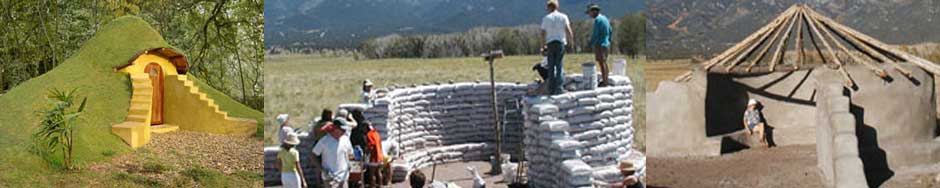
“Jaime Marin describes his experiment with building an earthbag root cellar in Belize. Using the most cost effective resources available at hand to develop a minimalistic but effective source of shelter and infrastructure for this transitional home project for children at Barzakh Falah in Georgeville, Belize. The project uses volunteer labor as it gets closer and closer to completion and minimal funds solely for materials.
sustainable
Earthbag School in Goldhunga, Nepal
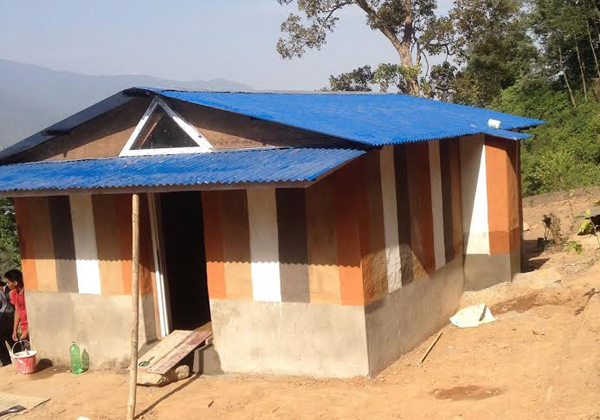
“Now Kathmandu’s outskirts also have an earthbag building! It will be used as an after-school house for the children of Goldhunga, a village located 30-minute drive from Thamel, in Kathmandu. It will be soon filled with computers, books and other supplies. Its size is 10x15ft and it is composed of one room and one floor.
Open Source Disaster Resistant Earthbag Homes for Nepal
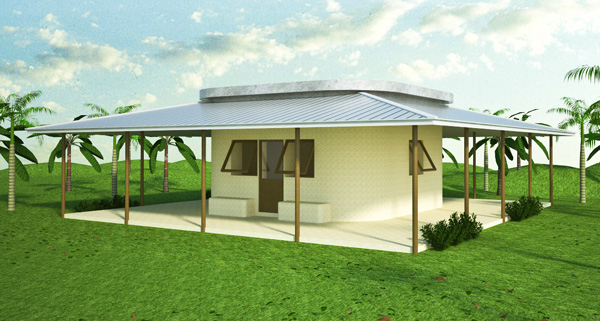
From the archives — I realized yesterday that this open source disaster resistant earthbag house could be easily adapted to Nepal.
Add a roof of recycled wood and metal roofing and for very little money (under $1,000) you’d have a safe, decent home in short order. This design is 25 sq.m (270 sq.ft or about 16’x16’ interior) It’s extremely simple and easily to build.
Rice Hull Tubes between Double Steel Pipe
Lightweight materials such as rice hulls can speed construction ten-fold. But good design is important! Note how Paul in Thailand (see yesterday’s blog post) added buttresses and steel pipe here and there as problems developed. Basically, he was just “winging it”. Who knows how long the house will last before having mold problems. That’s unfortunate because a similar house built correctly could last many decades.
Update on Rice Hull House in Thailand
I haven’t heard from the owner of this rice hull house in a few years. Yesterday I came across some new comments by the builder and thought it would make a good update. A reader had sent a message pointing out how rice hull houses can be built like the strawbale house the other day. (Round, pipe bond beam, etc.) So yeah, here you go. Here’s the step-by-step directions for a rice hull house. Note how lightweight fill materials such as rice hulls require some extra reinforcement from rebar, posts, buttresses, etc. for stability. In contrast, heavy earthbags filled with tamped soil are much more stable. Also note how Paul added wide roof overhangs to better protect the walls.
Step-by-Step Strawbale Roundhouse
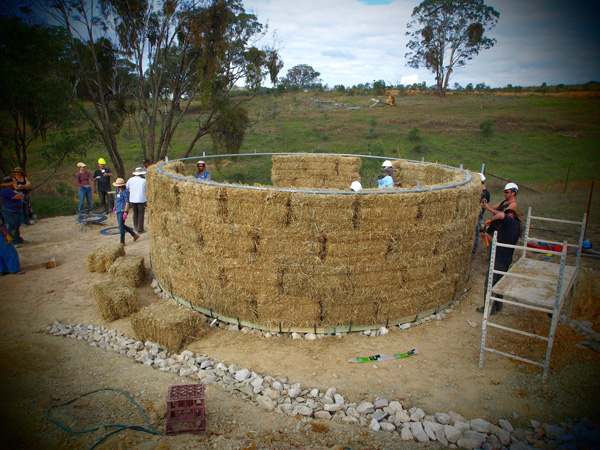
“A few months ago we raised a strawbale roundhouse with a reciprocal roof as part of our first Natural Building Workshop at Milkwood Farm.