This 5,660-square-foot home in Hyderabad, India—named Aurva Illam—was built entirely by hand, with hand-poured and hand-rammed earth. The spaces are designed to work with the climate, shaping a home that’s almost monastic with thermal autonomy, and a way of living that makes air-conditioning unnecessary.
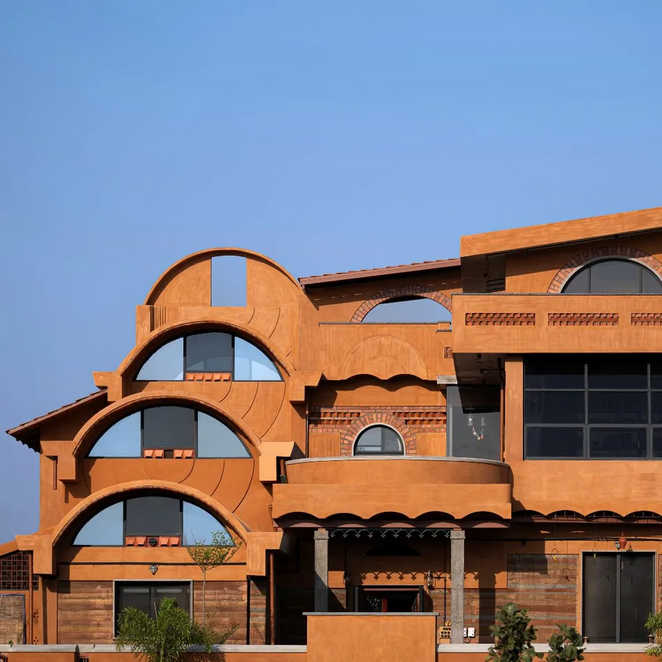 “From the outset, the intention was to build an earth home that felt alive,” says the home’s owner.
 Across the house, raw, unplastered earth walls and exposed terracotta elements sit alongside highly engineered passive systems that allow the structure to function as a net-zero energy home.
 The house incorporates rainwater harvesting and solar energy, and relies entirely on passive strategies for ventilation and daylight. There is minimal use of cement and steel, and no superficial finishes.
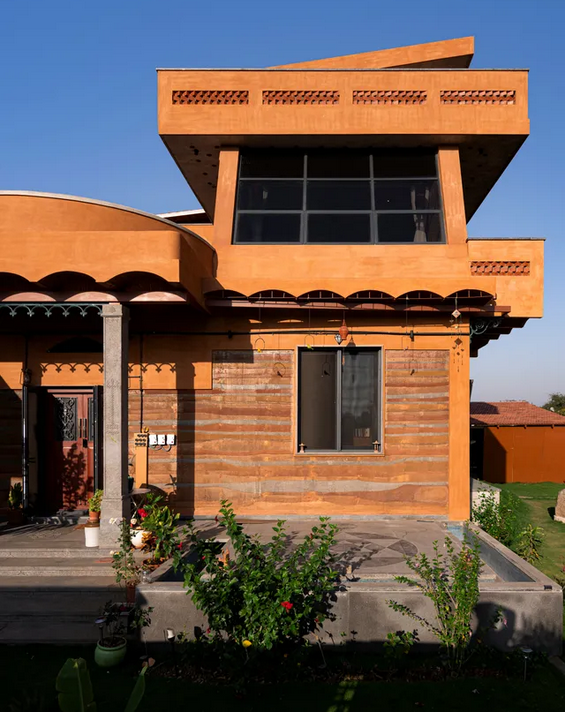 At the entrance, rammed earth walls—made largely from soil excavated on site—reveal their striated layers like a geological cross-section.
 Elsewhere, a debris-poured earth technique repurposes discarded quarry stone into thick, monolithic walls that double as thermal buffers.
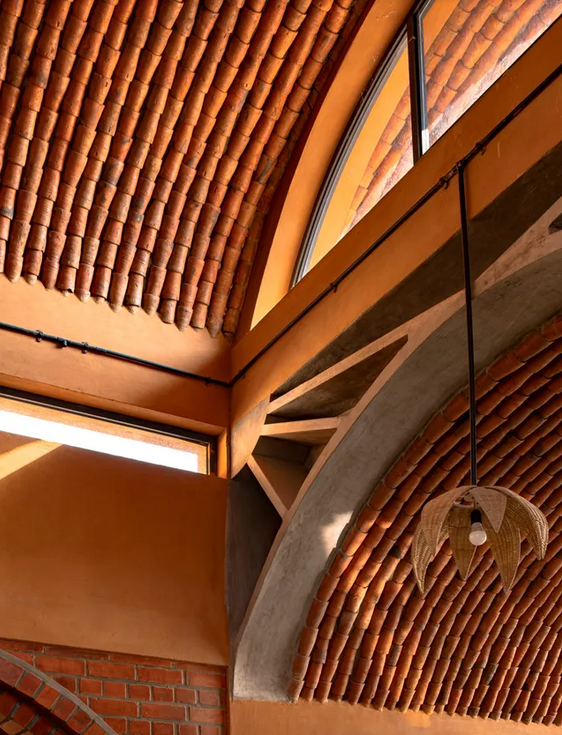 Combined with vernacular roofing systems such as terracotta Guna vaults and brick jack-arches, these elements create a noticeable drop in temperature from the heat outside.
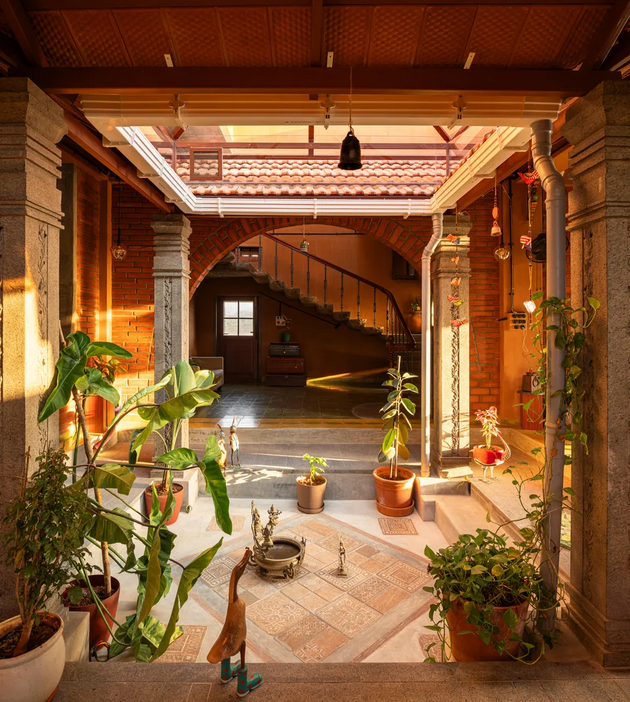 Anchored by the central courtyard, which acts as the home’s core. Around it, rooms rise in ascending vaults, harnessing the stack effect to draw in cooler air and release heat upwards.
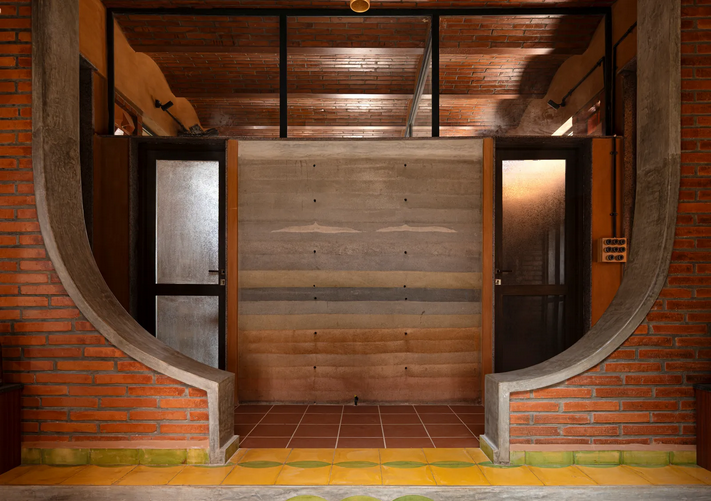 Rough stone pillars, exposed earth walls, and the irregularities of handmade surfaces create a tactile, grounding experience.
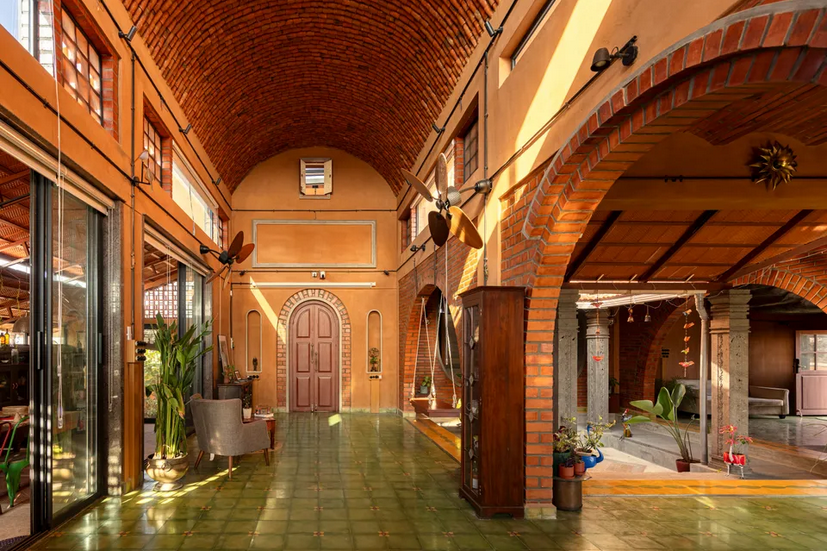 The floors feature handmade tiles that introduce a subtle sheen and a sense of craft.
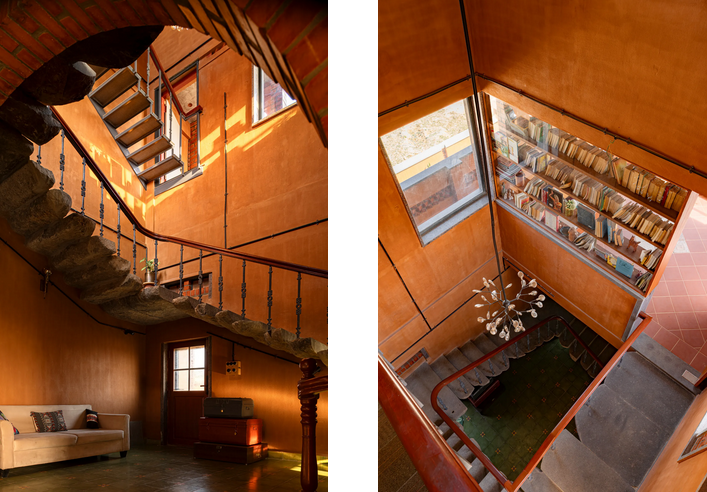 A cantilevered staircase of rough-cut granite boulders juts straight out of the walls, with its treads just smoothed enough to invite touch.
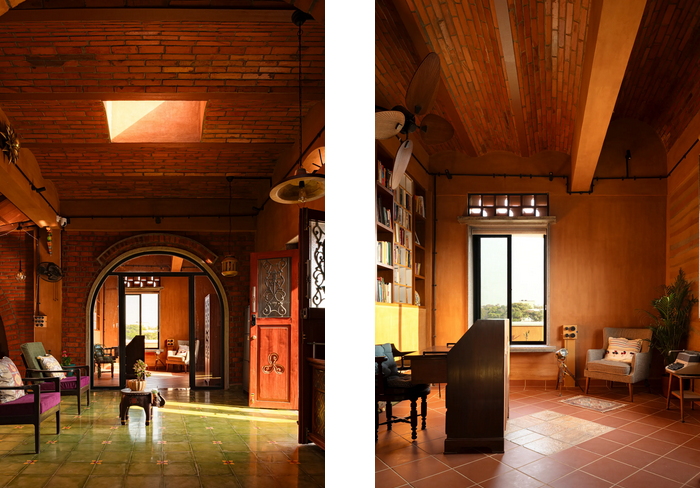 The living room rises into a double-height volume beneath a Guna tile vault.
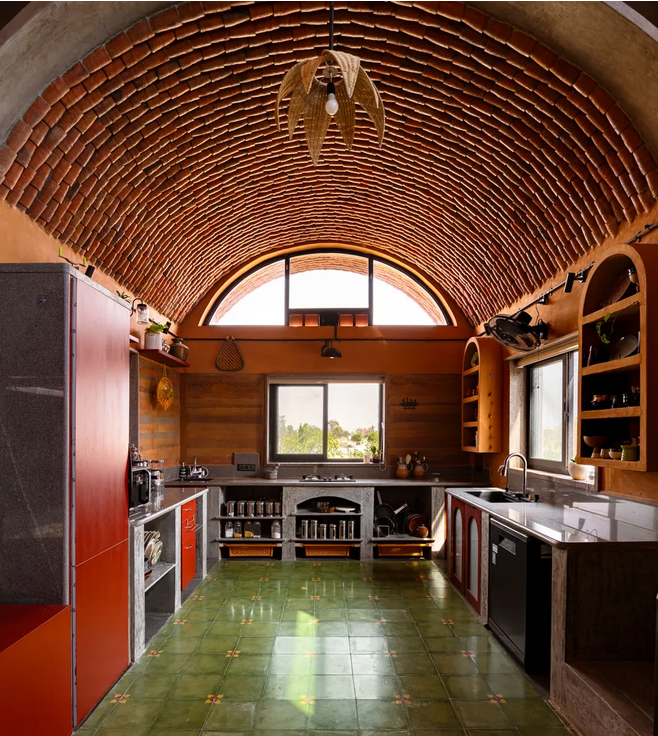 The kitchen has sunlight pouring in through a generous lunette opening.
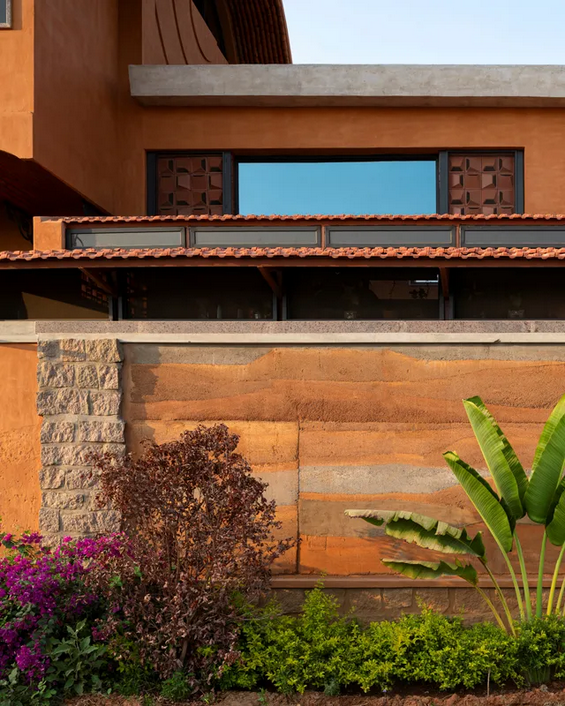 “Every time a rammed or poured earth wall was revealed, we felt like little kids in a candy store,” the homeowners recall—an image that lingers, full of delight, discovery, and a quiet sense of wonder. “The house reveals magical facets of itself every day,” she says. “In many ways, it has surpassed what we imagined.” Perhaps that is its real strength: not just as architecture, but as a living, evolving environment—one that, like the material it’s made from, only settles more beautifully with time.
 You can read the original article at www.architecturaldigest.in
I,d like more details on the cooling system. I saw lots of sun coming in and no curtains. I have thermal curtains that work well.
Hand ramming vs. An electric jackhammer? Be good to see labor factors on each , as well as overall costs, and cost coparisons to more conventional, plus the earthquake reinforcements you did there, compared to california style.