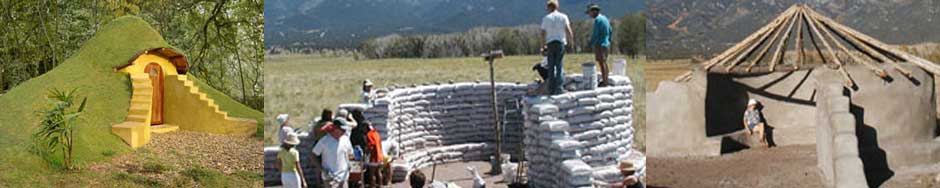
“CEBs are one of the cheapest, simplest building methods available. They are an advancement on adobe blocks and are far more versatile, durable and strong.
Structural aspects
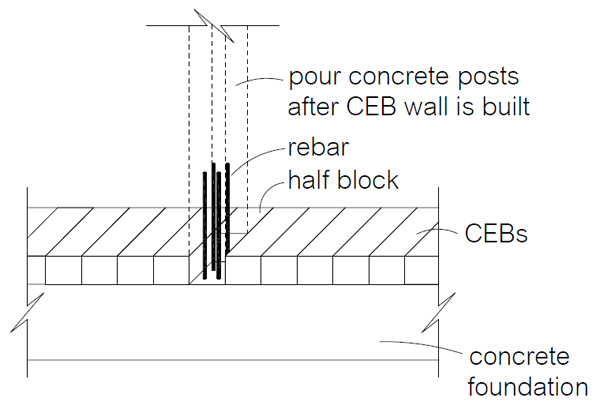
Post Detail for CEB Walls

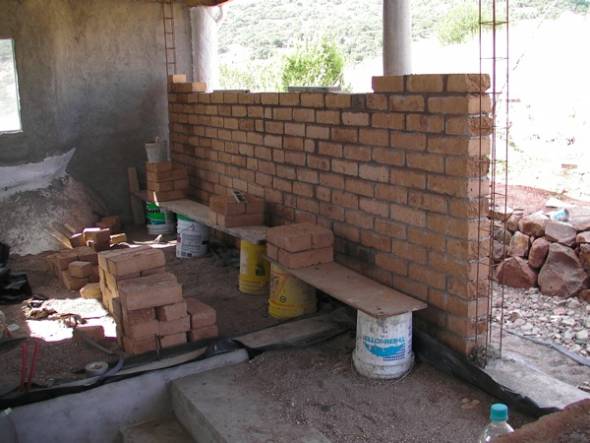
One way to speed construction of compressed earth block walls (CEBs) is to pour concrete posts after the CEB walls are built. This process may be desirable in mild climates where there’s low probability of rain or snow and you are eager to get the walls built. Pouring the posts in the walls saves on form material, and reduces cutting and fitting of blocks (less need for perfect alignment). Posts are inconspicuous (or invisible in some cases – see below) because they’re inset flush to the wall.
Mechanized Rapidobe

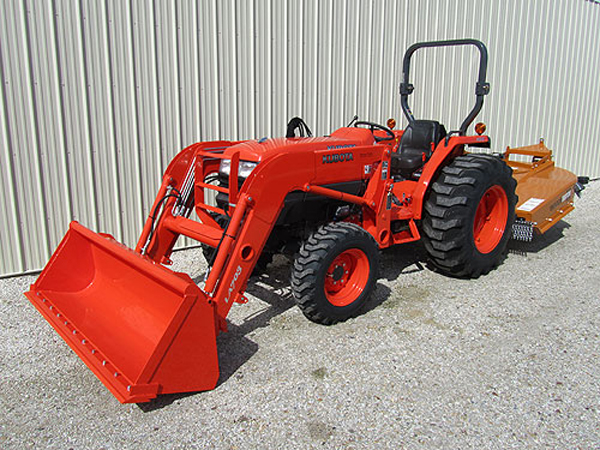
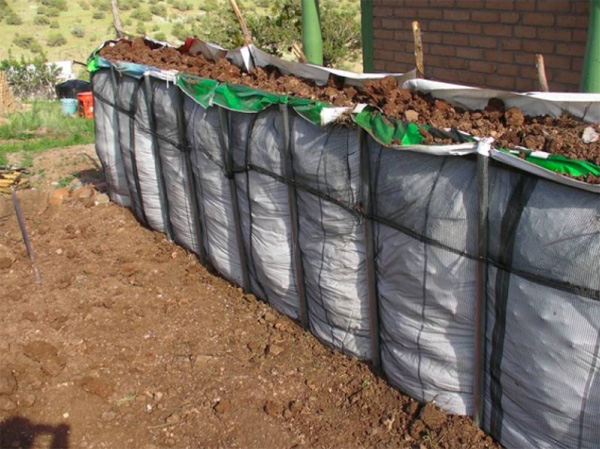
Abe from Vela Creations and I have been exchanging ideas about his new Rapidobe building system. The biggest strong point for rapidobe is its speed and ease of construction. You could speed the process along even more with a Bobcat or tractor to dump soil into the wall cavity, and then have several workers for tamping. Abe tamps the soil while standing inside the wall.
A Material and Structural Analysis of Earthbag Housing

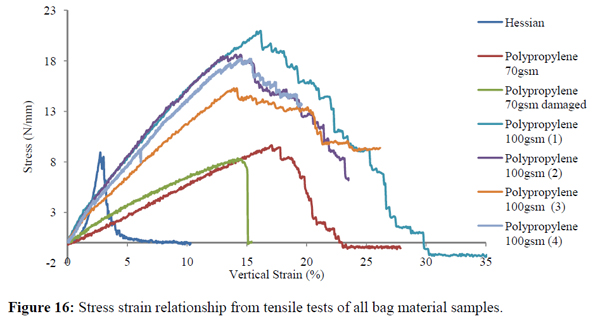
Nikul Vadgama from the University of Bath has completed one of the most extensive reports so far on earthbag building. In order for earthbag to enter mainstream building practice, engineering tests and analysis like this are needed by engineers, architects and code officials.
Rapidobe Walls

From Abe: “We really like this method of building. We put a 35 feet wall up in two days with three people, excluding the stucco and plaster. It was also very cheap. We do not yet know the durability of this method, as we are the first that we know of to have used it. Time will tell, but it certainly seems very sturdy and has not shifted at all in the six months it has been standing.
Living Structures

What if you could build your own home with living plants instead of using processed materials that have been shipped half a country away? Well, now you can.