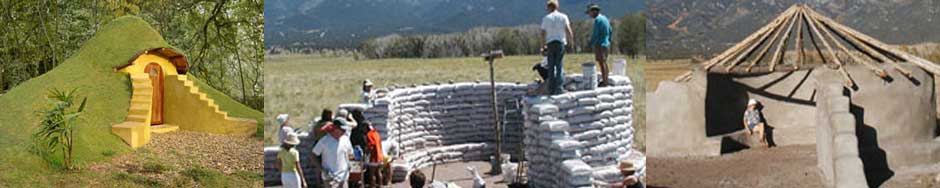
Below are listed several ways homes can be provided with renewable energy.
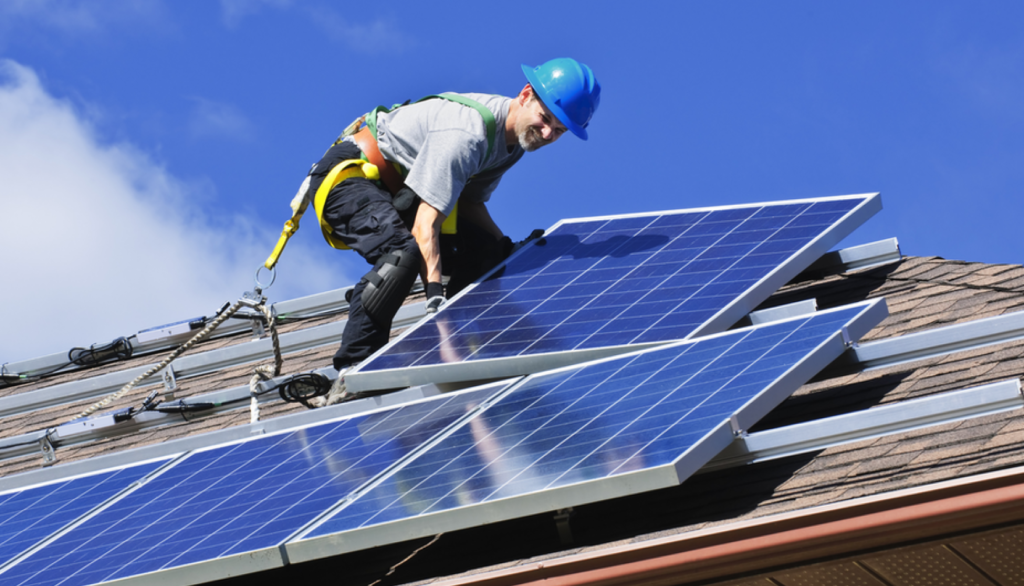 There’s a good reason that solar panels appear first and foremost on this list. Converting to solar power for your entire home is the ultimate way to reduce your carbon footprint. This method offers to save you the most money over time. Many residents see their energy charges drop to zero.
The average house uses about 30kWh per day or 30,000W. Conversely, each solar panel averages around 300W to 350W each hour or about 7,800 a day. Therefore, you’d need at least five panels to power a standard home.
Typically, your solar system hooks to the conventional grid. You save money on your electricity because your power company essentially buys energy from you, resulting in a rebate on your monthly bill. The advantage of this system becomes apparent if your panels ever become damaged or covered by three feet of snow — you won’t suffer an outage. You’ll simply use power from the traditional source.
Off-grid systems cost more and require more space because you need sufficient storage to contain your extra energy until use. Solar panels convert the sun’s energy into DC or direct current that feeds into a battery. You then need an inverter to convert DC to AC — the type of power most homes run on today.
Additionally, you can investigate joining a solar collective. In these models, you subscribe to a third-party company to offset your energy usage by selling the solar they collect to your energy company. Some more progressive apartment and condominium complexes even have private rooftop solar collectives.
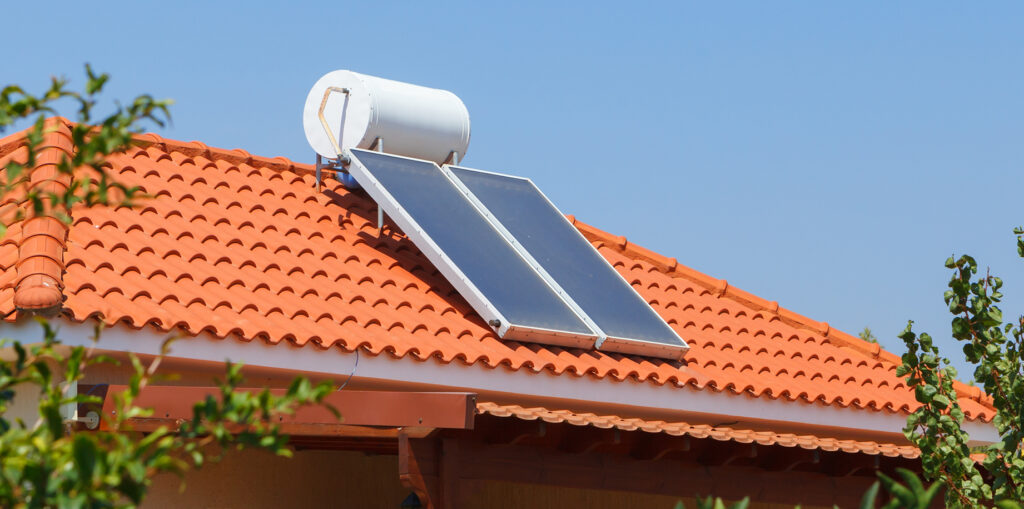 Like many home solar panels, converting to a solar water heater won’t mean disconnecting from your regular oil or gas. These systems tie into your existing water heater. Although many traditional solar water heaters are pricey, ringing in at as much as $8,000, you can now find a $2,000 model that you can install with a little DIY knowledge.
 Solar air conditioners use traditional panels to power the appliance directly. They need no connection to the grid, running on a DC current drawn right from the power source.
Solar thermal systems operate similarly to solar hot water heaters. The heated water converts a refrigerant from a liquid to a gas. The remaining hot water is then available for household use, saving even more energy.
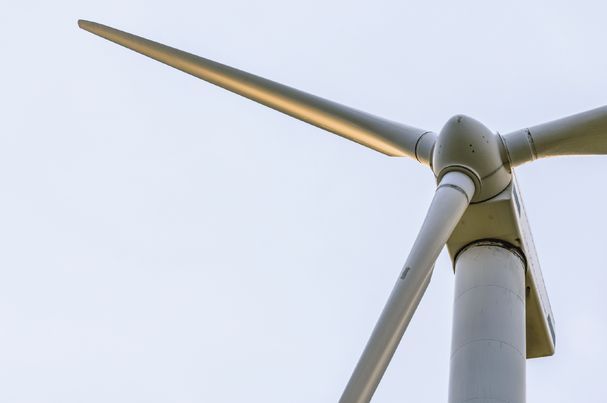 Some wind turbines can mount on your roof, some are made to mount to the earth, while others are portable. If installing a large model, check your local zoning regulations first; many have ordinances specifying maximum turbine height.
Here’s another option that depends on your parcel.
 This form of inexpensive renewable energy won’t work for everyone but might come in handy if you have a river or stream running through your property. Hydropower directs water through a pipe to run a turbine — a fan-like object that spins to run a generator and produce electricity. Designing such a system is relatively simple
Tackling climate change is everyone’s job, and perhaps you already do your part by recycling and reducing your use, but you want to expand your efforts.
You can read the original article at environment.co
There is a typo (or misunderstanding) in the math of how much power a solar panel produces daily. Peak sun is generally a window of about 6 hours, from 9am to 3pm. In that time, on a sunny day, you should get close to the rated output of a panel. 6*300w = 1800w. On a day that is very sunny with unobscured panels, you should get more than that and on a cloudy day, you will get a good bit less. Just trying to give folks a realistic appraisal of how big of a system they’ll need.
Good point. Morgan!