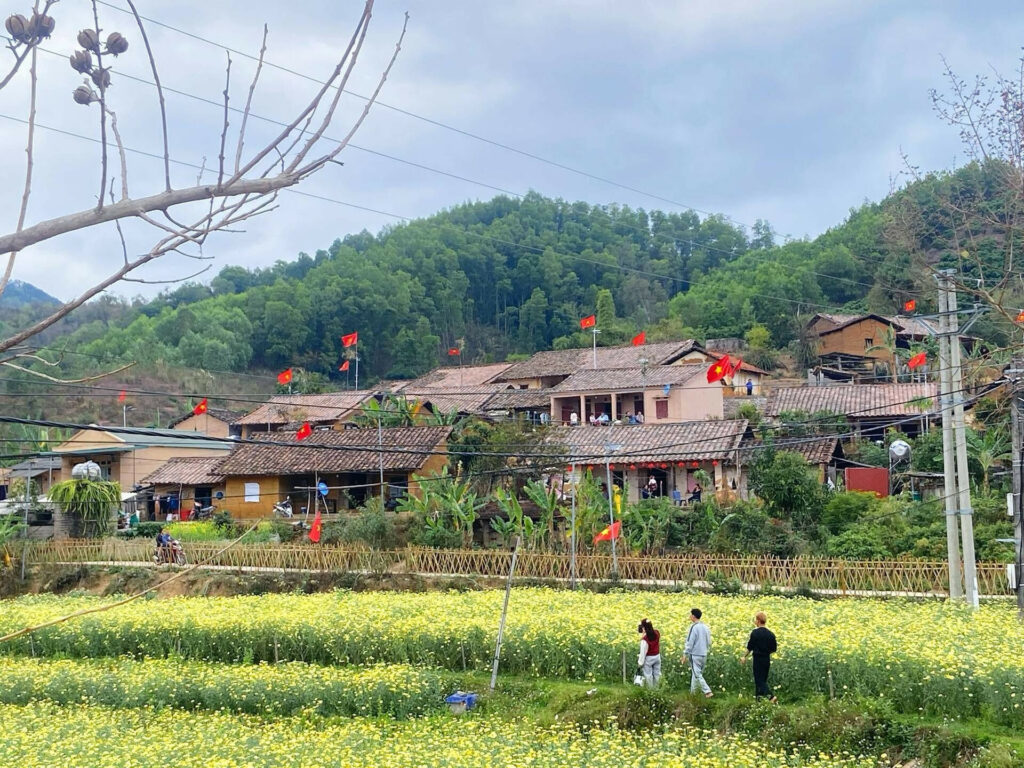
For generations, the Bac Hoa village in Vietnam has been home to the Nung ethnic community, whose traditional rammed-earth houses now carry the warm hues of time. In recent years, Bac Hoa has begun to attract travelers, particularly in spring when bright yellow mustard flowers bloom across the fields, creating picturesque scenes for visitors.
 The earthen houses in the village are several decades old. Their roofs are covered with traditional yin-yang tiles, each handcrafted from clay and fired with wood for days. The tiles come in two types: yin tiles placed face up and yang tiles laid over them. Arranged alternately, they create channels that help water drain and air circulate efficiently. The design also carries symbolic meaning, representing harmony between heaven and earth, yin and yang in the worldview of the local community.
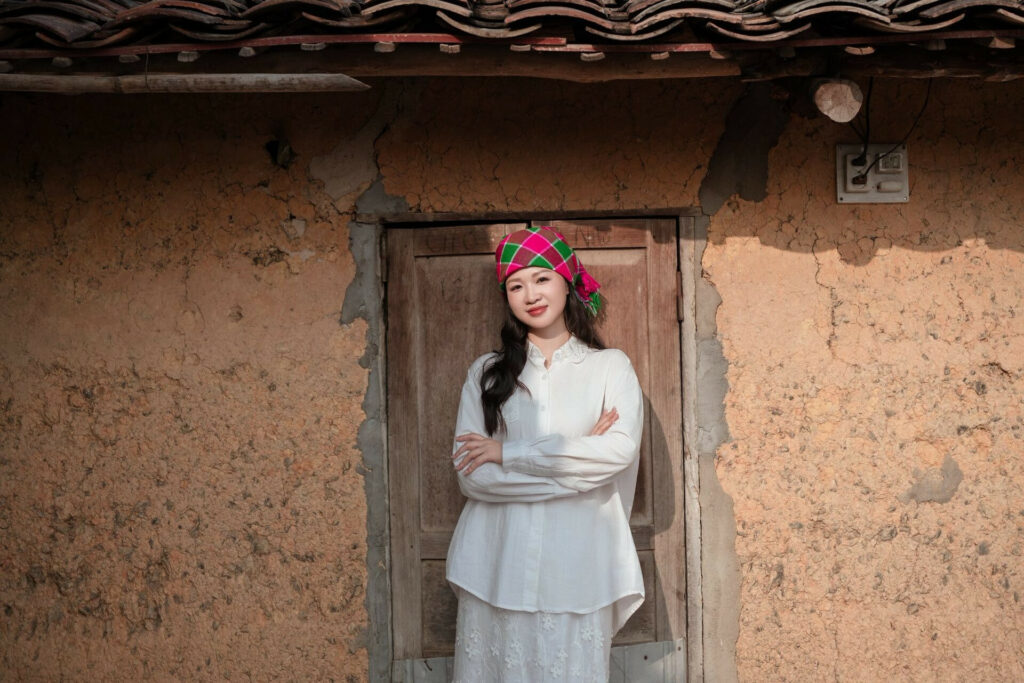 The walls are about 40-50cm (16-20 inches) thick and stand between 2 and 3 meters (7-10 feet) high. Thanks to this structure, the houses stay warm in winter and cool in summer.
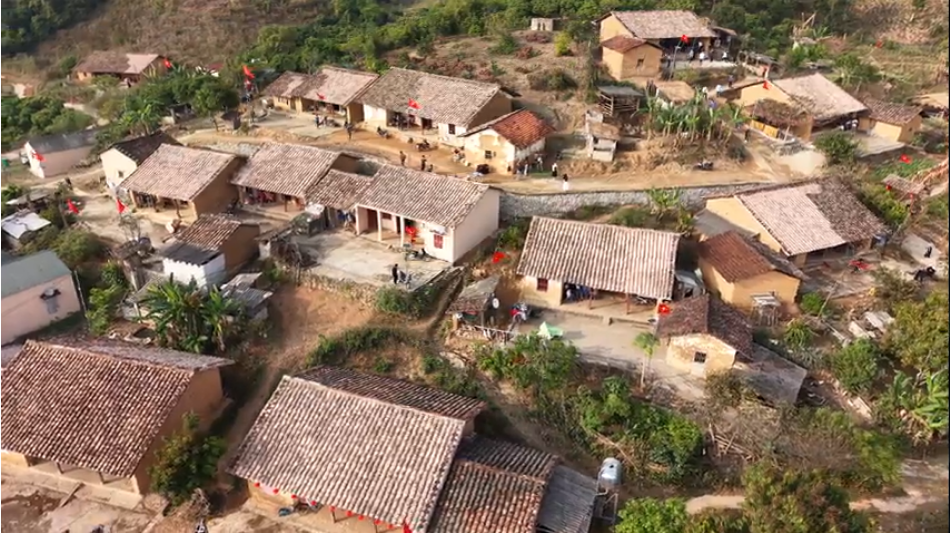 Most houses have three to five compartments. The central room holds particular significance, serving as the space for the ancestral altar while also functioning as the main area for welcoming guests and gathering for family meals.
One interesting feature of the village is the absence of solid fences between homes. Instead, boundaries are marked by wildflowers, stone edges or simple bamboo hedges. Families live closely connected, maintaining strong community ties across generations.
 One visitor remarked, “I immediately felt the fresh air and peaceful atmosphere. The village is filled with greenery and flowers. Tourism has not developed too much yet, so it is still quiet and not crowded. The locals are friendly and welcoming.”
You can read the original article at vietnamnet.vn