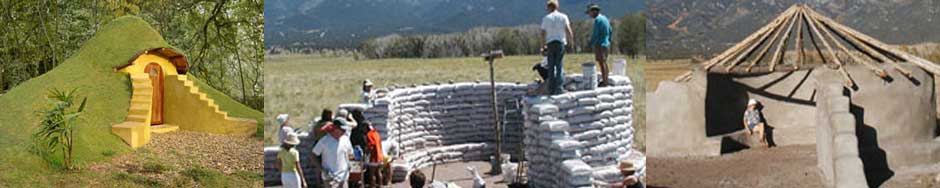

Compressed earth blocks are a combination of soil, mechanical engineering, and high-density compression capable of transforming the ground of the construction site into structural blocks used to erect resistant, stable, and visually striking walls. The technology combines thermal efficiency with low emissions.
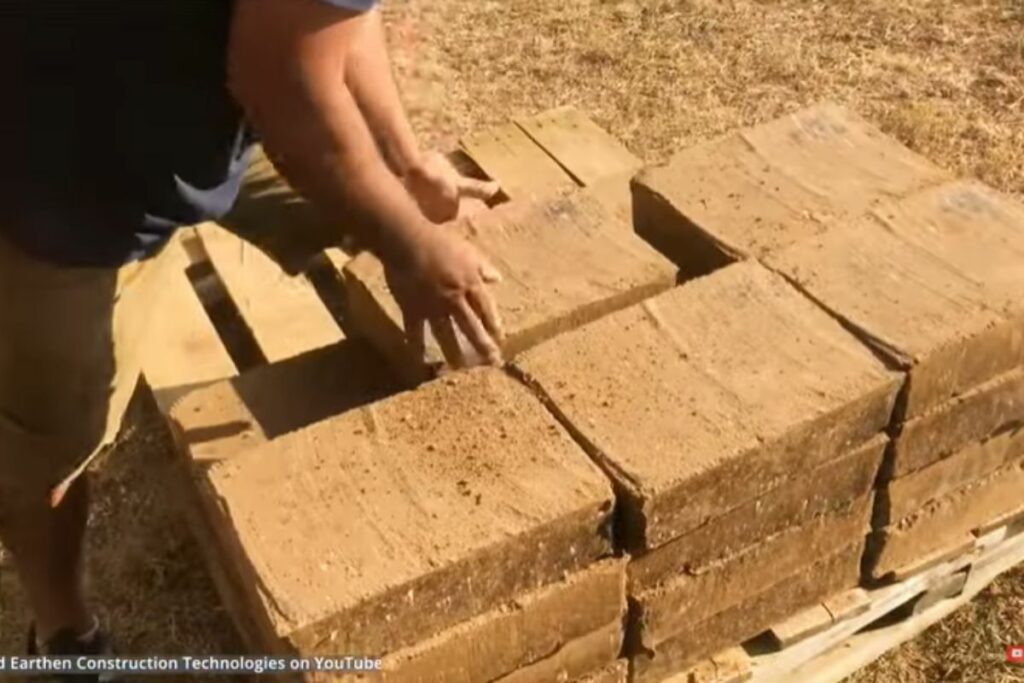 Any soil with between 10% and 30% clay can work for producing compacted blocks. Within this range, clay acts as a natural binder, giving cohesion to the material after compression. When the natural composition does not exactly meet the desired performance, stabilization can include about 7% Portland cement or lime, while the rest remains soil. This adjustment makes the block waterproof and expands its possibilities for use. Stabilized blocks can remain exposed, preserving the natural texture and color of the soil. Unstabilized blocks, made solely with suitable soil, can work very well when they receive external protection, such as lime plaster or large eaves.
 Even when the local soil is not used entirely, the alternative can be to buy soil from nearby quarries, which keeps transportation short and avoids a significant part of the footprint associated with traditional inputs.
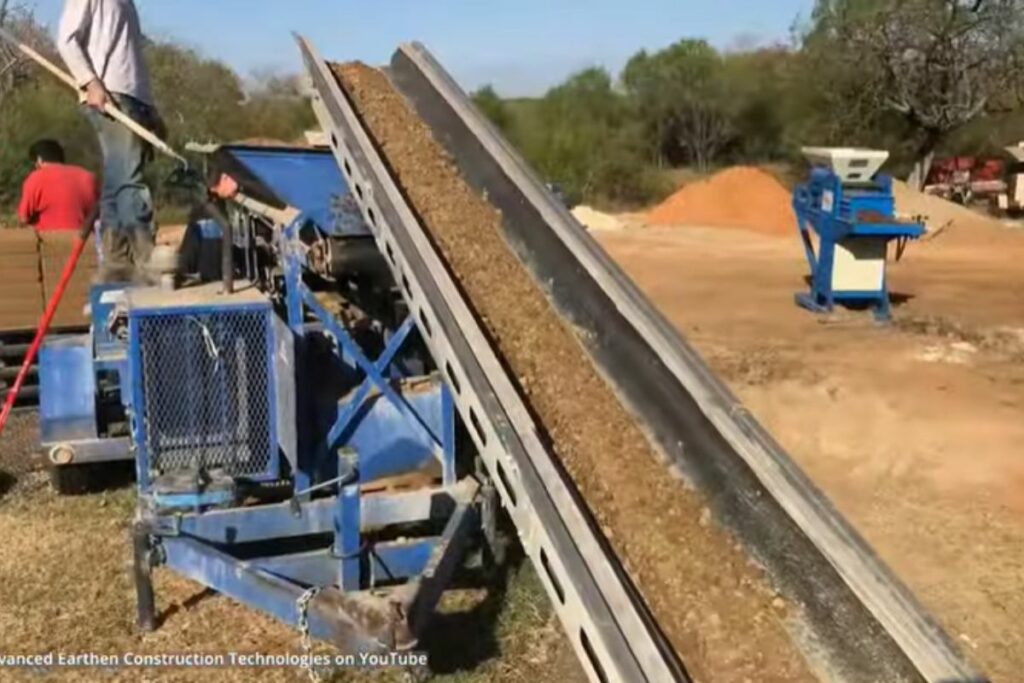
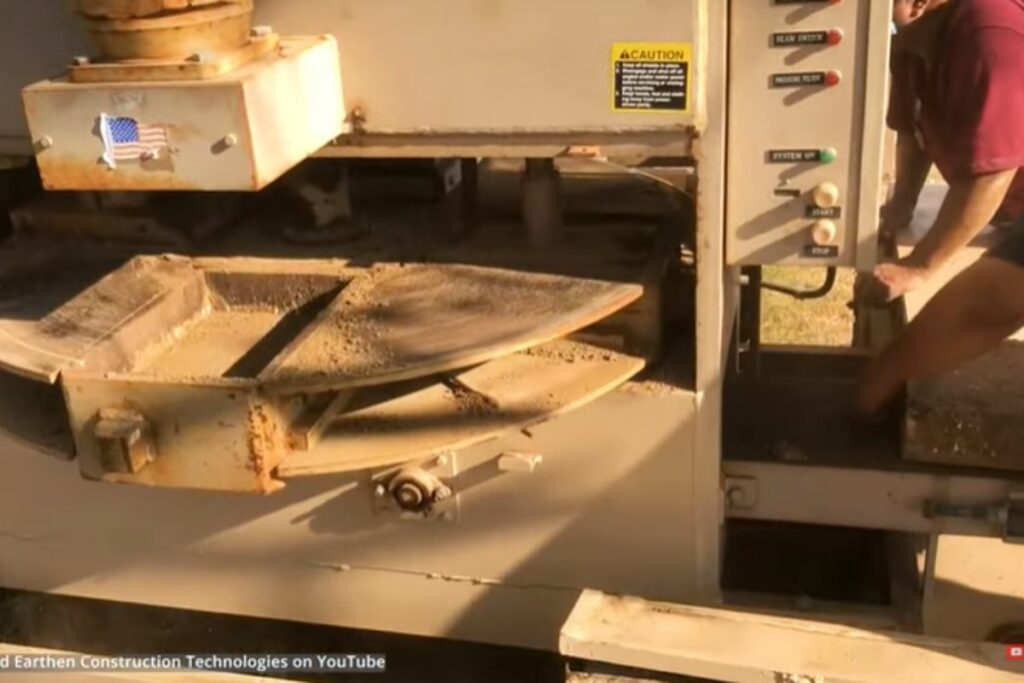 Advanced Earthen Construction Technologies company claims that it has been operating for 31 years and has sold equipment to 51 countries. One of the cited pieces of equipment is capable of processing 20 yards of material per hour. With this mixer and two large block machines, the production capacity could reach nearly a thousand blocks per hour. This changes the perception that building with soil is necessarily slow, artisanal, and limited to small isolated situations.
 One machine is fully automatic, receiving the material load, feeding the hopper, compressing the block, and repeats the cycle every six or seven seconds! The blocks produced measure 10 by 14 inches, weighs about 36 pounds, and are extremely dense. The blocks are compressed to about 1,200 psi, and they withstand fire, tornadoes, and even bullet impacts.
There is also an interlocking system which produces pieces with holes and fittings, facilitating stacking and the passage of rebar, conduits, electricity, and plumbing.
 Thermal mass is another strong point. Since the blocks are dense, the house tends to absorb and release heat slowly. This helps keep the interior cool during the summer for a longer time, in a condition compared to the climatic feel of a cave.
Compacted soil blocks have been kept submerged in a jar of water for 20 years without signs of erosion. Earthen buildings are still standing in regions like Afghanistan and Iraq, as well as the historical association with large structures built from compacted soils.
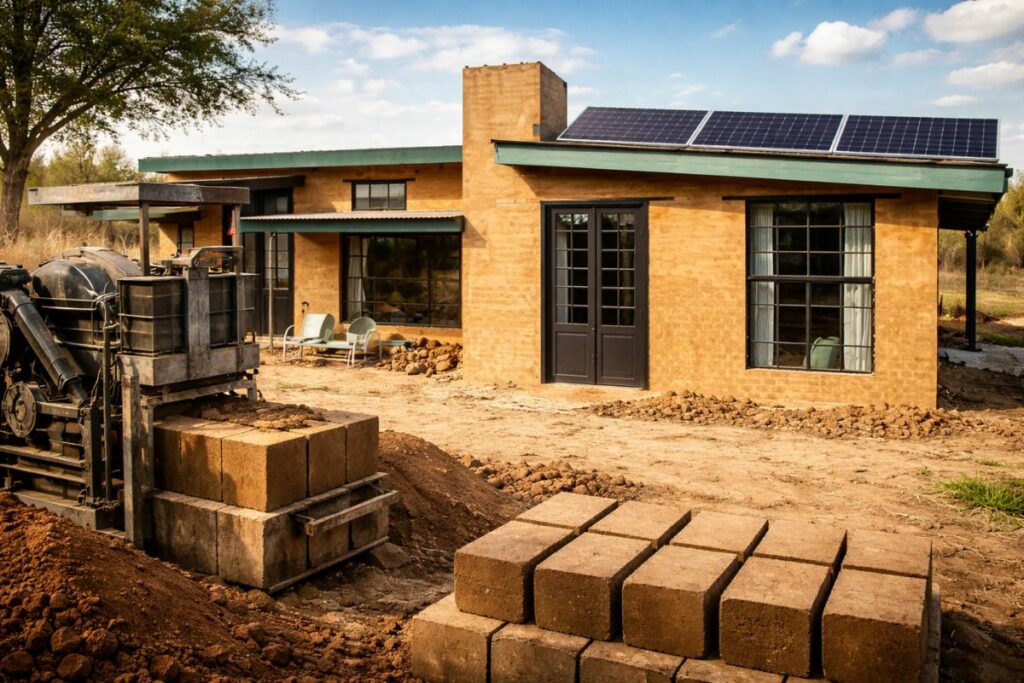 The biggest obstacle is not safety, cost, or material health, but the lack of wide acceptance in codes and regulations. Governments and construction authorities often do not yet treat this system as a standard. This barrier helps explain why the compressed earth house appears more in rural areas, in independent projects, and in self-build initiatives.
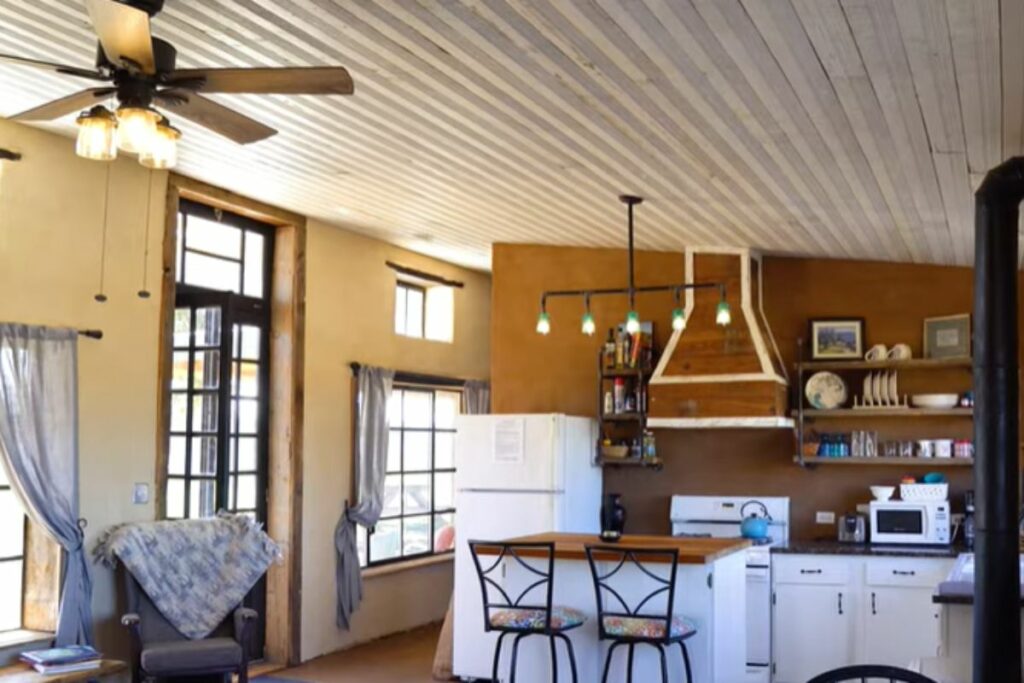 The compacted earth house brings together local raw material, high-productivity machinery, thermal comfort, physical resistance, and natural aesthetics in a single system.
You can read the original article at clickpetroleoegas.com