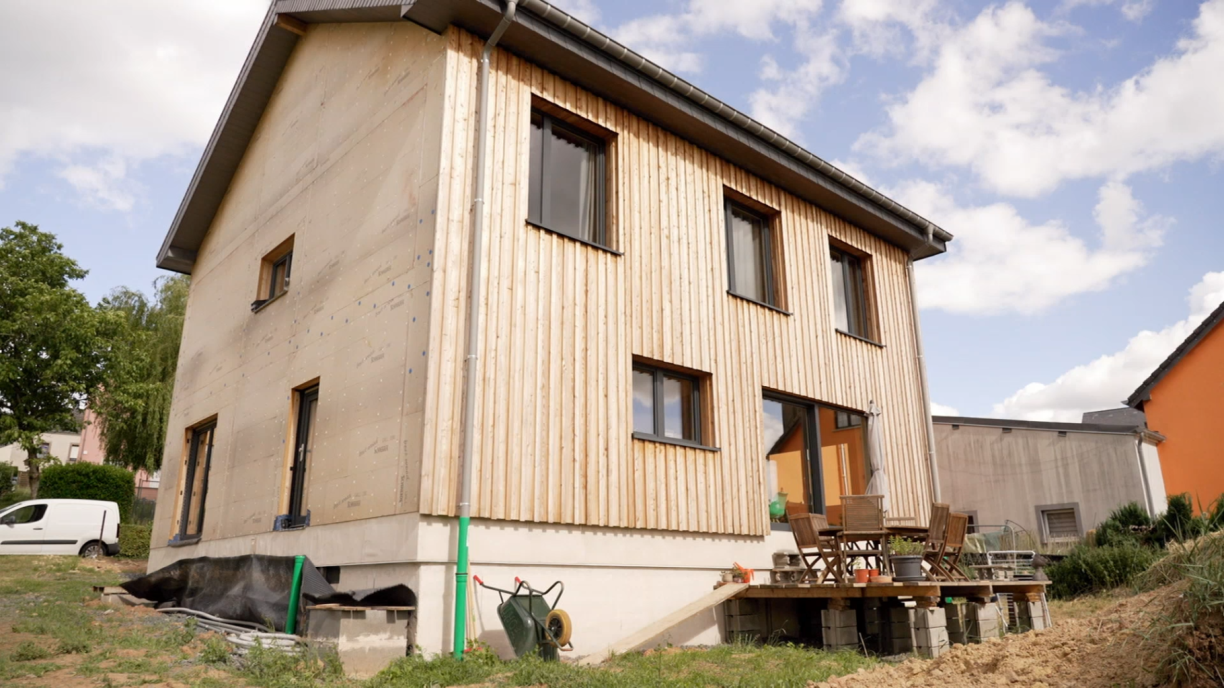
Marc Neu, a passionate advocate for sustainable building, has built his own home in Luxembourg using natural materials such as wood, straw, clay, and lime. He says, “A straw bale like this, about 1.1 metres long, costs five or six euros. I managed to insulate my entire house, from the floor slab up to the roof, for just €6,000. No insulation material can beat that price.”
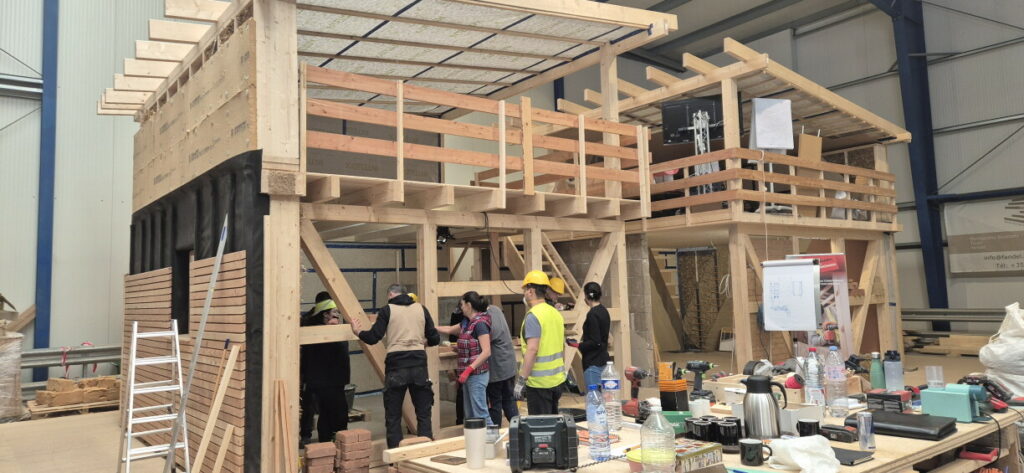 Now Marc leads a hands-on training courses. Participants construct a life-sized, fully sustainable house, which will be assembled and then dismantled over the course of the three-week programme. They consist of jobseekers: building draughtsmen, masons, engineers, and students. His aim is to broaden their horizons and introduce them to the principles of sustainable construction, which he believes represents the “Rolls-Royce of houses”.
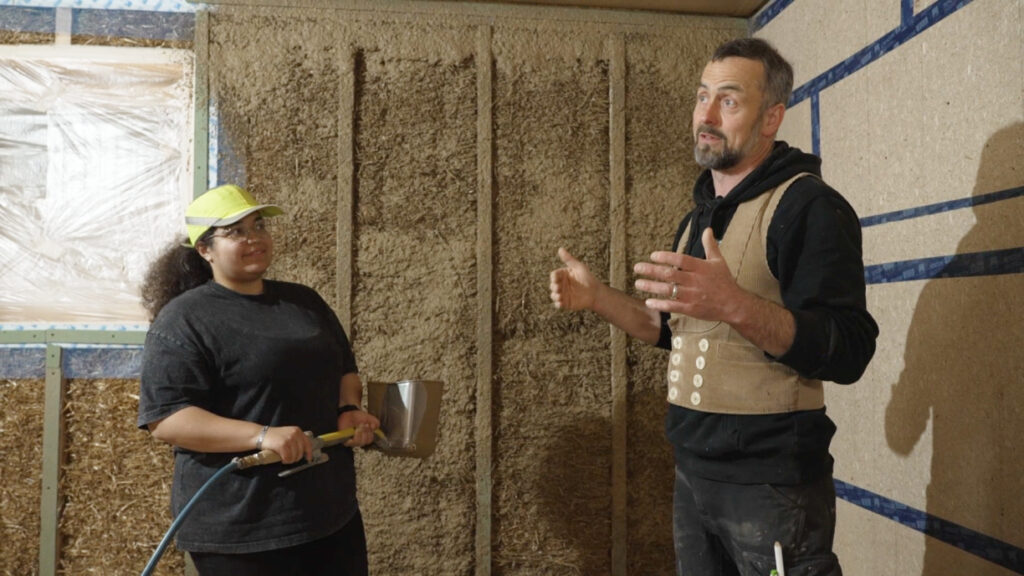 On this particular day, the group is using a machine to spray liquid clay onto straw-bale walls. Neu passionately explains the appeal of clay: “It is a fascinating material. If you are working with clay and your friend comes over for a beer, you can put down your tools and simply moisten the clay again the next day. With concrete, however, you would have to throw all your tools away because the material would have completely set.”
Building with wood, straw, and clay, Neu says, offers not only strong energy performance, but also unbeatable protection of natural resources. “It is a healthy construction from start to finish. If I have to take a house like this apart, ninety percent of it is untreated wood, untreated straw, and clay. There is almost nothing to take to landfill,” he points out.
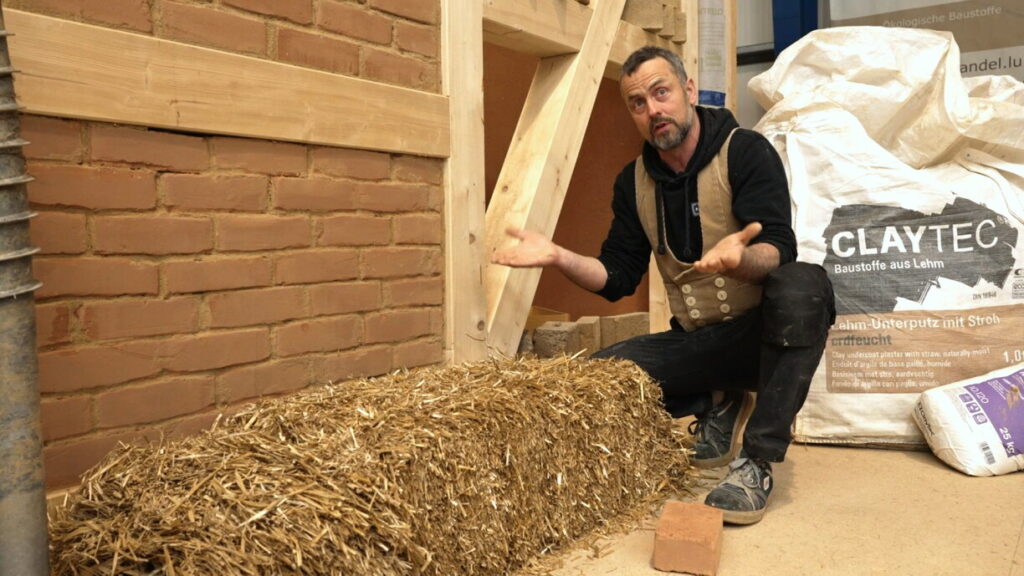 Neu readily addresses the classic doubts people have about straw homes: fire, moisture, and rodents. “People think straw burns, rots, and attracts mice,” he says. “Yes, straw burns – just like wood, paper, or even polystyrene. But try setting a tree trunk alight with a lighter: it does not work, because it is too dense, there is not enough oxygen. It is the same principle with tightly packed straw bales,” he says. He adds that as long as the straw bales are of good quality and the construction is done properly, mould should not occur. He points to many half-timbered houses, apartment blocks, and churches built with straw and wood that have stood for centuries.
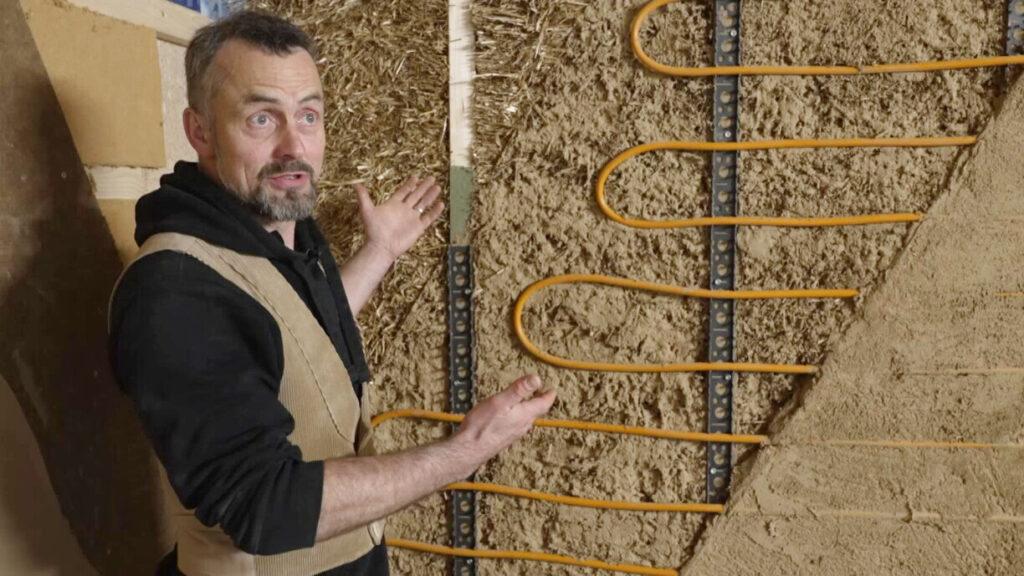 As for rodents, Neu is not concerned. “With the density, the wooden frame, and the coatings, and with modern agricultural machinery, there should not be any grain left in the straw. I always say mice are more likely to look for cornflakes in your kitchen than grains in a straw bale.”
Heat in summer is another challenge for wooden houses, he admits. “It is a real challenge. You need to design the house and its façade carefully based on its orientation. For example, we use clay bricks, which add mass and help regulate temperature and humidity,” Neu says. Neu also explains that under his own house, there is a ventilated gap of 80cm beneath the wood-and-straw floor, which protects against rising damp, radon, and termites – just one of the solutions he has put in place.
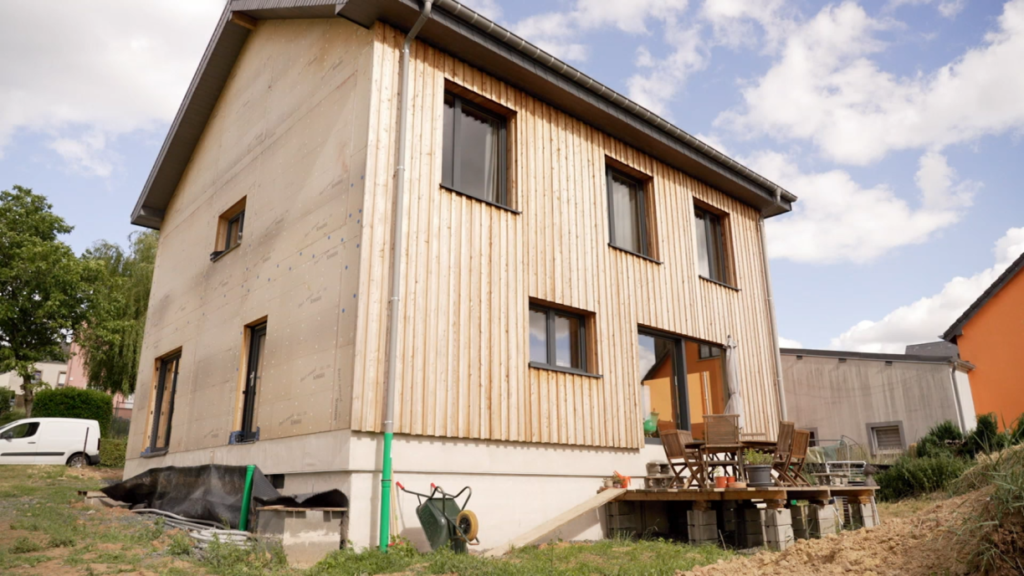 Inside his home, wood is everywhere, often left untreated or only lightly oiled. The staircase reveals a wooden slab made from beams connected without glue, only massive wooden dowels. Since moving in, Neu and his family have settled in well. “We feel good here. Before, we lived in one of the oldest houses made of stone, and we were always cold. Here, a masonry stove is enough to heat the whole house.”
With twenty years of experience as an energy consultant, he has seen many new builds and renovations focus on energy performance, which he applauds, but he warns there are several ways to achieve this. “We should do as indigenous peoples do – borrow from nature during our lives and return it when we die. But with concrete, polystyrene, synthetic paints, polyurethane foams, and all this other rubbish that produces wonderful energy certificates, we are far from that. We are destroying our planet while thinking we are saving it with A+ rated homes,” Neu concluded.
You can read gthe original article at today.rtl.lu