
Rebuilding Nepal, One Earthbag at a Time

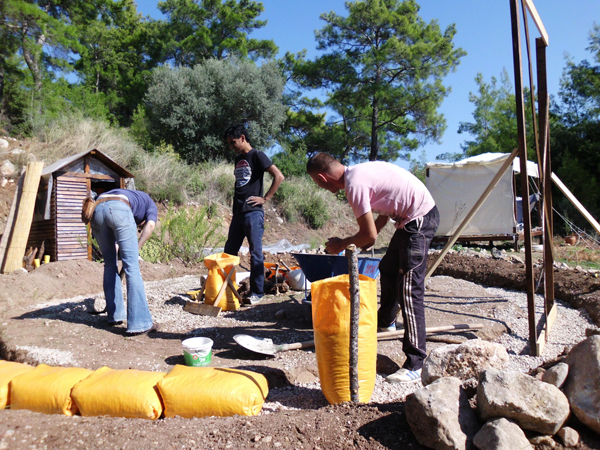
rebuildingnepalRebuilding Nepal, One Earthbag at a Time is a short Kindle book assembled by a team of eight volunteers who went to Palchok in the Trishuli Valley to rebuild a school in the fall of 2015. Because of the remote location they needed to plan for every aspect of the project, and this book is primarily advice for others who might try to do something similar. Besides actually building the school, they wanted to introduce the earthbag technique to the villagers so they could continue rebuilding this way. The team had raised enough funds from friends and family to accomplish this goal. They were there for only two weeks, but they got that small school built! Graeme Howell was the mastermind behind this endeavor.

The first chapter introduces what they consider to be the essential building process and suggests how to make this happen efficiently. Because of the number of volunteers, including folks from the village, they wanted to keep everybody busy and make sure there weren’t bottlenecks in the process. For this reason they had people filling and sewing bags right away, even before the foundation trench was prepared. Likewise, they had people screening soil for the eventual plaster.
Read more

Hands-On Workshops at the NBC

In addition to the tree house and rocket stove projects already described, there were quite a few other hands-on demonstration projects happening at the Natural Building Colloquium (NBC), and I’ll describe a few of these.

sb2

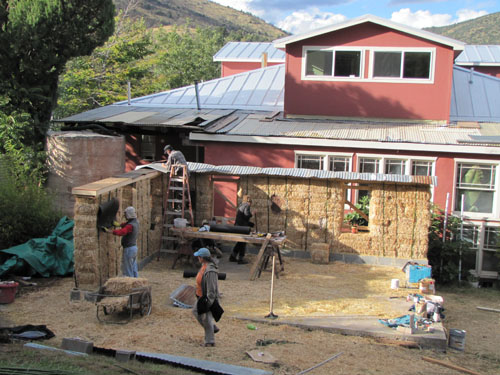
A simple straw bale wall was erected on a prepared concrete foundation; this was directed by Bill Steen with the assistance of Matts Myhrman and many others. This L-shaped wall would immediately serve as a kind of performance stage and could eventually be enclosed for a building.

Read more

The Mud Home: Earthbag Foundations

Gravel bag foundations save thousands of dollars, use no concrete and don’t wick water up in the wall.

“There will be many who refuse to believe this will work. What no concrete? Will be their never-ending refrain.

Concrete foundations have been around for less than a hundred years. Buildings have been built for millennia. In the eastern Mediterranean it’s common to see structures still standing over 2000 years after they were built, without a drop of concrete.

Read more

Wiki Natural House Foundation Design

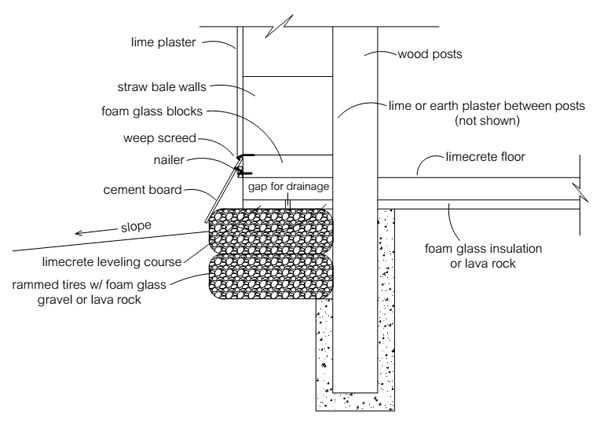
The low cost Wiki Natural House foundation is designed to meet UK building codes.

Yesterday’s blog post was about the foam glass insulation we plan to use on the Wiki Natural House. Today we’re giving a sneak peak (first draft) of the foundation design. The primary design considerations are low cost, owner-builder friendly, minimal cement, must withstand cold and wet climate (insulation is key), must align with thick straw bale walls and meet UK building codes. That’s a pretty tall order. Many of my designs are for rural areas with few or no codes. In this case, we have to put a little more effort into workable solutions.

Read more

Code Approved Rammed Tire Foundations

If you spend enough time you can find almost anything now for free on the Internet. Jason has been sending me one good tip after another. He recommended Strawworks.com in the UK for their detail drawings. They’re world famous for their expertise in strawbale building. Visit their site to see their code approved rammed tire foundation detail drawing and other excellent drawings, photos and more. Note: I still prefer gravel bag foundations for their speed and ease of construction, however, it can be challenging getting them permitted in areas with building codes.

Read more

Another Post Footing Alternative

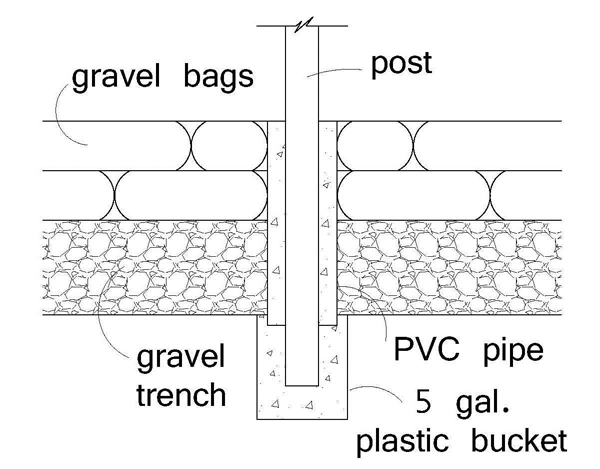
Concrete footing detail for wood, bamboo or metal posts

Many of our readers use post and beam frames for their natural homes and so it’s important to know various options for setting posts. I’ve been corresponding with Zafra, one of our readers and the lady who helped translate my Earthbag Building Guide into Spanish. She and her partner Daniel are going to use bamboo poles on their natural home in Venezuela, but the method shown here will work just as well with wood or metal poles.

Read more