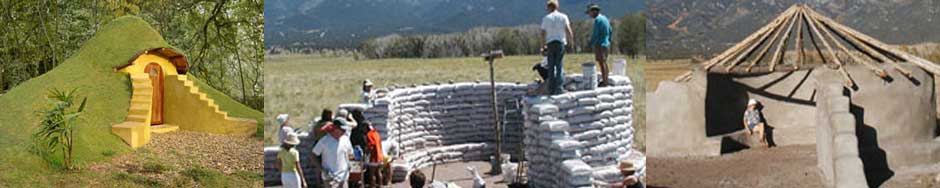
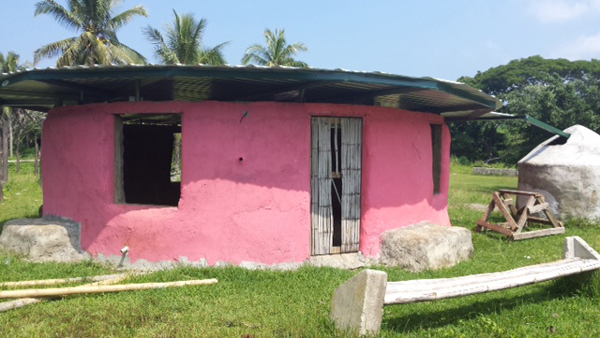
Cyclone Pam, one of the worst cyclones ever recorded in the Pacific Ocean, blasted the island chain of Vanuatu with category 5 winds up to 185 miles per hour and 26 foot storm surge. The women’s earthbag center near Port Vila and the earthbag water tank made it through the storm with minimal damage, despite the widespread destruction in the region.
affordable
Low Tech Ferrocement Roof Building System
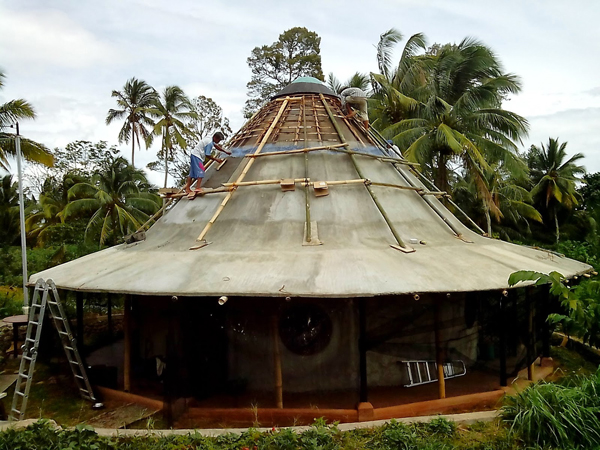
“Total roof size 360sqm approx
1 inch wire mesh 22 gauge
Days worked so far: 34 working days till last layer on last section laid.
Total cost so far $2800 not including patio post rebuild. Also waterproofing and painting not included but whole roof is covered.
Bioconstruction Women of La Paz
“Women from La Paz filmed themselves and tell their story about them building houses for their marginal children.” Note the earthbag domes and cobblestone floors they are building. Their floor technique is particularly interesting.
Update: An Earthbag Training Center for Teachers in Nepal
An earthbag training center for teachers in Nepal from Eco-Logis on Vimeo.
“A short video presenting First Step Himalaya, NGO who is building a training center for teachers in rural Nepal (Sindhupalchok district). They decided to build with earthbags: an economical, ecological & quick technique.
Natural Building Materials and Methods
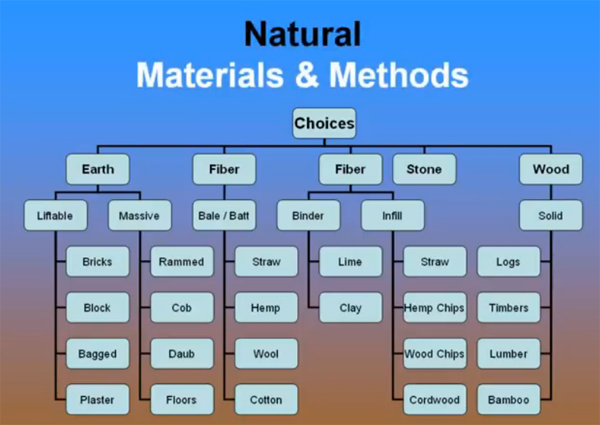
Chris Dancey put together a video titled Natural Building Overview that shows many different natural building options. The screenshot above was taken from his video. I like the chart because it shows at a glance the various natural building materials and methods in an organized way.
Building Blocks at a Fraction of a Penny Each
Harvey Lacey’s Ubuntu-Blox block building machine was featured in seventh place in yesterday’s blog post on Top 10 Cottage Industry Products. Today’s blog post shows how his block making process has shifted to using extremely low cost materials – vetiver roots, the waste material from making vetiver oil. The end result is similar to straw bales except the bales are smaller, lighter, more insect resistant and they’re made on site with waste materials. The mini bales are less expensive than ordinary straw bales, take up less space and can be made without an expensive baling machine. His open source plans make it easy for anyone to build his machine quite easily.