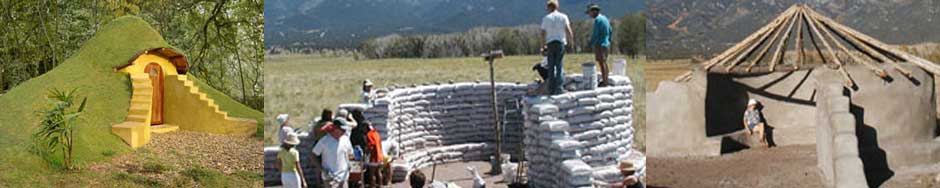
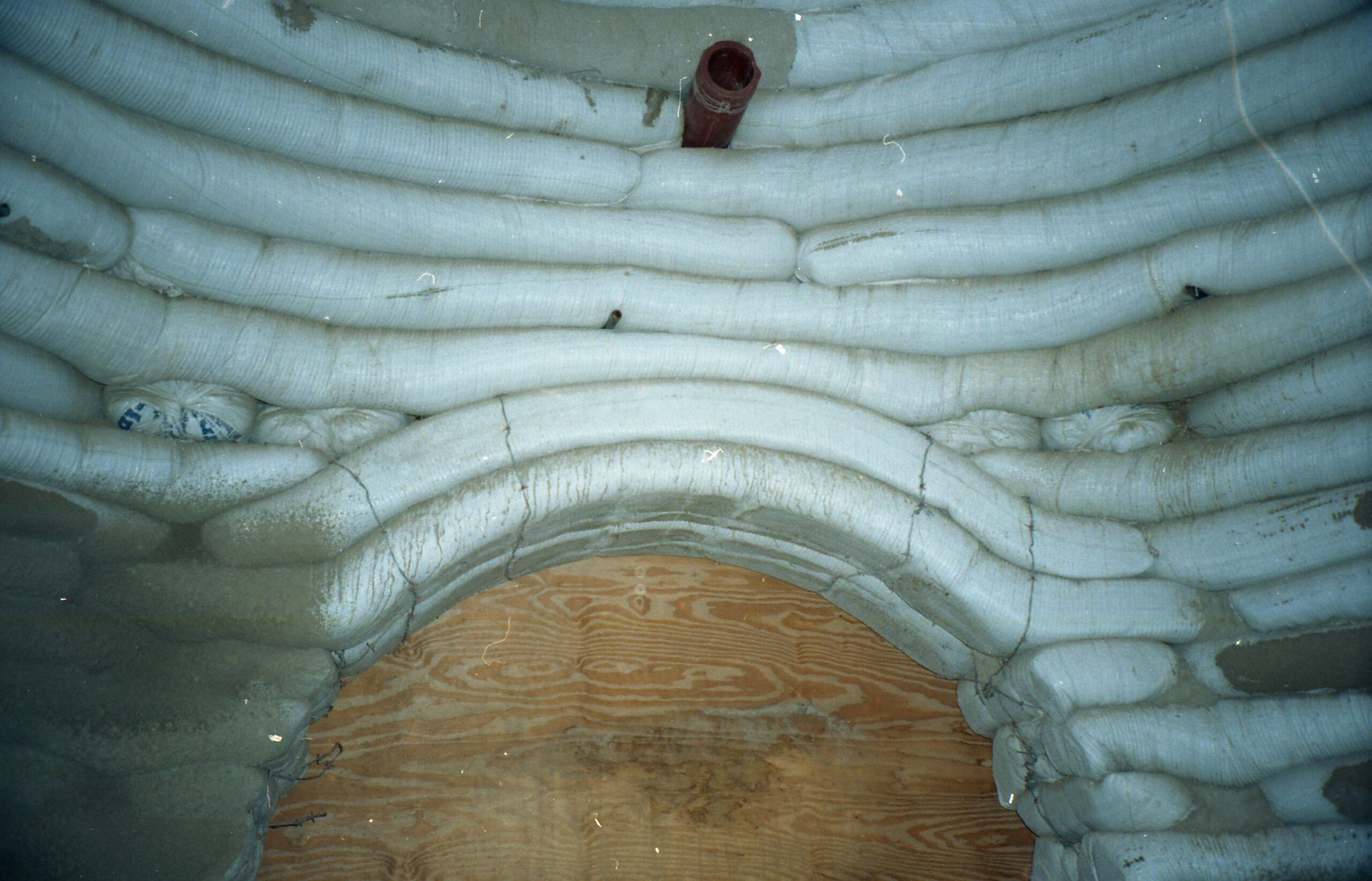
In a world increasingly affected by natural disasters, climate change, and housing crises, a seemingly simple technique has been attracting attention for decades: building houses with earthbags, also known as Superadobe. It has already demonstrated resistance to earthquakes, hurricanes, and fires. Popularized by Iranian-American architect Nader Khalili in the 1980s, superadobe combines ancient earth-based construction techniques with modern principles of structural engineering.
 The basis of the technique is surprisingly simple:
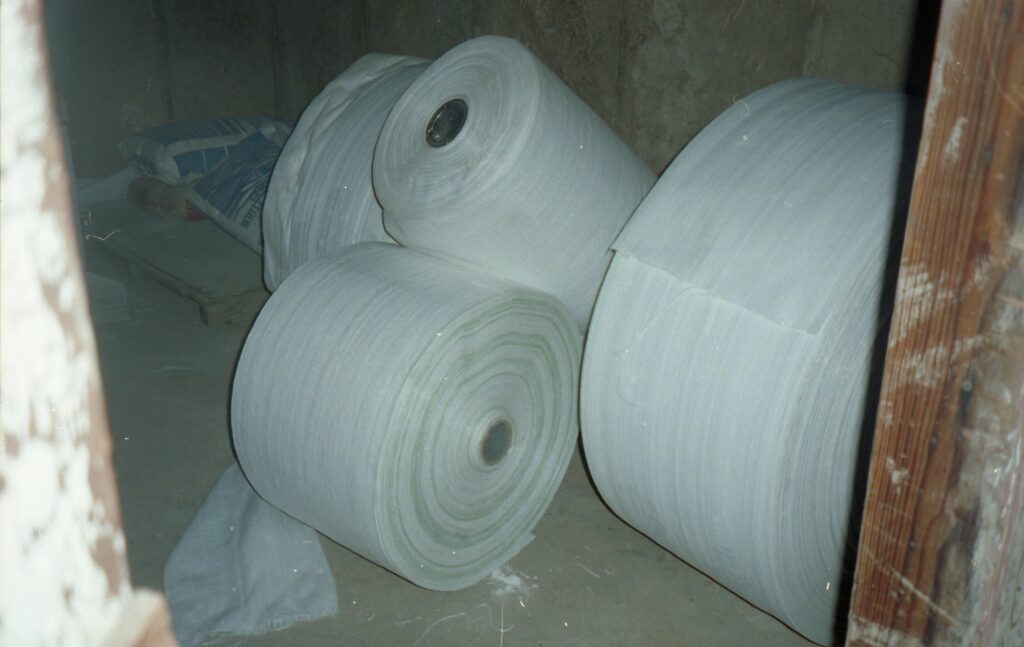
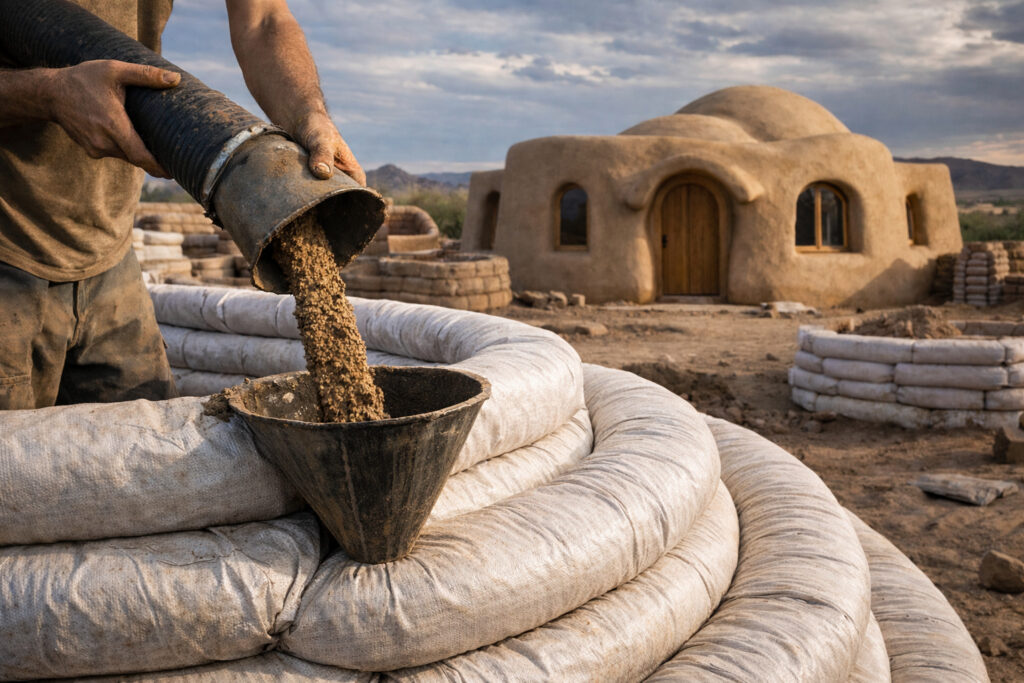
- Polypropylene bags or tubes are filled with soil (sometimes mixed with lime or cement).
- These “cords” of earth are stacked in layers according to the shape of the structure.
- Between each layer, barbed wire is placed, which acts as structural reinforcement.
- The building can take the form of dome or vault, or other rectilinear shapes.
 The result is a monolithic, compact, and extremely stable structure. A curved dome shape distributes the weight evenly, reducing stress points.
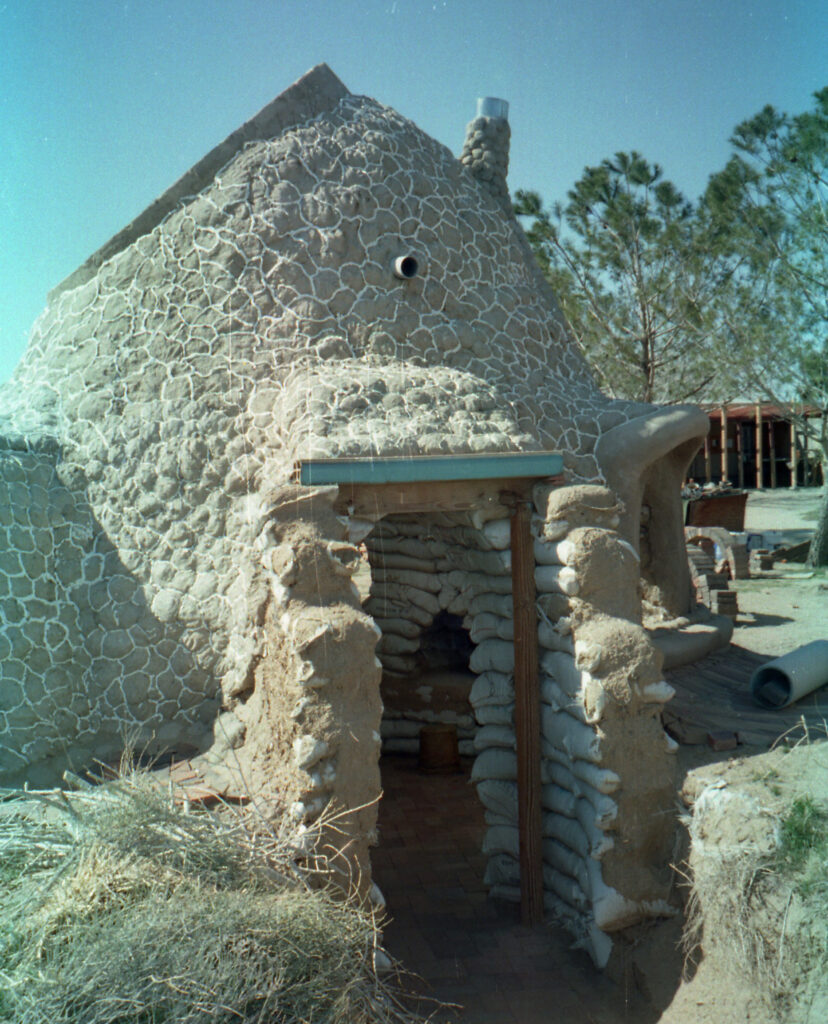 After the basic structure is completed, an external coating of earthen plaster or stucco is applied to protect against erosion, moisture, and UV deterioration.
Earthquakes cause collapse primarily when rigid structures are unable to dissipate the energy of seismic waves. In superadobe, the combination of compacted earth, dome shape, and layers interconnected by wire creates a structure that behaves as a single body. Instead of cracking easily, the structure distributes forces across its entire surface. After the devastating earthquake in Nepal in 2015, for example, houses built using earthbag techniques remained standing while many conventional buildings collapsed.
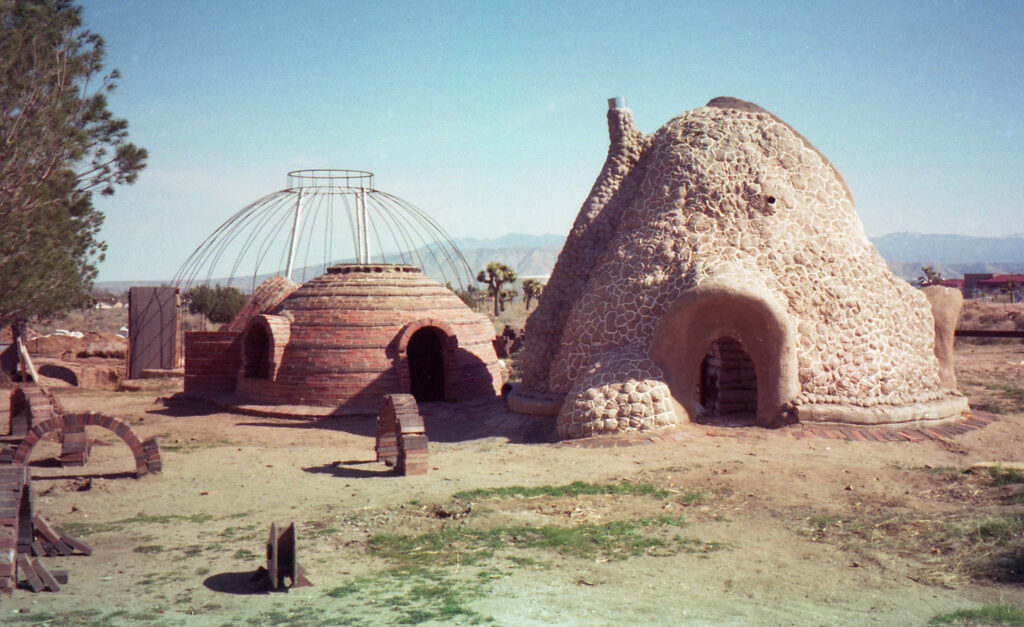 Traditional buildings with flat or pitched roofs can suffer severe damage from strong winds. Superadobe domes, on the other hand, offer natural aerodynamics, allowing the wind to glide across the surface. Furthermore, the weight of the compacted earth provides stability. Unlike lightweight structures, these houses are not easily displaced or dismantled by intense storms. In regions prone to hurricanes and cyclones, superadobe domes have already demonstrated superior performance compared to many conventional buildings.
Earth is not fuel. This simple fact makes a huge difference. While wooden structures can fuel fires, rammed earth walls offer significant thermal resistance. The thermal mass absorbs heat slowly and hinders the spread of flames. In areas affected by forest fires, superadobe structures have shown the ability to withstand extreme heat without collapsing.
Another factor driving interest in superadobe is its reduced cost. Since the main raw material is the local soil, transportation costs are drastically reduced. Furthermore: It reduces the use of concrete and steel (high-carbon materials); it can utilize local labor with simple training, and it offers excellent natural thermal mass to help stabilize interior temperatures.
 In the 1980s, Nader Khalili presented a concept called “Velcro Adobe” at a symposium focused on future lunar bases. The idea was simple and visionary: to use the available soil on-site to build space habitats, reducing the need to transport materials from Earth. The concept caught NASA’s attention because, on the Moon or Mars, transporting tons of steel and concrete would be economically unfeasible. Using lunar soil as a structural material could be a practical solution. Although superadobe has not been officially adopted as a spatial standard, it has been studied as a promising concept.
The method has already been applied in dozens of countries, including community projects in Latin America, educational centers in Africa, experimental housing in the United States, and bio-construction initiatives in Brazil. Furthermore, variations of the technique, such as hyperadobe, are being developed to improve structural performance and simplify building.
 Despite its advantages, superadobe is not a universal solution. It is necessary to consider: availability of suitable soil, protection against prolonged moisture, local building regulations. In some countries, technical standards do not yet fully encompass alternative methods, which can hinder the legal approval of projects.
Superadobe proves that innovation doesn’t always mean high technology. Sometimes, it means reinterpreting old techniques with new knowledge. Resistant to earthquakes, hurricanes, and fire, sustainable and accessible, the method continues to be a benchmark in alternative construction. And the fact that it sparked NASA’s interest shows that, when it comes to building in extreme environments — whether in the desert, in seismic regions, or even off-Earth — simple solutions can be surprisingly powerful.
You can read the original article at clickpetroleoegas.com.br