Traditional reed bridges in the Himalayan Nepal are similar to those in the Andes, showing how people on opposite sides of the planet living in similar circumstances come up with the same building solutions. Does this resemblance stem from people designing similar structures because of similar topography, or is it because the indigenous people of the Americas originally migrated from High Asia during the last Ice Age? The similar geography of Ecuador and Nepal provides space for similar ways of making architecture.
Visitors can gauge for themselves at the Materia Awards Mountain Architecture Exhibition that brings the Andes and the Himalaya into one shared architectural dialogue through nature-based materials.
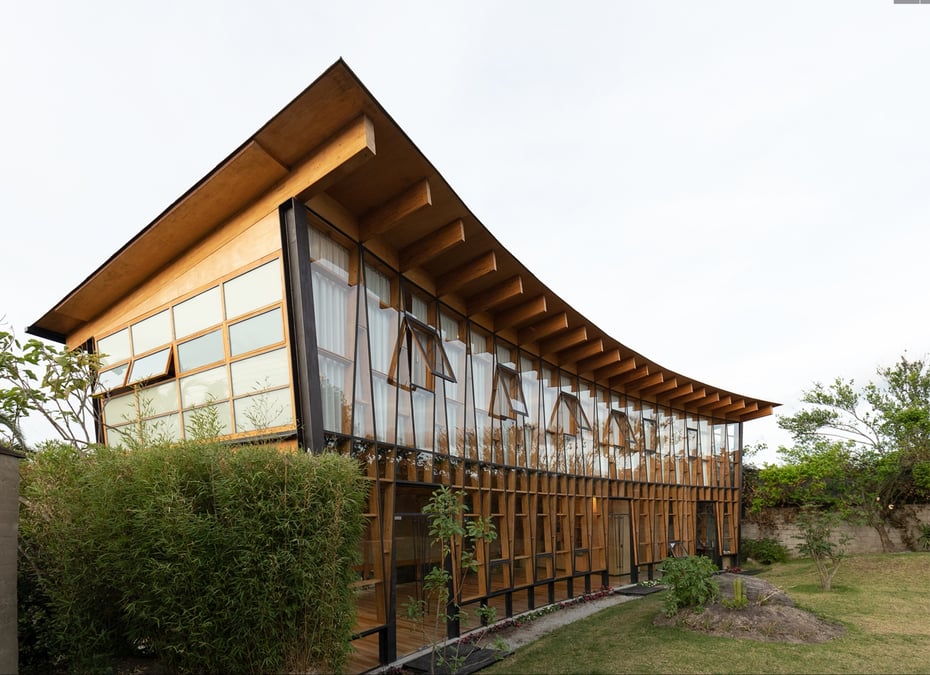 The yoga and therapeutic center ÁGAPE near Quito looks like a giant concave accordion. The light rammed earth and timber design uses local nature-based materials, is seismic resistant, has insulating properties ideal for the local climate. The ÁGAPE building has a healing touch– cars are kept away, providing therapeutic space for mind and body. There are bright and airy multipurpose rooms that can be used for yoga, art or sculpture, as well as a residential space. The main facade has slender triangles made of laminated timber beams, and the rammed earth walls let the building breathe. The unique door handles, sinks and lampshades are crafted by local artisans, and a water management system traps rainfall and grey water from sinks and showers.
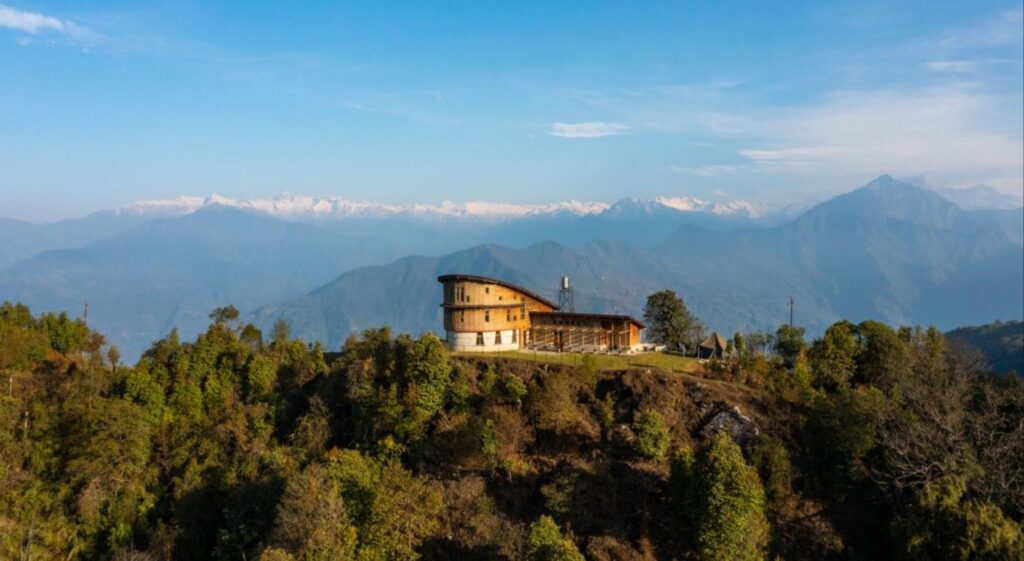 The exhibition in Kathmandu spotlights six projects in the Himalayas and Andes that emphasize local materials, climate responsiveness, and sustainability, while being frugal and functional in design.
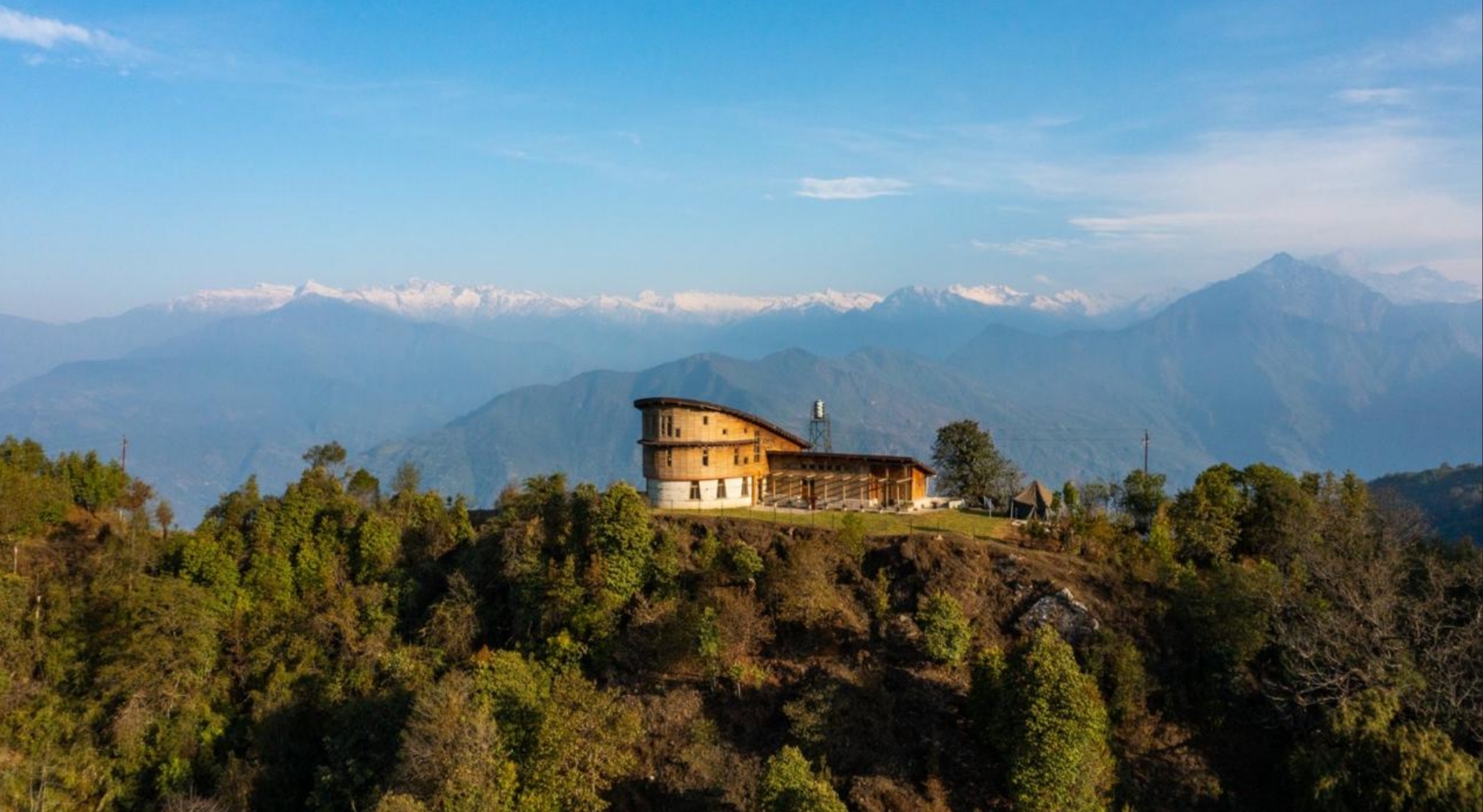
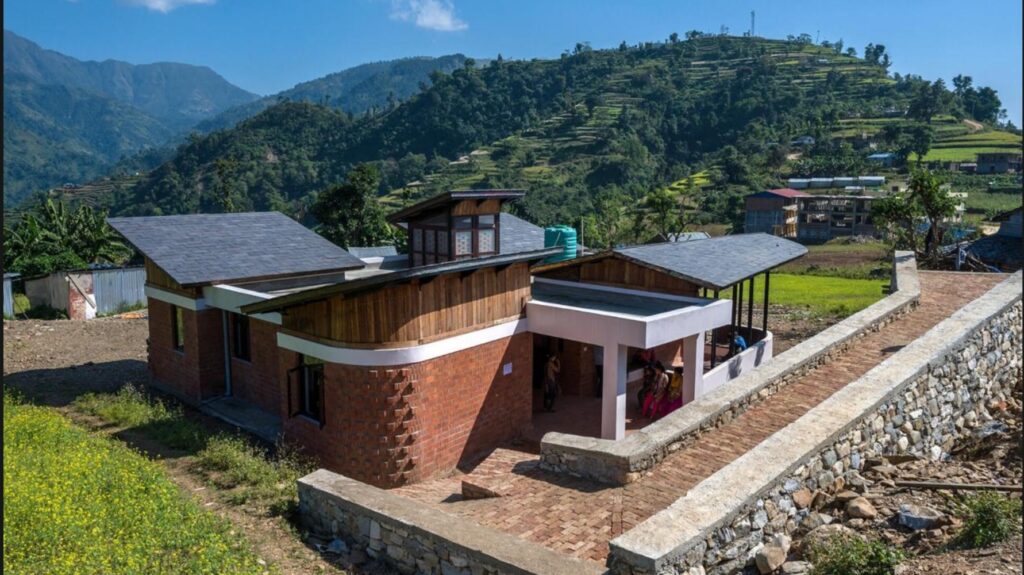 The Silinge Maternity Centre departed from the typical concrete block design for hospitals in Nepal. It uses light cavity bricks, eucalyptus timber, slate roof tiles, and terrazzo flooring with a high butterfly roof that allows cross-ventilation for natural temperature control.
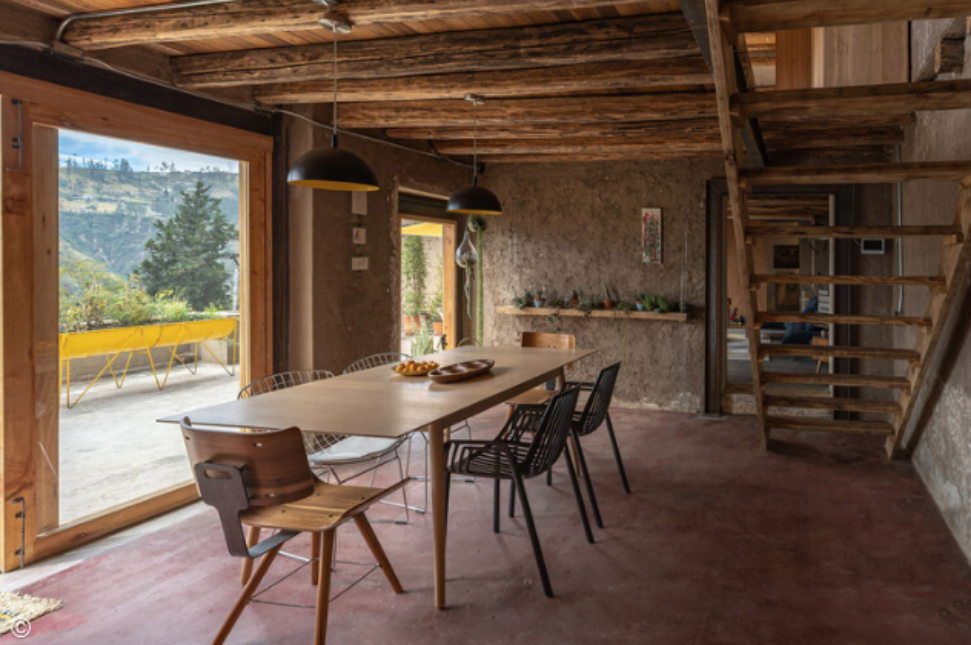 The CASA TALLER near Quito looks like it could be anywhere on the outskirts of Kathmandu. The village features self-built houses that are now occupied by artists, migrants, tourists, and students. The structural rehab involved removing anything that adds weight to the structure, removing layers and adding elements, and putting in a wooden and metal frame. The project demonstrates that self-built, abandoned, dilapidated structures can be renovated and repurposed with a low budget — something many structures in Nepal could emulate.
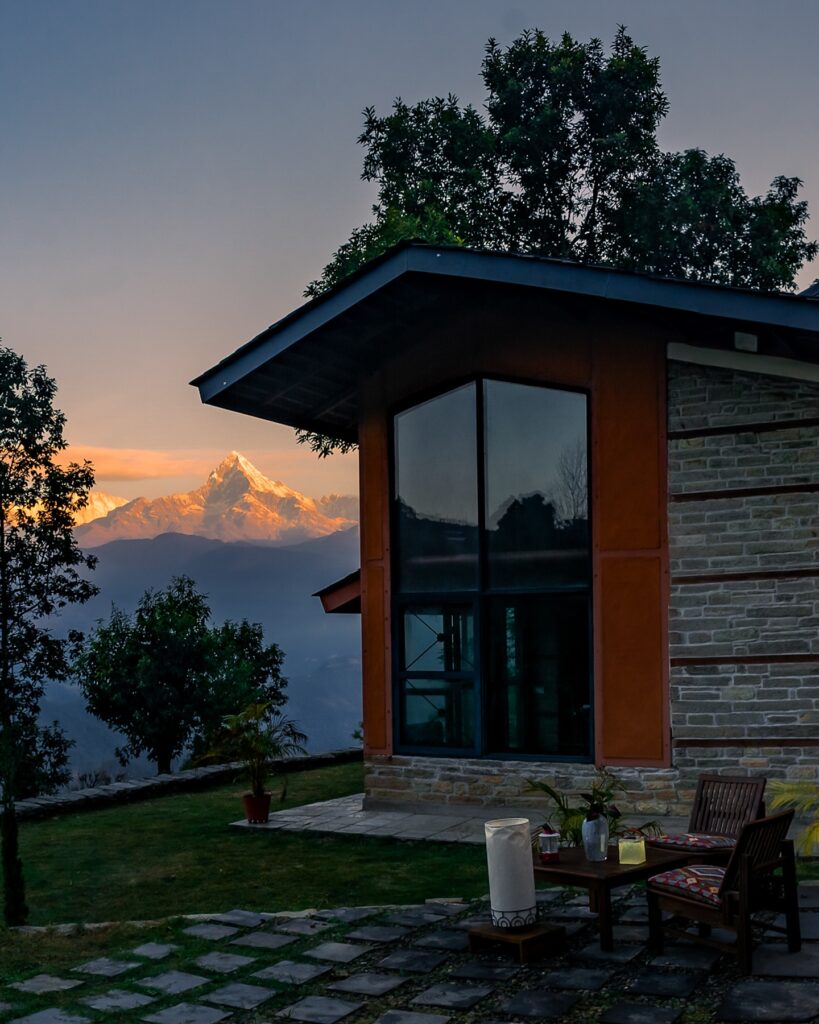 The exhibition also showcases SMA’s Deumadi Mountain Cottage, an elegant structure above Begnas Lake in Pokhara that is designed to open up towards the Annapurnas, and let in moonlight at night through its large windows. The roof is made of extra-thin local slate so they are safe during earthquakes.
You can read the original article at nepalitimes.com