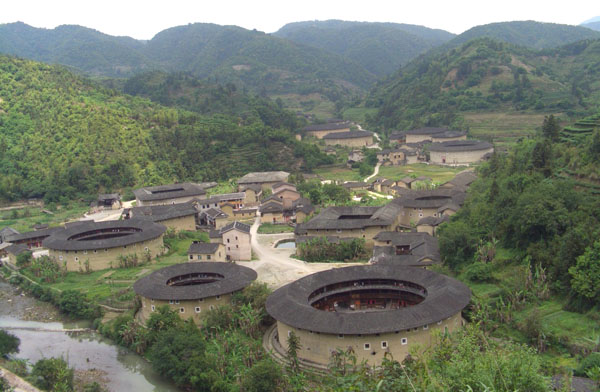
 I received an email from Professor Sunny Cai, who teaches architectural design at a college in Beijing , China. He mentioned his interest in ancient Chinese architecture, especially the earthen buildings called “tulou,” and he sent me some pictures of these rammed earth buildings. I had never seen anything quite like them, so I queried him further about how they were made and used. He replied, “The foundation was built with rocks, 2 feet high all around. The juice of glutinous rice and some lime is mixed into the earth for strength, and then sliced bamboo, reeds, and sometimes pieces of wood are also used.”
Kelly Hart
A Bedford House Bus In An Off-The-Grid Upcycled Homestead Kingdom
In a way Purple is like a modern wizard, transforming old trash into useful treasures for his off the grid homestead. After being gifted an old Bedford bus by a friend, he has been restoring it over the years and it’s now a wonderful off the grid tiny house in an upcycled homestead. Purple’s house … Read more
Recovering America
The late Malcolm Wells was a writer, artist and architect who was a vocal advocate of underground building since the early 70’s, having written nearly twenty books on the topic. He wrote in a humorous, personal, eloquent and inspiring style. His books are completely written by hand in pen and ink, and are liberally illustrated … Read more
A 3D Printed House for $4000?
There has been a lot of publicity about 3D printed housing lately, and it is not surprising because the notion seems almost unbelievable. What is not to like about being able to almost instantaneously convert practically any plan into reality for very little money? This article from fastcompany.com describes such housing that is being developed for masses of poor people in El Salvador and other third world countries. They claim that this can be done for under $4000 per house!
The Beauty of Mud and Straw
What could be more basic to life on Earth than mud and straw? The dirt beneath your feet brings forth grasses that become straw. When you combine these two elements with loving care you can create an enduring beauty that will thrill your soul, and a home that will embrace and protect you. We have been experiencing a renaissance in the use of natural materials for building throughout the U. S. 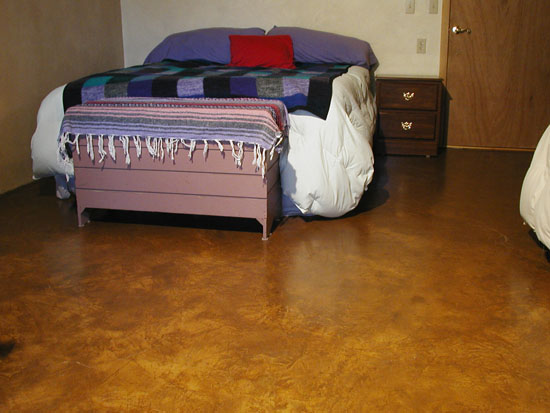
To make an earthen floor you need to add about 25% of finely screened clay to 75% sharp sand or crusher fines, with enough water to make something the consistency of a thick cake batter. Once this is thoroughly mixed, then several handfuls of chopped straw (several inches long) can be mixed in to help bind the material together and give the final floor some beautiful flecks of gold if desired.
This wet mixture is poured over a prepared base of thoroughly tamped road base (gravel and sand). The layer of adobe can be as thin as about ¾ inch, but usually it is more like about 2 inches. The first stage of pouring an adobe floor is similar to pouring concrete, where the wet material is roughly screed to get it uniformly level. With concrete, however, you must do all of the finish work within a few hours, before it sets up. With adobe the curing and finishing process can go on for weeks, or even months.
Building with Nature
“Natural building” has become a catch phrase for a variety of building techniques that generally employ unprocessed natural materials, such as earth, stone, and straw. The focus is mainly on the material itself, and to some extent the methods that are used to work with the material, rather than the architectural design or other aspects of building that might be explored. If the phrase is reversed to “building naturally,” this opens up a whole new level of consideration. Just what does it mean to build naturally , or to build with nature?
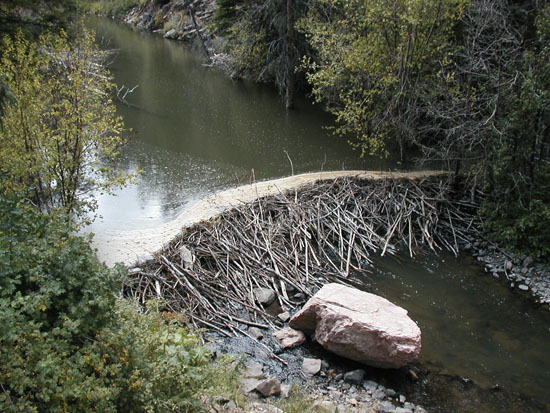 If we use the natural world as a guide for how to build our homes, we could look to other animals and see how they do it. Whatever they use to build with will be found locally; they don’t waste energy carrying things great distances. Beaver cut saplings along the creek bed to dam the stream and create a fortified home. Birds collect twigs and grass to make their nests. Some wasps gather mud to form protected space for their young. Many animals don’t carry materials at all; they simply convert an existing hole or niche as a suitable home, much as our ancestors used caves or rock overhangs for shelter.